Skip to content
Viz Tools - Latest Trends in Software, Tech, and Innovation Viz Tools - Latest Trends in Software, Tech, and Innovation
  • Home

Unified Modeling Language

Home » Unified Modeling Language » Page 5
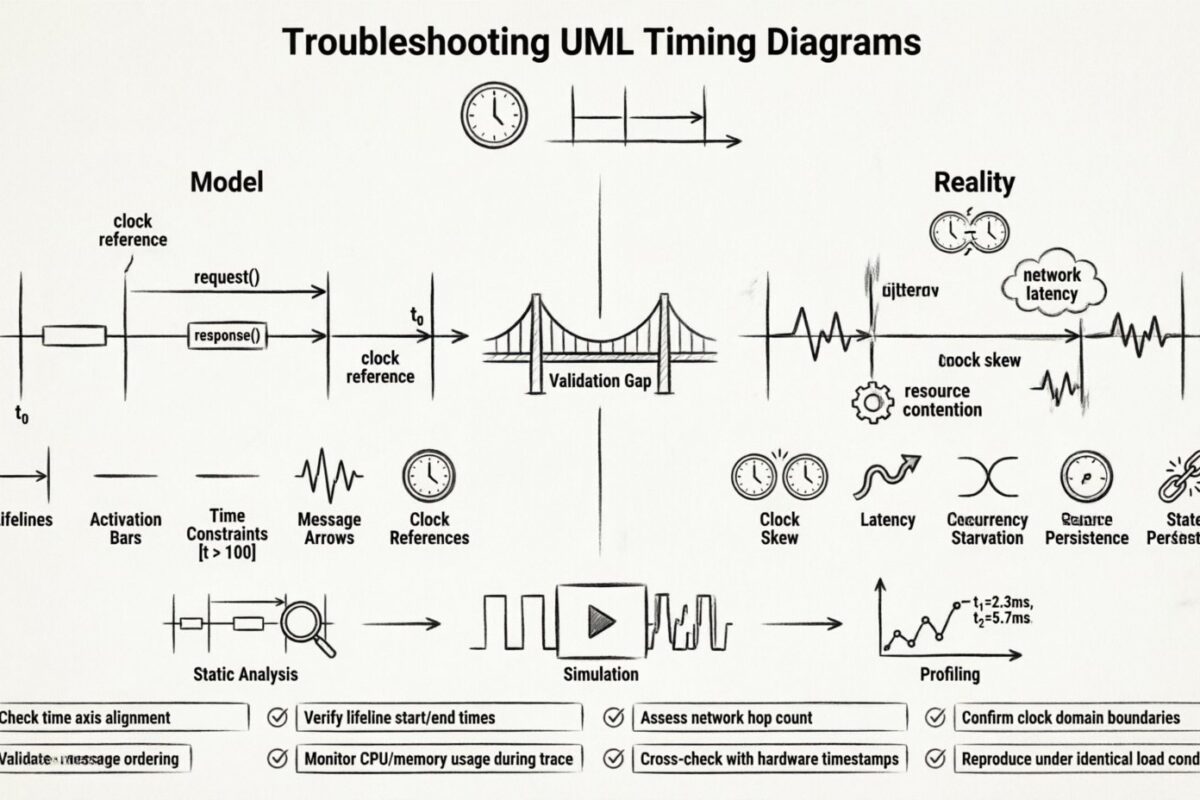
Troubleshooting UML Timing Diagrams: What to Do When Your System Behavior Doesn’t Match the Model
Posted inUnified Modeling Language

Troubleshooting UML Timing Diagrams: What to Do When Your System Behavior Doesn’t Match the Model

When the gap between a design model and actual system execution widens, engineering teams face critical challenges. This is particularly true for UML Timing Diagrams, which serve as the blueprint…
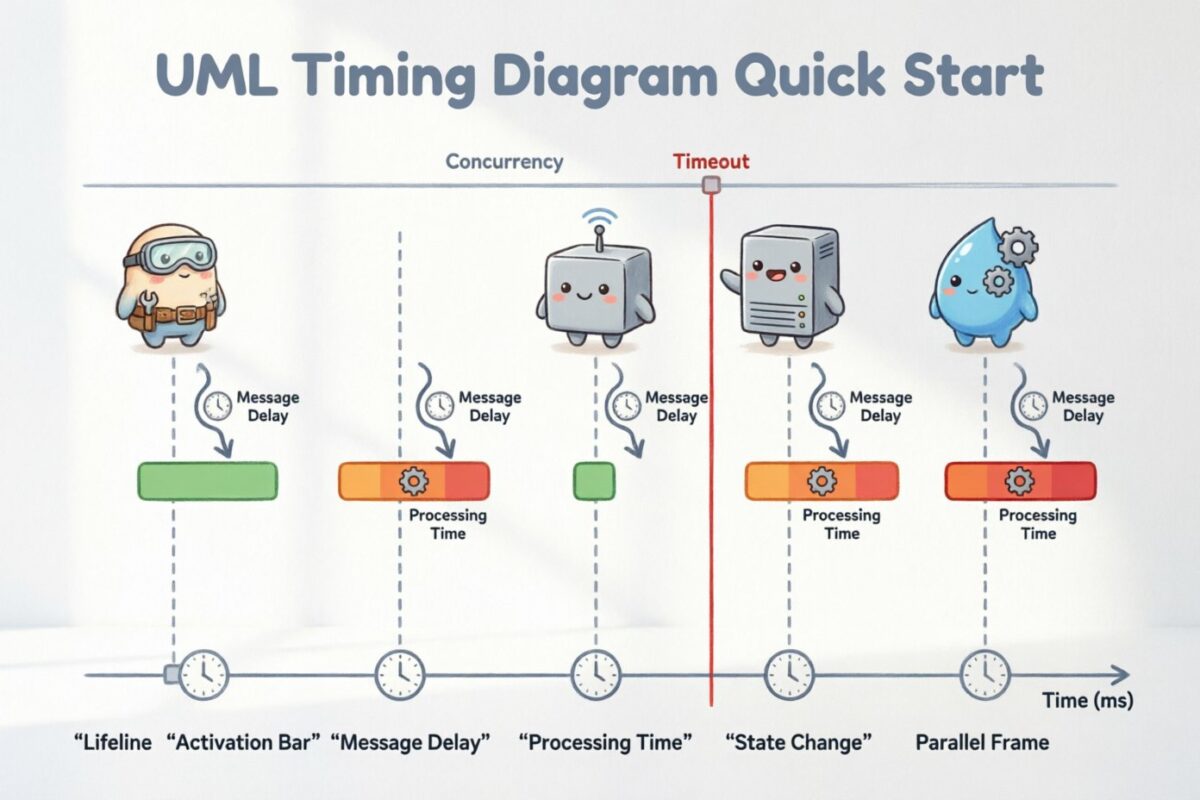
UML Timing Diagram Quick Start: How to Model Message Delays and Processing Times Fast
Posted inUnified Modeling Language

UML Timing Diagram Quick Start: How to Model Message Delays and Processing Times Fast

In complex software architectures, understanding when things happen is just as critical as knowing what happens. While sequence diagrams map interactions, they often lack the precision required to analyze temporal…
Why Your UML Activity Diagrams Look Messy and How to Fix Them
Posted inUnified Modeling Language

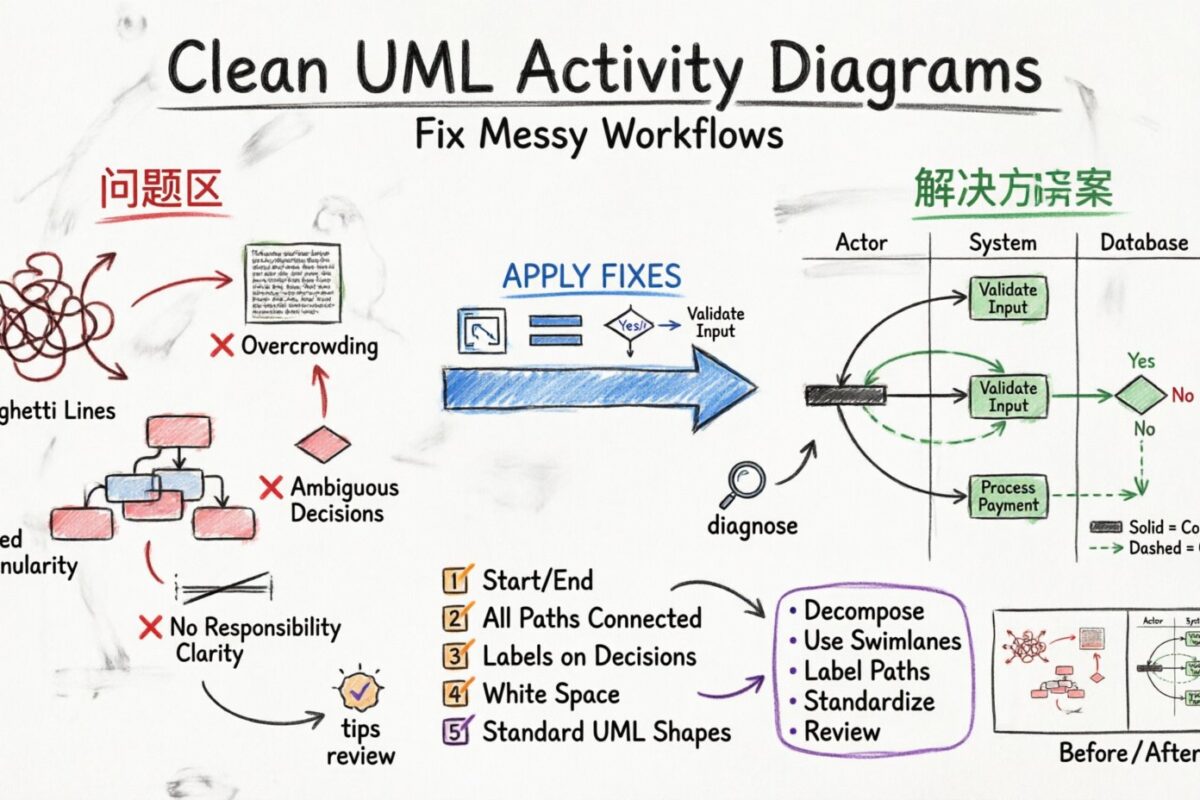
Why Your UML Activity Diagrams Look Messy and How to Fix Them

Creating clear, effective UML activity diagrams is a critical skill for any analyst or developer. Yet, many professionals struggle with diagrams that appear cluttered, confusing, or outright unreadable. When stakeholders…
Deep Dive into UML Activity Diagrams: Mastering Decision Nodes and Branching
Posted inUnified Modeling Language

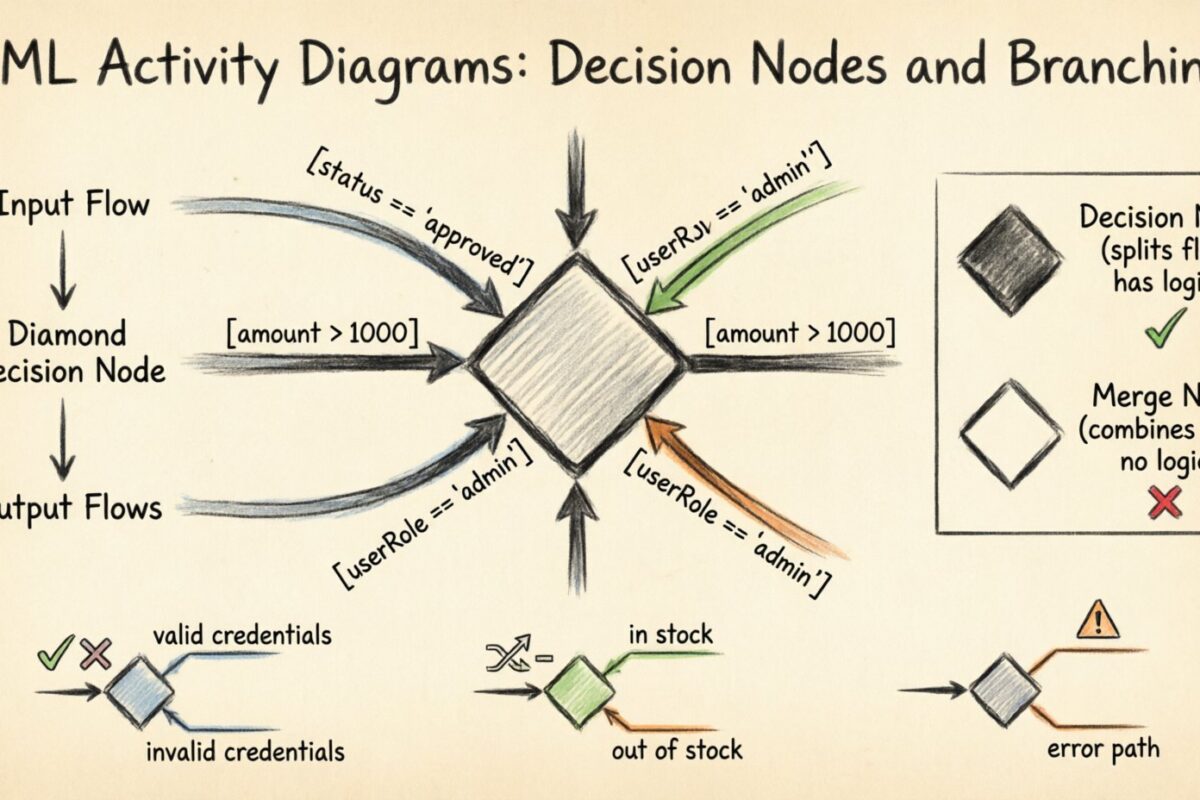
Deep Dive into UML Activity Diagrams: Mastering Decision Nodes and Branching

Activity diagrams serve as the backbone for visualizing the dynamic aspects of a system. While flow charts and state machines offer insights into behavior, activity diagrams specifically focus on the…
Comparing UML Activity Diagram Types: Selecting the Right Shape for Your Need
Posted inUnified Modeling Language

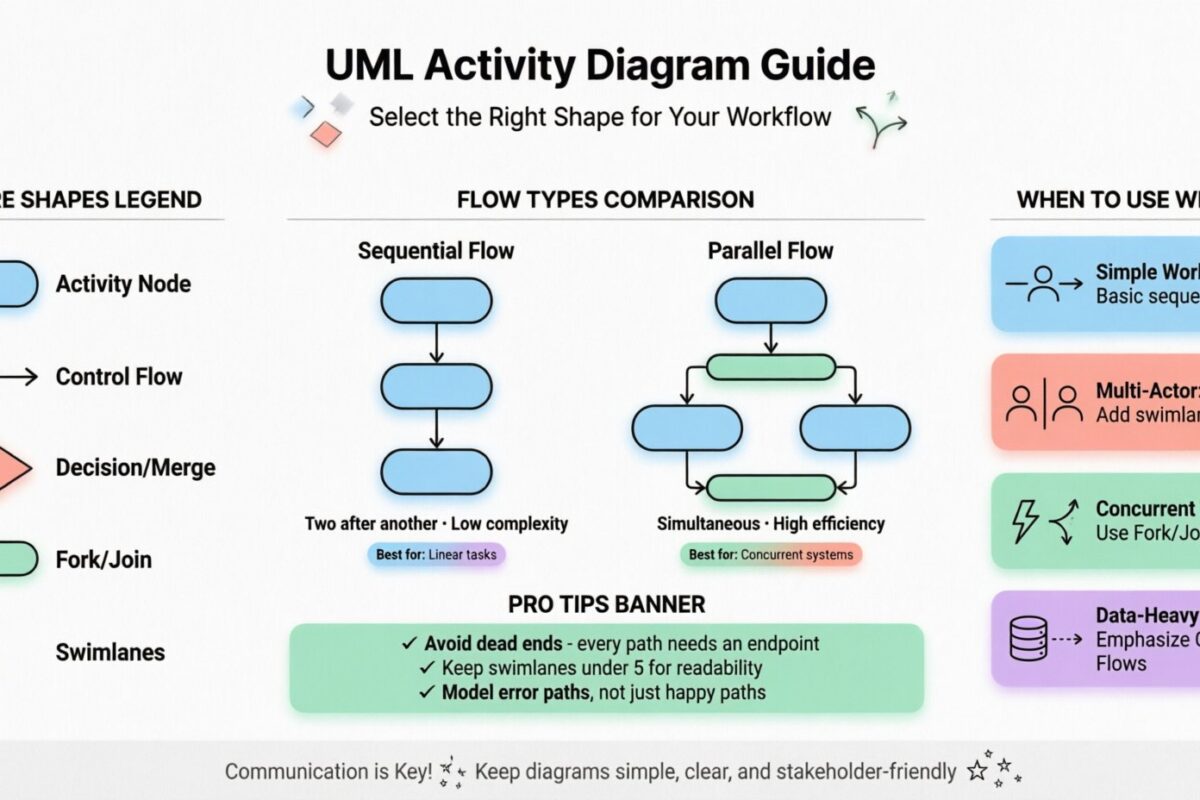
Comparing UML Activity Diagram Types: Selecting the Right Shape for Your Need

When modeling complex business processes or software workflows, clarity is paramount. The Unified Modeling Language (UML) provides a standardized way to visualize system behavior. Among the various diagram types available,…
A Definitive Overview of UML Activity Diagrams for Beginner Developers
Posted inUnified Modeling Language

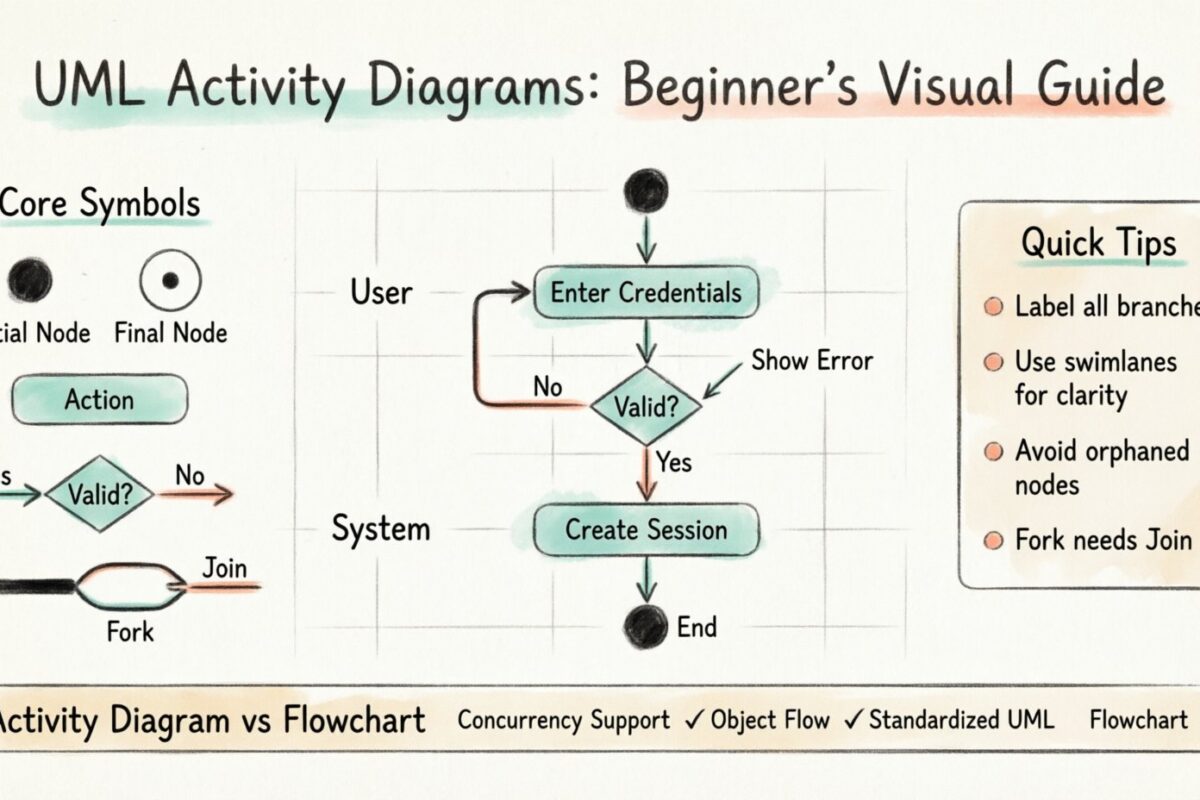
A Definitive Overview of UML Activity Diagrams for Beginner Developers

Understanding the flow of logic within software systems is a fundamental skill for any developer. While code tells the computer what to do, visual models help humans understand the structure…
UML Activity Diagrams vs. Flowcharts: Which One Should You Actually Use?
Posted inUnified Modeling Language

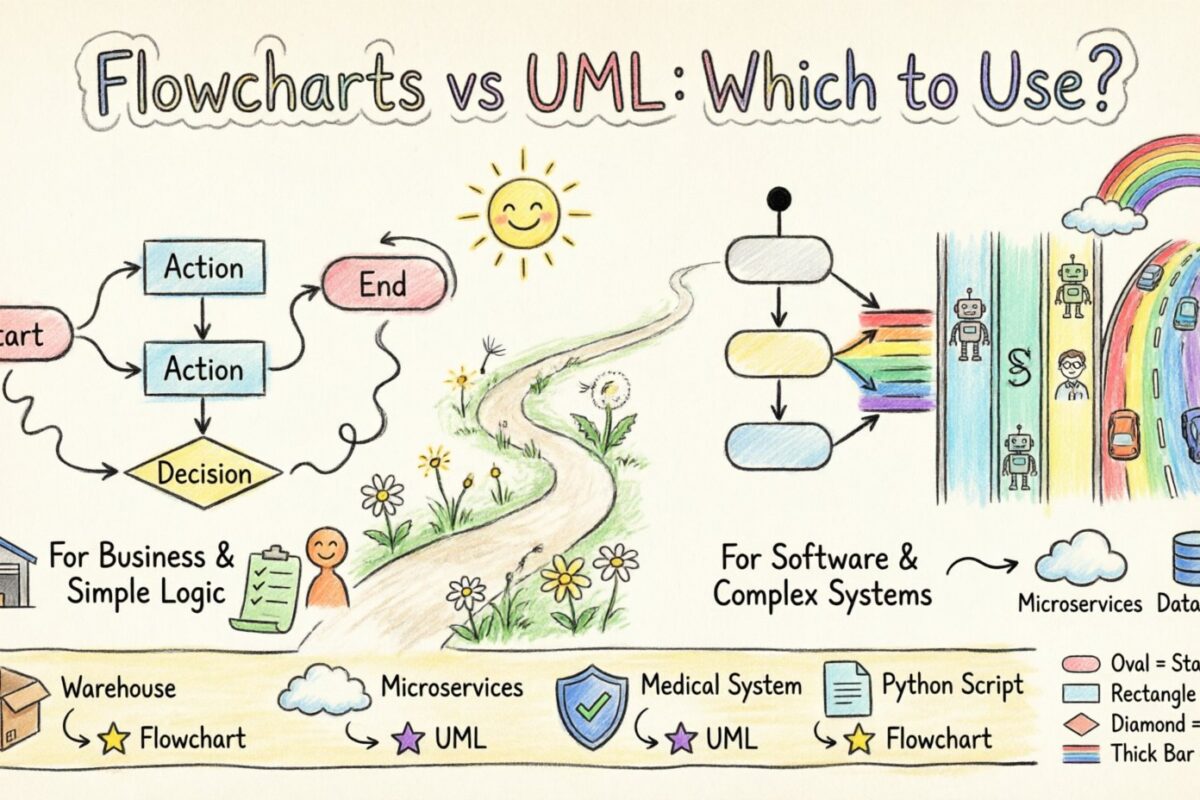
UML Activity Diagrams vs. Flowcharts: Which One Should You Actually Use?

Visual modeling is a cornerstone of system design and software engineering. When planning a complex process, stakeholders often reach for a diagram to map out logic, data movement, and decision…
Myth-Busted: UML Activity Diagrams Are Not Just for Enterprise Giants
Posted inUnified Modeling Language

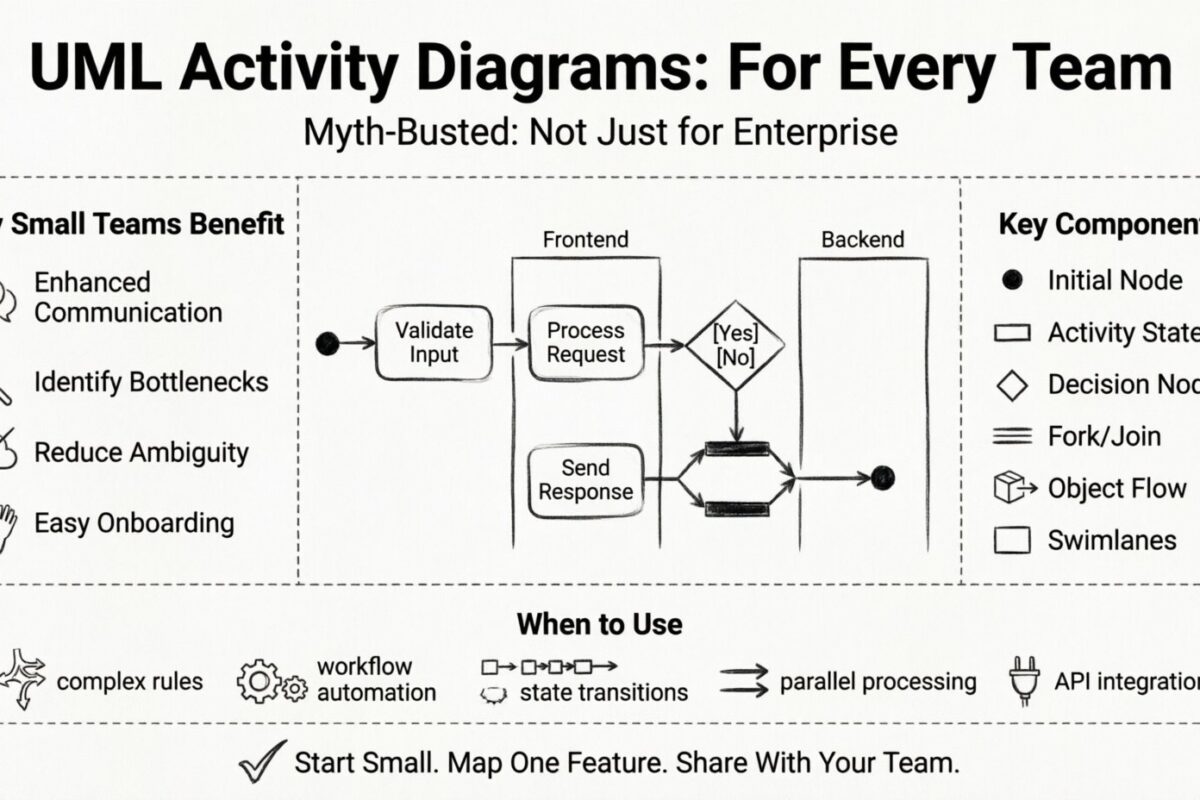
Myth-Busted: UML Activity Diagrams Are Not Just for Enterprise Giants

When professionals discuss Unified Modeling Language (UML) diagrams, the conversation often drifts toward large-scale banking systems, telecommunications infrastructure, or massive legacy applications. It is a common misconception that UML Activity…
The Hidden Power of UML Activity Diagrams in System Design Documentation
Posted inUnified Modeling Language

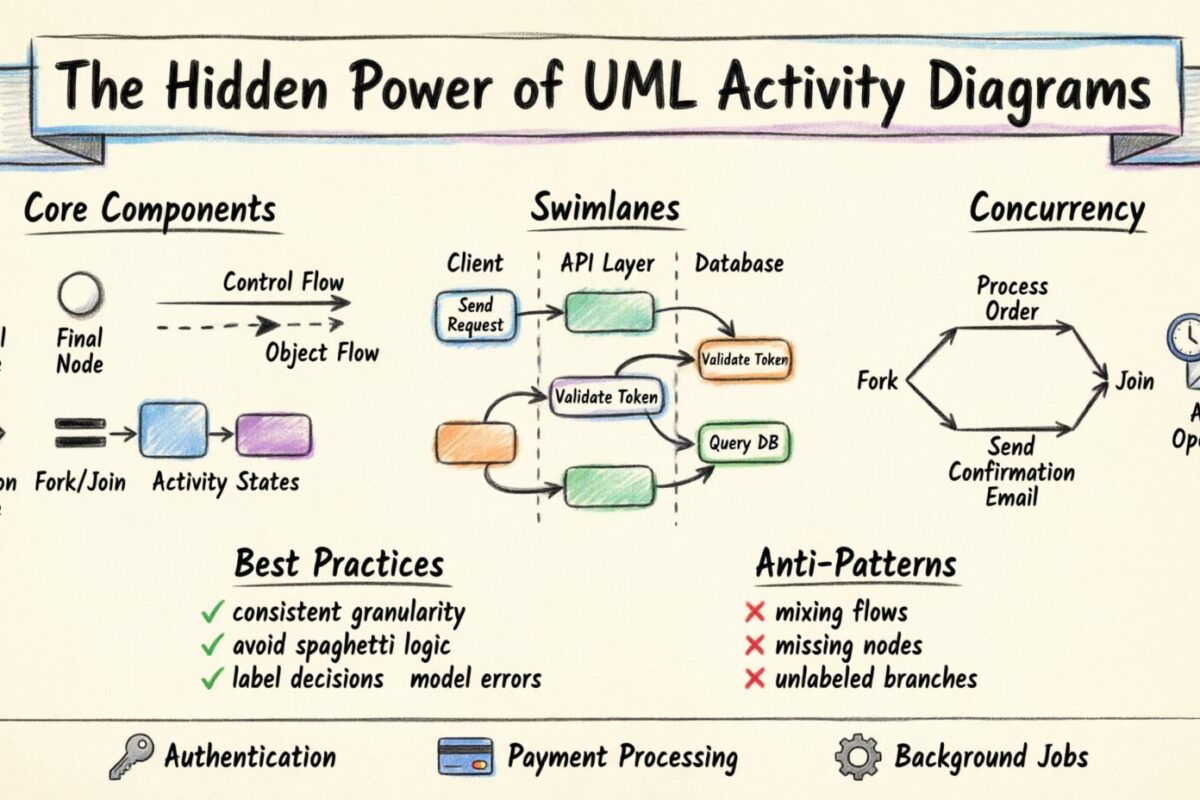
The Hidden Power of UML Activity Diagrams in System Design Documentation

System design is inherently complex. It involves orchestrating multiple components, managing data flows, and ensuring logical consistency across distributed environments. When architects and developers attempt to document these intricate processes,…
Comprehensive Tutorial: Designing Business Processes with UML Activity Diagrams
Posted inUnified Modeling Language

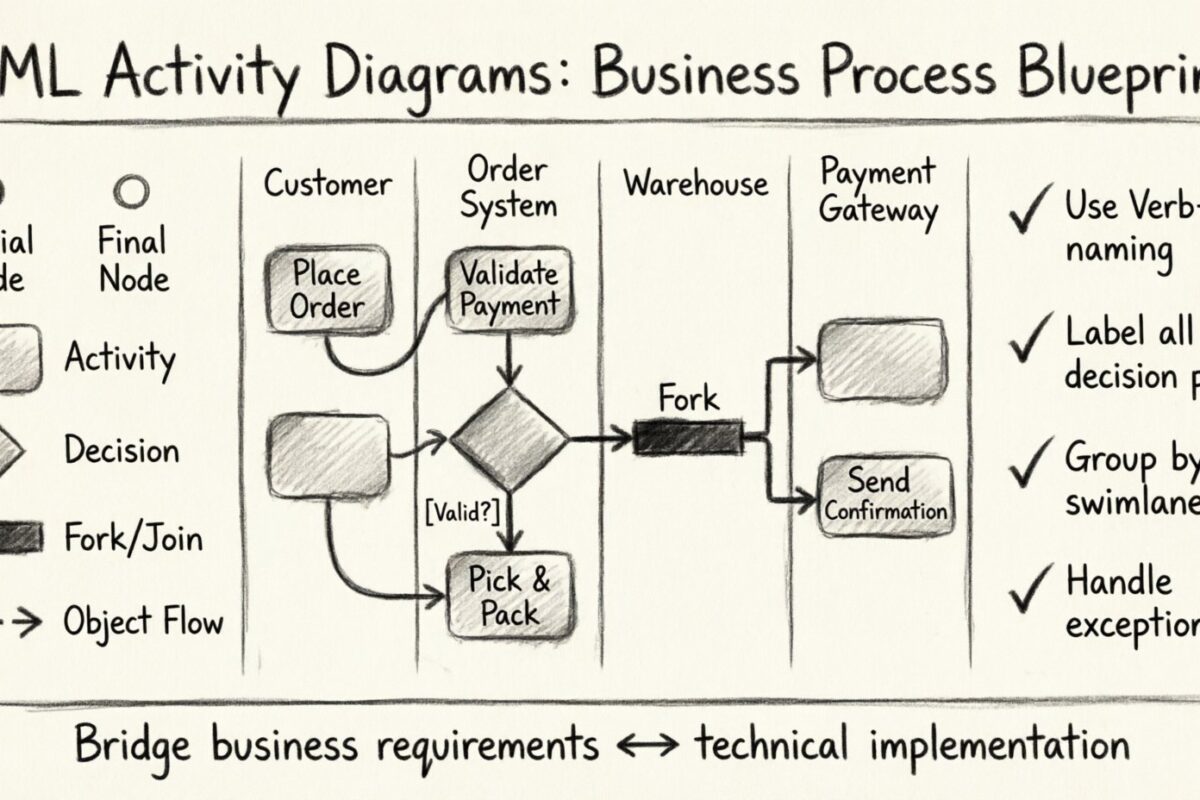
Comprehensive Tutorial: Designing Business Processes with UML Activity Diagrams

Business processes are the backbone of any organization. They define how work flows, who is responsible for specific tasks, and where decisions occur. To visualize these complex interactions effectively, modeling…

Posts pagination

Previous page 1 … 3 4 5 6 7 … 9 Next page
Language
No available translations found
Categories
  • AI
  • AI Chatbot
  • AI Image Translator
  • AI Visual Modeling
  • Animation Tool
  • ArchiMate
  • C4 Model
  • Cloud Architecture Diagram
  • Content & Visual
  • Database Design
  • Enterprise Architecture
  • Flipbook Maker
  • OpenDocs
  • Project Management
  • Scrum
  • Software Development
  • Strategic Analysis
  • SysML
  • TOGAF
  • Uncategorized
  • Unified Modeling Language

Recent Posts

  • From Diagrams to Documentation: A User’s Journey with Visual Paradigm OpenDocs Integration
  • From Concept to Documentation: Visual Paradigm’s AI-Powered Pipeline Ecosystem
  • From Diagrams to Digital Books: A User’s Journey with Visual Paradigm’s OpenDocs Pipeline
  • Definitive Guide to UML Timing Diagrams: Mastering the Art of Temporal System Modeling
  • Future Outlook: How UML Timing Diagrams Are Evolving with Event-Driven Architecture Trends
Copyright 2026 — Viz Tools - Latest Trends in Software, Tech, and Innovation. All rights reserved.
Scroll to Top