Skip to content
Viz Tools - Latest Trends in Software, Tech, and Innovation

Viz Tools - Latest Trends in Software, Tech, and Innovation

  • Home
  • Gallery
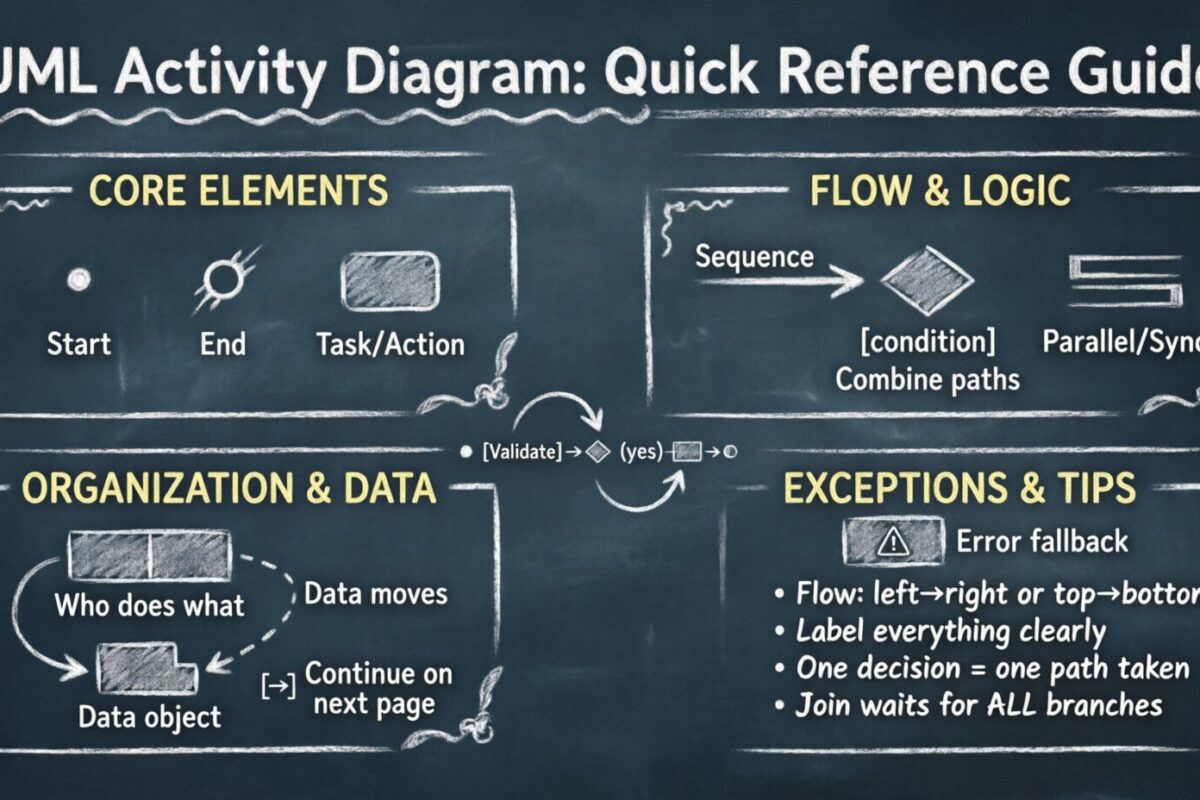
Quick Reference Guide: Symbols and Notations Every UML Activity Diagram Needs
Posted inUnified Modeling Language

Quick Reference Guide: Symbols and Notations Every UML Activity Diagram Needs

Understanding the behavior of a system requires more than just a list of functions. It demands a visual representation of the flow. The Unified Modeling Language (UML) Activity Diagram serves…
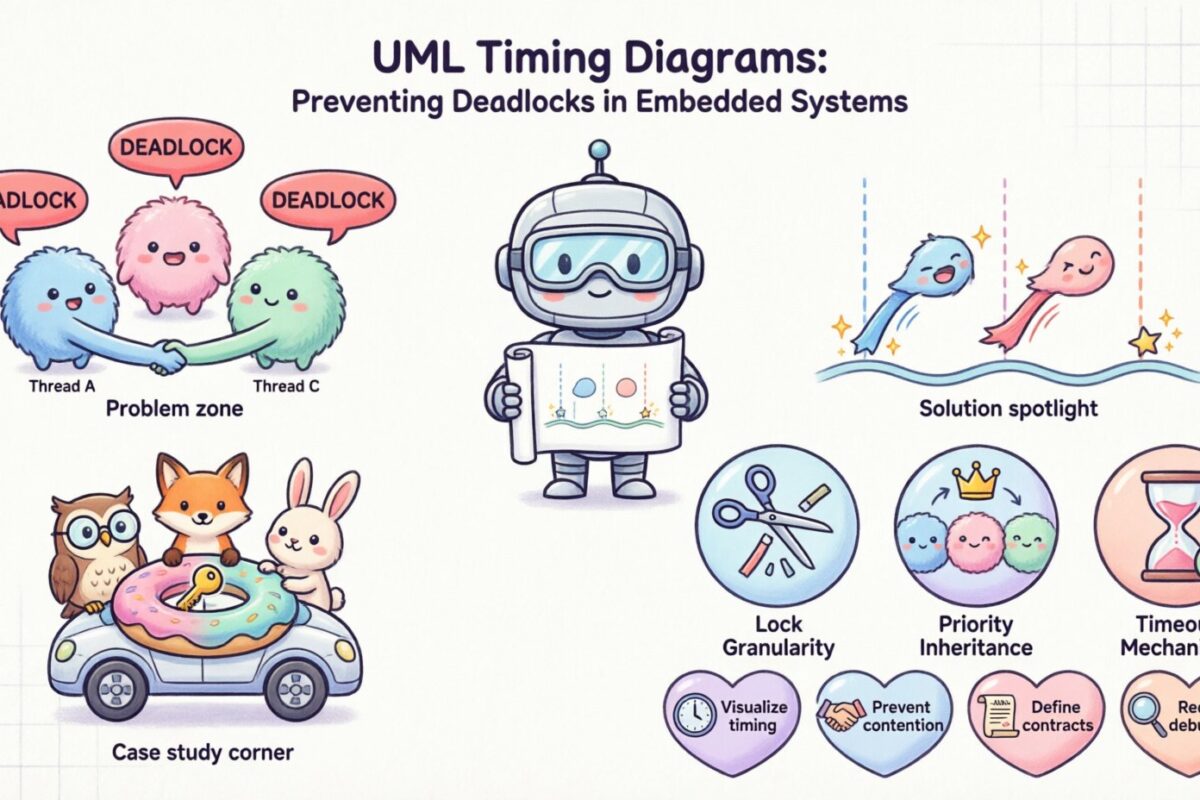
Real-World Case Study: Using UML Timing Diagrams to Solve Deadlock Issues in Embedded Systems
Posted inUnified Modeling Language

Real-World Case Study: Using UML Timing Diagrams to Solve Deadlock Issues in Embedded Systems

Embedded systems operate in environments where time is not merely a metric, but a functional requirement. When multiple processes compete for shared resources without precise synchronization, the system can halt…
UML Timing Diagram Best Practices: How to Keep Your Timing Specifications Clear and Maintainable
Posted inUnified Modeling Language

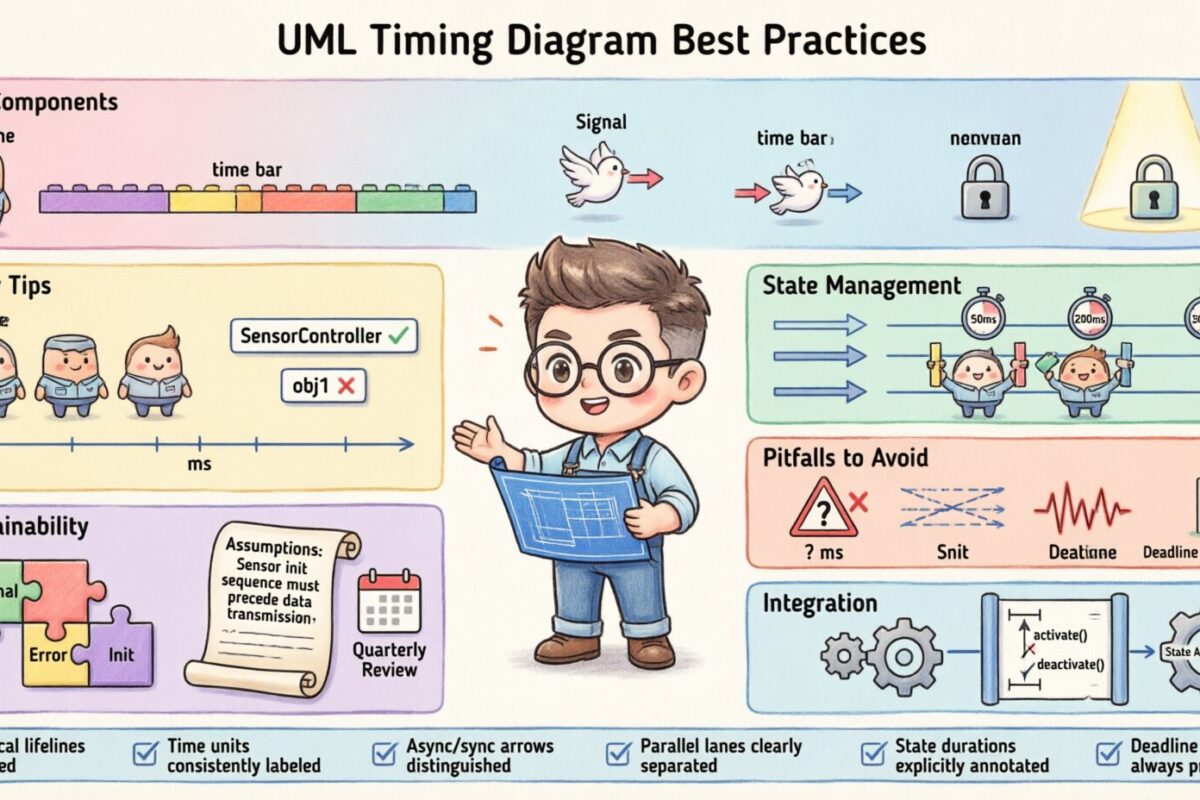
UML Timing Diagram Best Practices: How to Keep Your Timing Specifications Clear and Maintainable

In complex system design, understanding the temporal behavior of components is just as critical as understanding their structural connections. While sequence diagrams show the order of messages, a UML Timing…
From Text to Time: A Quick Start Guide to Creating Your First UML Timing Diagram
Posted inUnified Modeling Language

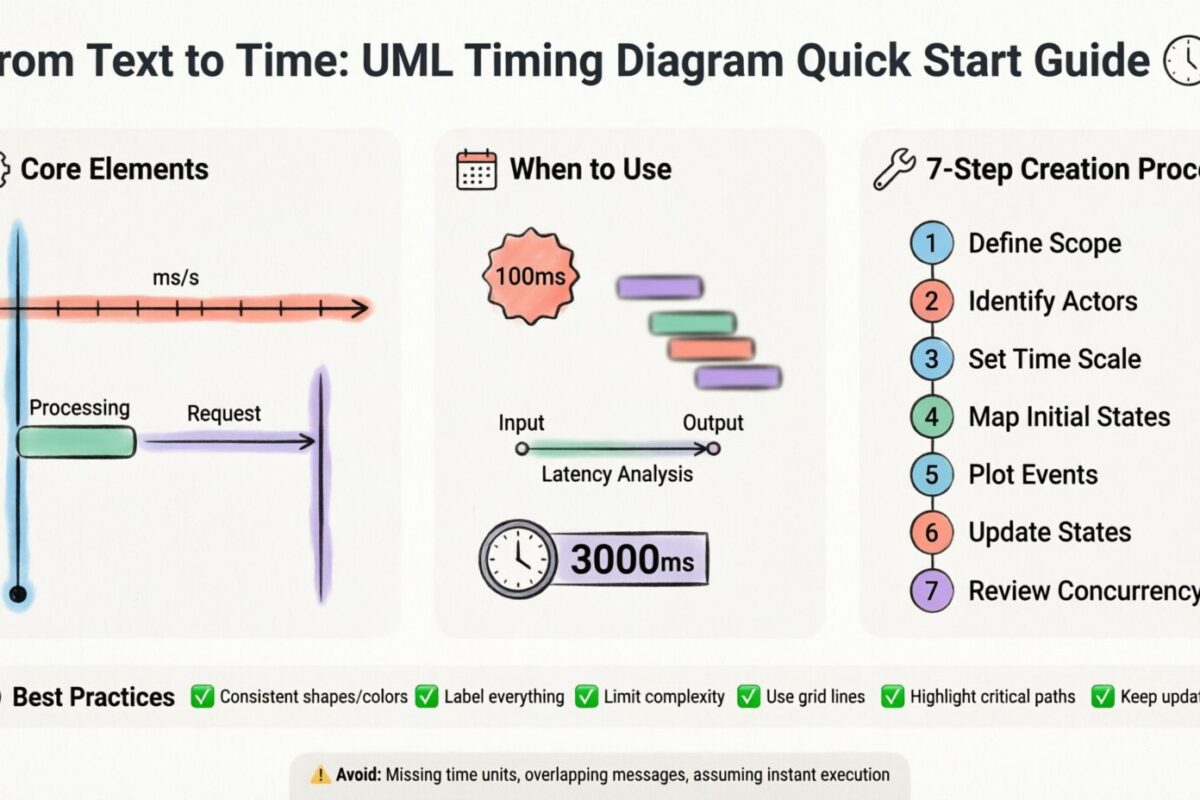
From Text to Time: A Quick Start Guide to Creating Your First UML Timing Diagram

Designing complex systems requires more than just knowing what objects exist; it requires understanding when they act and how long they take to respond. While many developers are familiar with…
UML Timing Diagram vs Sequence Diagram: Which One Should You Use for Real-Time Logic?
Posted inUnified Modeling Language

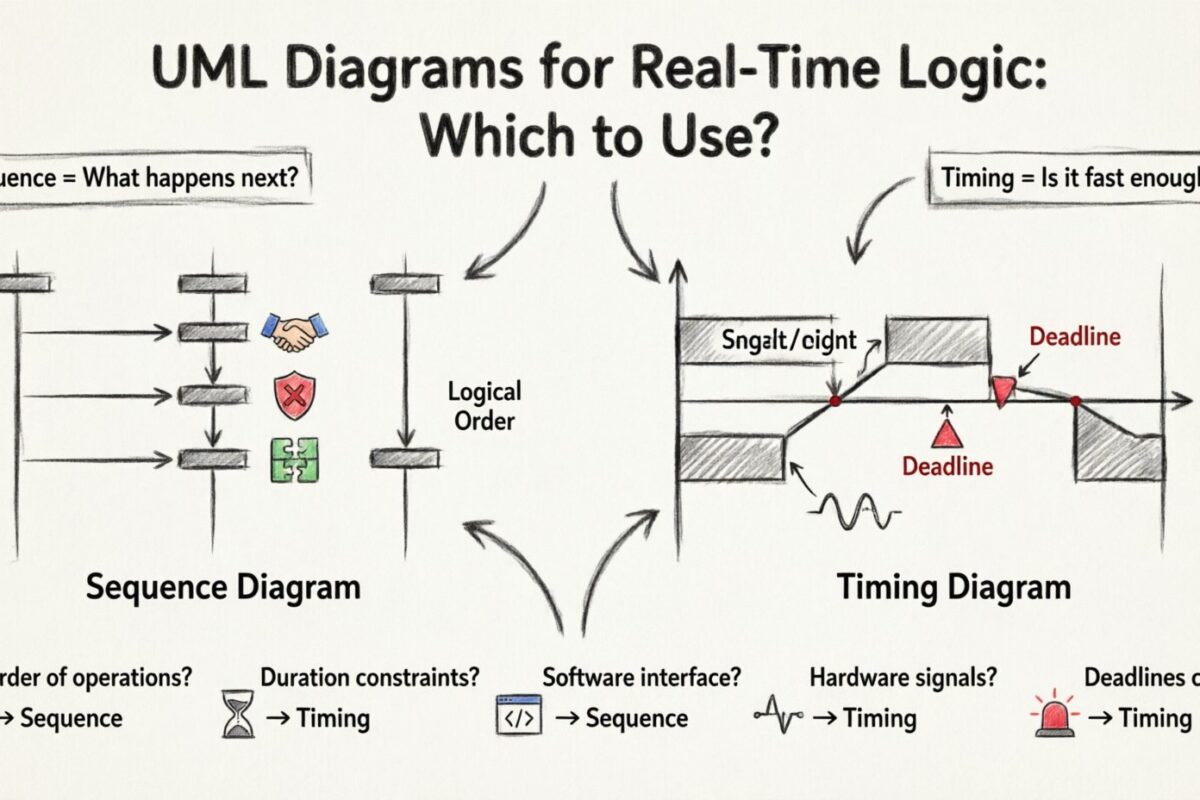
UML Timing Diagram vs Sequence Diagram: Which One Should You Use for Real-Time Logic?

Designing real-time systems requires precision. When signals must arrive within specific windows, and state changes must occur predictably, standard modeling often falls short. You are dealing with logic that does…
How to Read and Draw Basic UML Timing Diagrams: A Step-by-Step Tutorial for Juniors
Posted inUnified Modeling Language

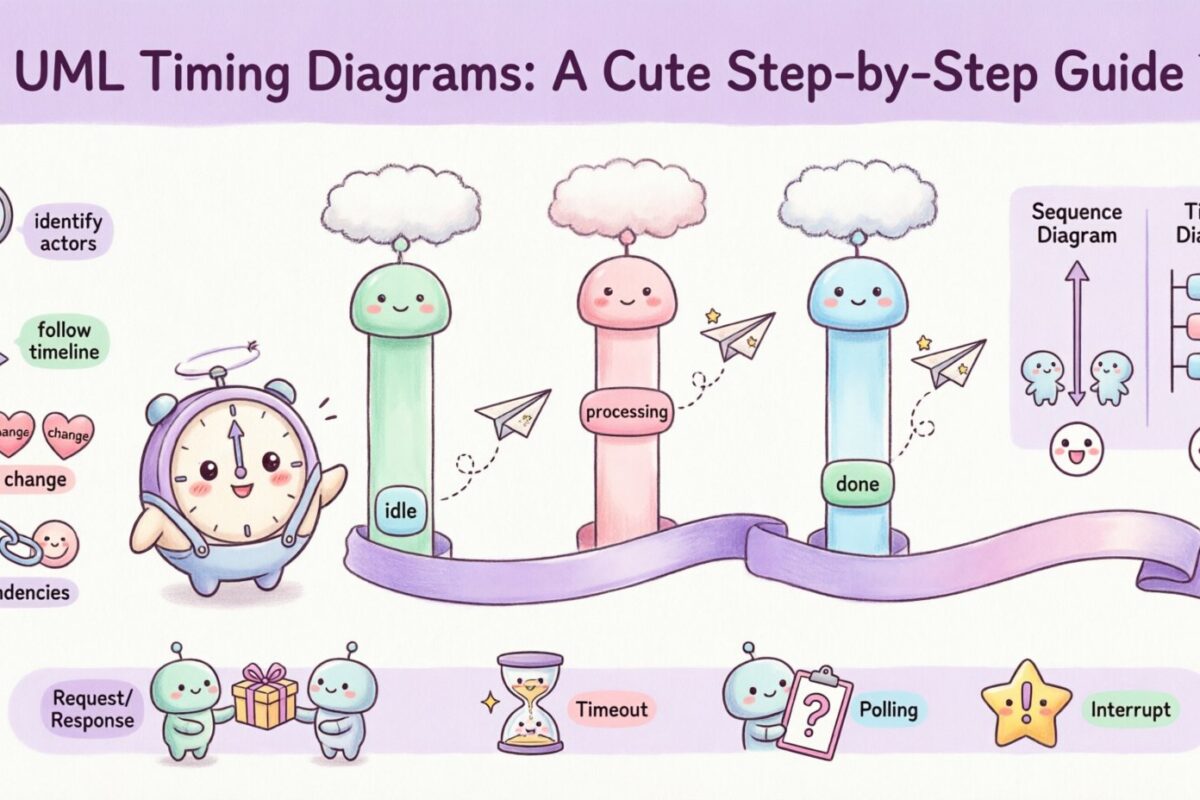
How to Read and Draw Basic UML Timing Diagrams: A Step-by-Step Tutorial for Juniors

Understanding the flow of time within a software system is critical for developers and architects. While standard sequence diagrams show what happens, timing diagrams reveal when it happens. This guide…
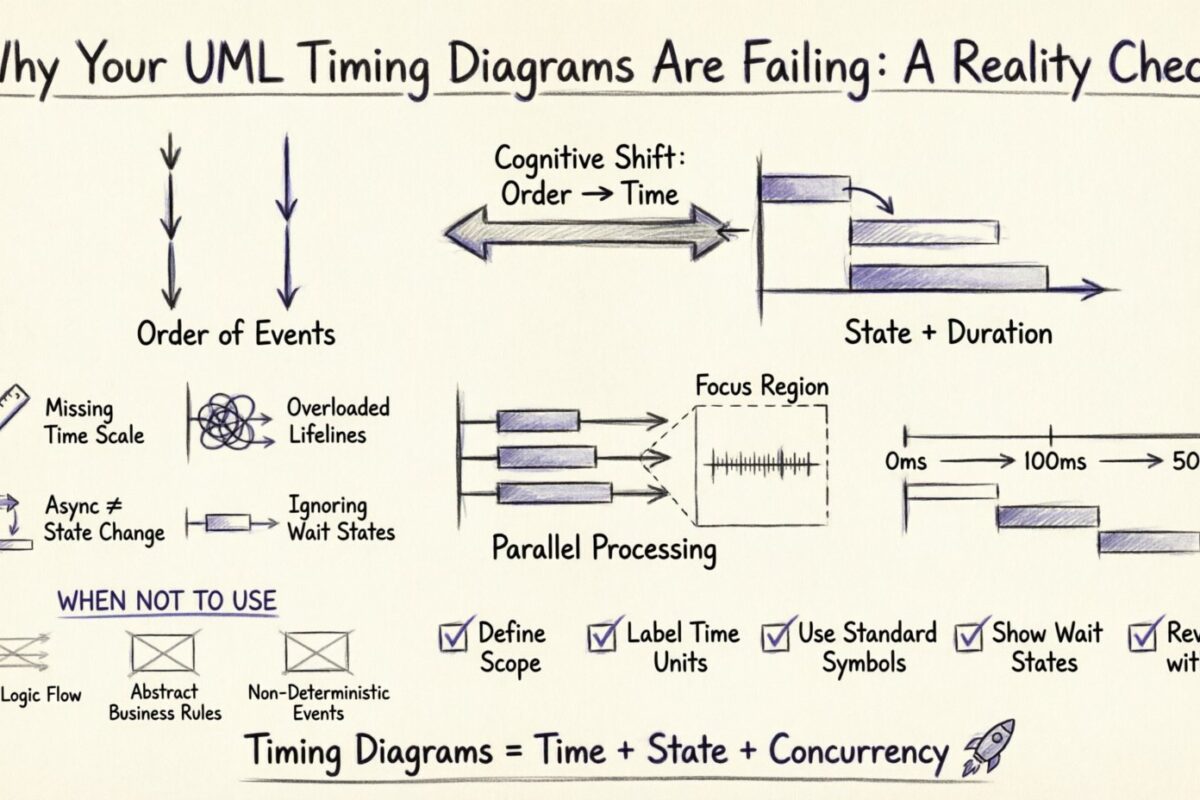
Why Your UML Timing Diagrams Are Failing: A Reality Check for Early-Career Engineers
Posted inUnified Modeling Language

Why Your UML Timing Diagrams Are Failing: A Reality Check for Early-Career Engineers

If you are reading this, you have likely stared at a timing diagram for hours, convinced the logic is sound, only to watch it fall apart during implementation. You are…
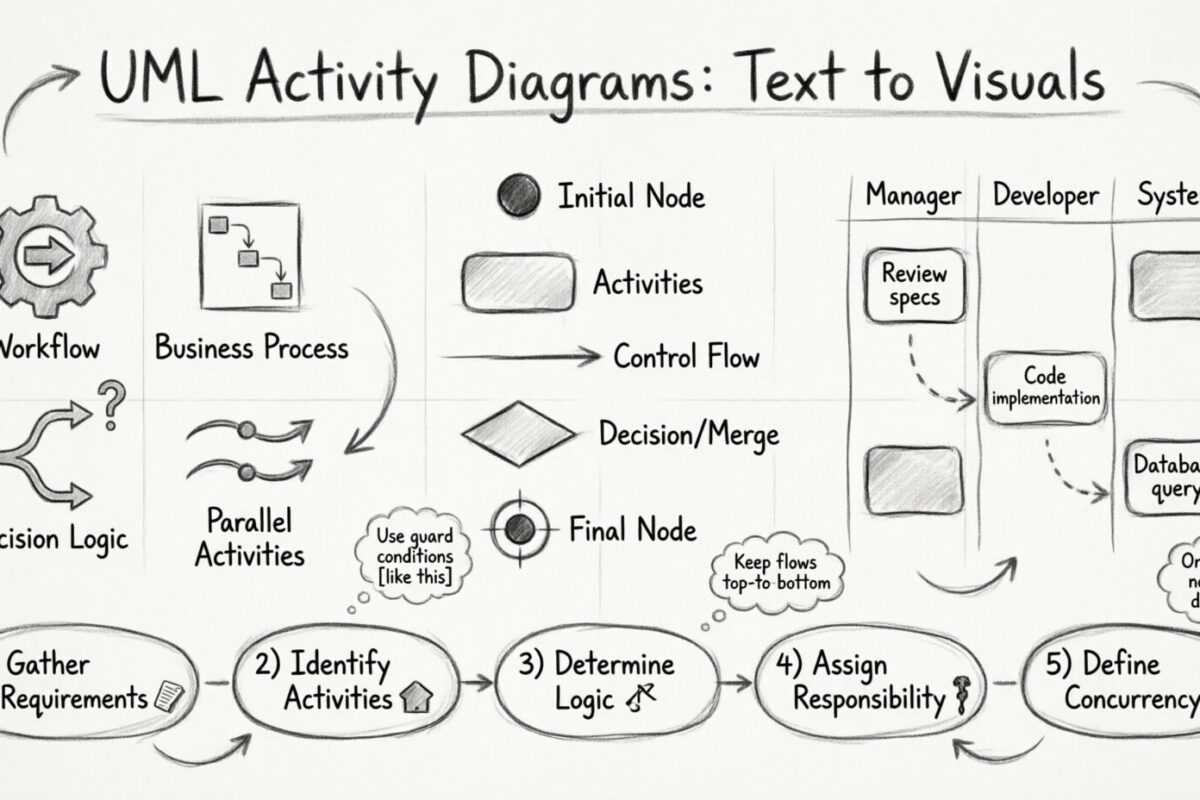
From Text to Visuals: A Quick Start to Drawing UML Activity Diagrams
Posted inUnified Modeling Language

From Text to Visuals: A Quick Start to Drawing UML Activity Diagrams

In the complex landscape of software engineering and business process modeling, clarity is currency. When requirements exist only as text, understanding the flow of logic can become a barrier. This…
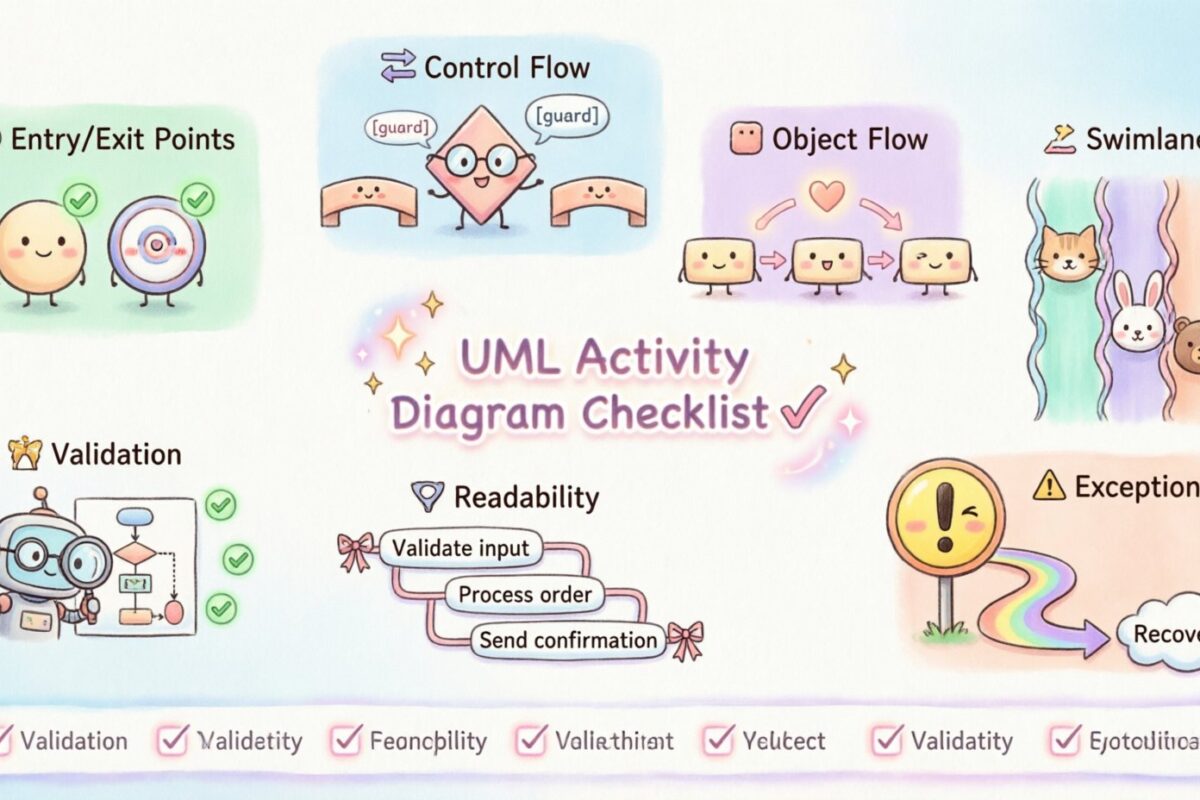
UML Activity Diagram Checklist: Ensure Your Design Is Complete and Correct
Posted inUnified Modeling Language

UML Activity Diagram Checklist: Ensure Your Design Is Complete and Correct

Creating a robust UML activity diagram is a critical step in the systems analysis and design process. These diagrams provide a visual representation of the workflow, capturing the logic and…
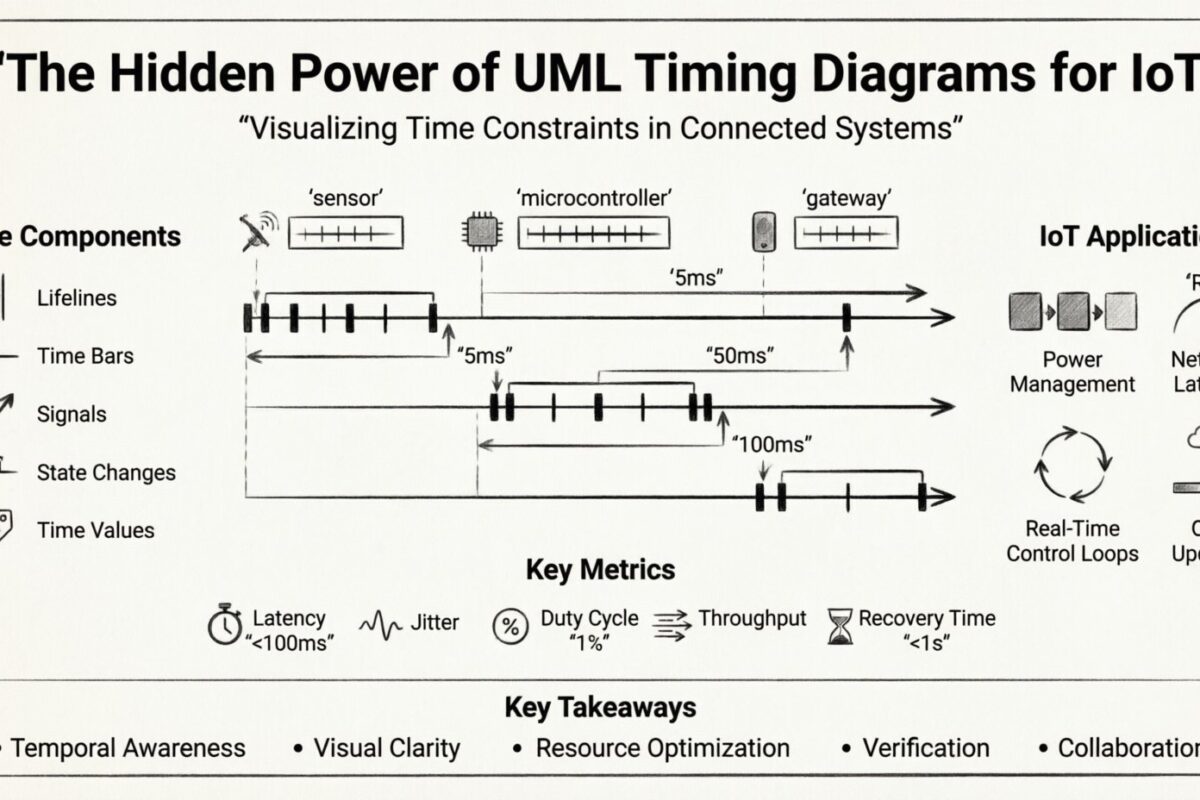
The Hidden Power of UML Timing Diagrams: Why They Matter More Than You Think for IoT
Posted inUnified Modeling Language

The Hidden Power of UML Timing Diagrams: Why They Matter More Than You Think for IoT

In the world of Internet of Things (IoT), time is not just a metric; it is a fundamental resource. Devices communicate, sensors trigger actions, and processors manage resources within strict…

Posts pagination

Previous page 1 2 3 4 5 … 26 Next page
Language
de_DEes_ESfr_FRhi_INid_IDjapl_PLpt_PTru_RUvizh_CNzh_TW
Categories
  • AI
  • AI Chatbot
  • AI Image Translator
  • AI Visual Modeling
  • Animation Tool
  • ArchiMate
  • BPMN
  • Business Improvement
  • Business Process Modeling
  • C4 Model
  • Cloud Architecture Diagram
  • Content & Visual
  • Database Design
  • Enterprise Architecture
  • Flipbook Maker
  • OpenDocs
  • Project Management
  • Scrum
  • Software Development
  • Strategic Analysis
  • SysML
  • TOGAF
  • Uncategorized
  • Unified Modeling Language
  • VPasCode

Recent Posts

  • PlantUML Class Diagrams: A Practical Guide Using VPasCode Tool
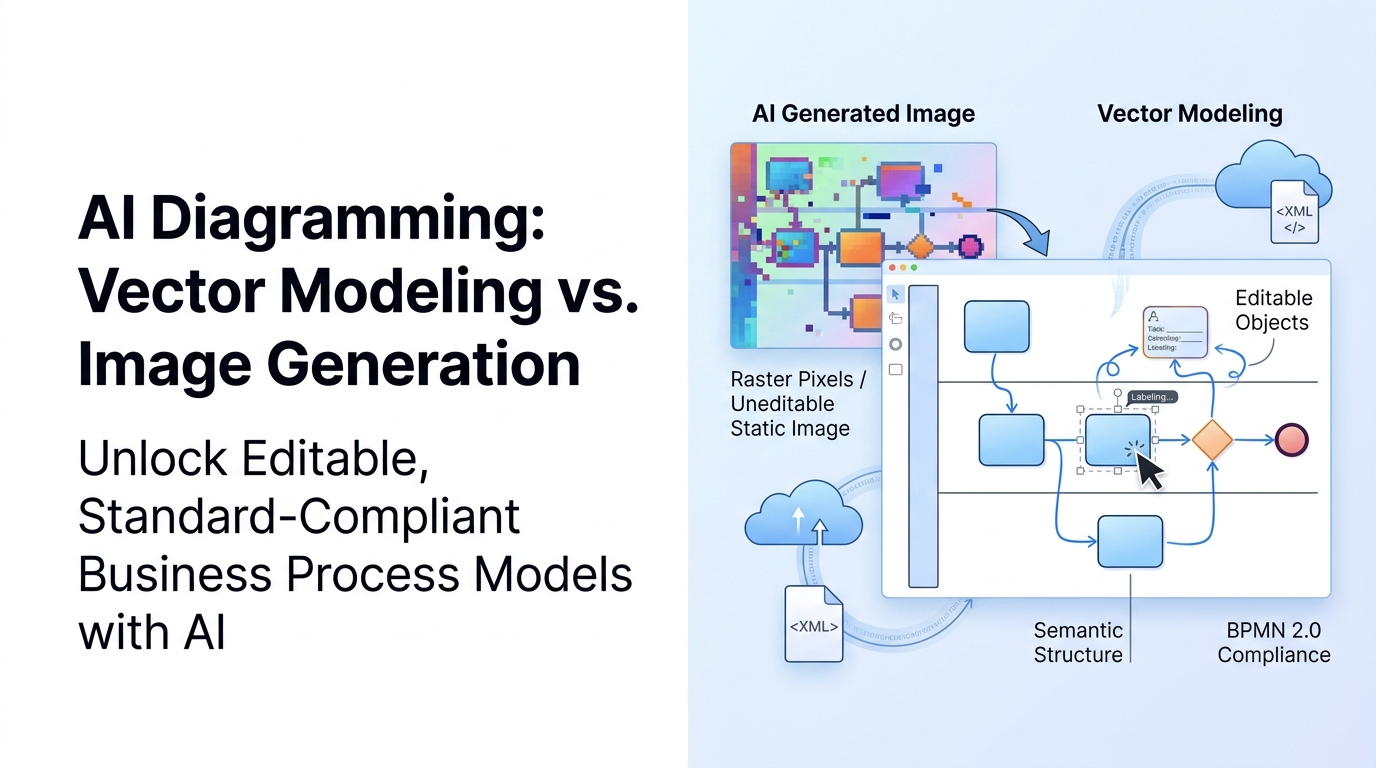
  • AI Diagramming: Vector Modeling vs. Image Generation
  • From Diagrams to Documentation: A User’s Journey with Visual Paradigm OpenDocs Integration
  • From Concept to Documentation: Visual Paradigm’s AI-Powered Pipeline Ecosystem
  • From Diagrams to Digital Books: A User’s Journey with Visual Paradigm’s OpenDocs Pipeline
You May Have Missed
PlantUML Class Diagrams: A Practical Guide Using VPasCode Tool
Posted inAI VPasCode

PlantUML Class Diagrams: A Practical Guide Using VPasCode Tool

AI Diagramming: Vector Modeling vs. Image Generation
Posted inAI BPMN Business Improvement

AI Diagramming: Vector Modeling vs. Image Generation

From Diagrams to Documentation: A User’s Journey with Visual Paradigm OpenDocs Integration
Posted inAI AI Chatbot OpenDocs

From Diagrams to Documentation: A User’s Journey with Visual Paradigm OpenDocs Integration

From Concept to Documentation: Visual Paradigm’s AI-Powered Pipeline Ecosystem
Posted inAI AI Chatbot OpenDocs

From Concept to Documentation: Visual Paradigm’s AI-Powered Pipeline Ecosystem

Copyright 2026 — Viz Tools - Latest Trends in Software, Tech, and Innovation. All rights reserved.
Scroll to Top