
Enterprise Architecture (EA) serves as the strategic blueprint for an organization’s structure and operations. It bridges the gap between business strategy and technology implementation. Without a clear architectural view, organizations risk fragmentation, redundant systems, and misaligned investments. This guide provides a comprehensive look at the core principles, components, and processes involved in building a robust architecture practice. 🧭
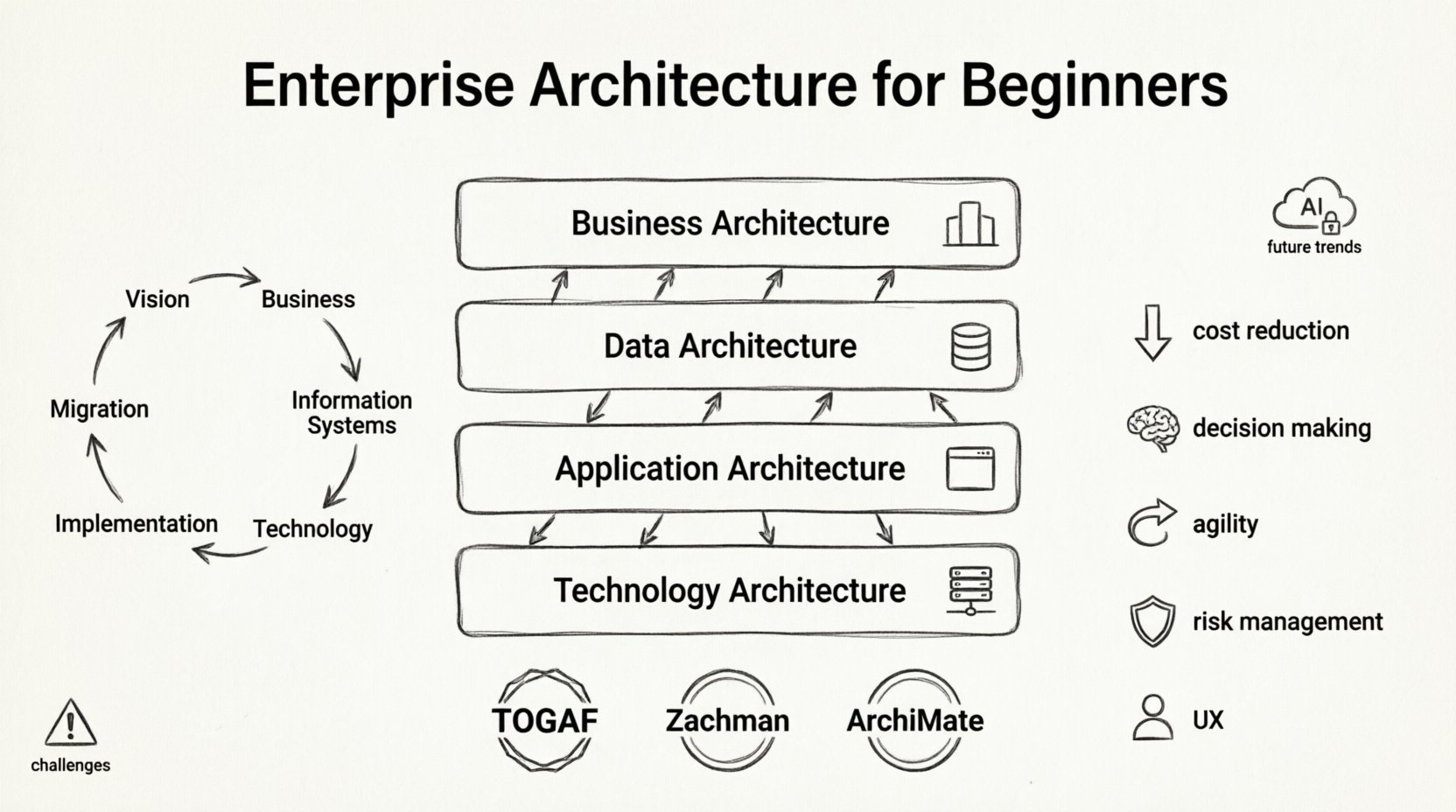
What is Enterprise Architecture? 🤔
At its core, Enterprise Architecture is a discipline that creates a holistic view of the enterprise. It is not merely about IT infrastructure; it encompasses business processes, information flows, and organizational structures. The primary goal is to align technology capabilities with business objectives to ensure long-term value creation.
Think of EA as the architectural plans for a city. Just as a city needs zoning laws, road networks, and utility plans to function coherently, an organization needs a defined structure to manage complexity. This structure allows leaders to make informed decisions regarding investment, risk, and innovation.
Key Objectives of EA:
- Strategic Alignment: Ensuring IT investments directly support business goals.
- Complexity Reduction: Simplifying systems to reduce maintenance costs and technical debt.
- Agility: Enabling the organization to adapt quickly to market changes.
- Standardization: Establishing common standards for data, applications, and technology.
The Four Layers of Enterprise Architecture 🏛️
A standard approach to EA divides the architecture into four distinct layers. Each layer focuses on a specific aspect of the organization, yet they all interconnect to form a cohesive whole. Understanding these layers is essential for any beginner entering the field.
1. Business Architecture 🏢
This layer defines the business strategy, governance, organization, and key business processes. It answers the question: What does the business do to achieve its goals?
- Strategy: Vision, mission, and strategic objectives.
- Governance: Decision-making structures and policies.
- Processes: Workflows and operational activities.
- Organization: Roles, responsibilities, and capabilities.
2. Data Architecture 🗄️
Data is the lifeblood of modern enterprises. This layer describes the structure of an organization’s logical and physical data assets. It ensures that data is available, secure, and accurate across the enterprise.
- Data Models: Logical and physical representations of data.
- Data Flow: How data moves between systems.
- Data Governance: Policies for data quality and security.
- Standards: Naming conventions and formats.
3. Application Architecture 🖥️
This layer provides a blueprint for the individual application systems, their interactions, and their relationships to the core business processes. It focuses on the software that supports the business and data layers.
- Portfolio: Inventory of all applications in use.
- Interactions: How applications communicate (APIs, interfaces).
- Functionality: The capabilities each application provides.
- Integration: Mechanisms for connecting disparate systems.
4. Technology Architecture 💻
The technology layer describes the hardware, software, and network infrastructure required to support the business, data, and application layers. It is the foundation upon which everything else rests.
- Infrastructure: Servers, storage, and networking hardware.
- Cloud Services: Compute, storage, and platform services.
- Security: Network security and access controls.
- Standards: Protocols and technology selection criteria.
To visualize the relationship between these layers, consider the following table:
| Layer | Focus | Key Question |
|---|---|---|
| Business | Strategy & Processes | What do we need to do? |
| Data | Information & Assets | What information do we need? |
| Application | Software & Services | How will we process the information? |
| Technology | Infrastructure & Platforms | Where will it run? |
Common Frameworks and Methodologies 📚
While there are no mandatory rules, several frameworks exist to guide EA practitioners. These frameworks provide a common language and structure for analysis and planning.
- TOGAF (The Open Group Architecture Framework): One of the most widely used frameworks. It focuses on the Architecture Development Method (ADM), a step-by-step approach to developing architecture.
- Zachman Framework: A taxonomy for classifying artifacts of an enterprise. It is structured as a matrix with perspectives (Who, What, Where, When, Why, How) and levels (Planner, Owner, Designer, etc.).
- ArchiMate: A modeling language that allows architects to visualize, analyze, and document the relationships between layers.
- Gartner’s IT4IT: Focuses on the management of IT services and operations.
When selecting a framework, organizations should choose one that fits their size, complexity, and industry requirements. It is important to adapt the framework rather than forcing the organization to fit the framework.
Key Roles in Enterprise Architecture 👥
EA is a collaborative effort involving various stakeholders. Understanding the roles helps clarify responsibilities and communication channels.
- Chief Enterprise Architect (CEA): The leader responsible for the overall vision and strategy of the architecture practice. They report to the CIO or CTO.
- Enterprise Architect: Professionals who design the architecture across the organization. They ensure alignment between business and IT.
- Solution Architect: Focuses on specific projects or solutions. They translate enterprise standards into detailed designs for specific initiatives.
- Data Architect: Specializes in the data layer, designing data models and governance strategies.
- Application Architect: Focuses on the software applications and their integration.
- Technology Architect: Handles the infrastructure and platform requirements.
The EA Lifecycle and Process 🔄
Enterprise Architecture is not a one-time activity; it is a continuous cycle. The process typically involves several phases that repeat as the business evolves.
1. Architecture Vision 🎯
Define the scope, stakeholders, and high-level goals. This phase sets the direction and ensures alignment with business strategy.
2. Business Architecture 🏢
Identify business drivers, goals, and processes. Map out the current state of the business operations.
3. Information Systems Architecture 🗄️
Design the data and application architecture required to support the business processes. This includes identifying gaps in current capabilities.
4. Technology Architecture 💻
Define the infrastructure needed to support the applications and data. Select hardware, software, and network standards.
5. Implementation and Governance 🛡️
Execute the plan and monitor compliance. Governance ensures that new projects adhere to the defined architecture.
6. Migration Planning 🗺️
Create a roadmap for moving from the current state to the target state. This involves prioritizing initiatives and managing risks.
Benefits of a Strong EA Practice 📈
Implementing Enterprise Architecture delivers tangible value to an organization. It moves the conversation from reactive troubleshooting to proactive planning.
- Reduced Costs: By eliminating redundant systems and standardizing technology, organizations lower maintenance and licensing costs.
- Improved Decision Making: Architects provide data-driven insights into the impact of technology decisions on the business.
- Enhanced Agility: A modular architecture allows for faster deployment of new features and services.
- Better Risk Management: Identifying vulnerabilities in the system landscape before they become critical issues.
- Consistent User Experience: Standardizing interfaces and data flows leads to a smoother experience for employees and customers.
Challenges and Common Pitfalls ⚠️
Despite the benefits, EA initiatives often face significant hurdles. Recognizing these challenges early can help mitigate risks.
1. Lack of Executive Support 🚫
Without strong backing from leadership, EA is often viewed as a bureaucratic overhead. Leadership must understand the strategic value of architecture.
2. Resistance to Change 🔄
Architects often suggest changes that disrupt existing workflows. Stakeholders may resist new standards or processes that require learning curves.
3. Over-Engineering 🏗️
Creating overly complex models can hinder agility. Architecture should be practical and fit for purpose, not academic.
4. Siloed Information 🧱
Data and knowledge often get trapped in departments. EA requires a holistic view that breaks down these silos.
5. Outdated Models 📄
Architecture models become obsolete quickly if not maintained. Regular reviews are necessary to keep the blueprint accurate.
Getting Started with Enterprise Architecture 🚀
For beginners or organizations new to EA, a structured approach is essential. Do not attempt to model everything at once. Start small and scale.
- Assess the Current State: Understand what systems, processes, and data currently exist. Inventory is the first step.
- Identify Pain Points: Talk to stakeholders to find where the organization struggles. Is it slow deployment? High costs? Data inconsistencies?
- Define the Target State: What does success look like? Set clear goals for the future architecture.
- Develop a Roadmap: Plan the journey from current to target. Prioritize quick wins to build momentum.
- Establish Governance: Create a lightweight process to review projects against architectural standards.
- Invest in Training: Ensure the team understands the tools and concepts used in architecture.
The Future of Enterprise Architecture 🔮
As technology evolves, so does the role of the Enterprise Architect. Emerging trends are shaping the landscape of the discipline.
- Cloud-Native Architectures: Shift from on-premise infrastructure to cloud-based, scalable services.
- AI and Automation: Using artificial intelligence to automate architecture planning and monitoring.
- Security by Design: Integrating security principles into the architecture from the beginning, rather than as an afterthought.
- API Economy: Designing systems that expose capabilities via APIs for internal and external consumption.
- Sustainability: Considering the environmental impact of technology choices and infrastructure.
Conclusion 🏁
Enterprise Architecture is a critical discipline for any organization aiming for long-term success in a complex digital landscape. It provides the structure needed to navigate change, manage risk, and drive innovation. While the journey requires commitment and resources, the payoff in efficiency, agility, and strategic alignment is substantial.
By understanding the four layers, adopting appropriate frameworks, and fostering a culture of collaboration, organizations can build a resilient architecture practice. Remember that EA is not a static set of documents; it is a living practice that evolves with the business. Start with clear goals, engage stakeholders, and focus on delivering value at every step.