

Strategic planning requires a clear understanding of where an organization stands today and where it aims to go tomorrow. The SWOT analysis framework provides a structured method for evaluating these positions. It is a tool used to identify Strengths, Weaknesses, Opportunities, and Threats. While often taught in academic settings, its true value lies in practical application across diverse industries. Many organizations struggle to move from theoretical understanding to actionable strategy. This guide focuses on bridging that gap.
Effective business analysis involves looking inward at capabilities and outward at the market environment. A comprehensive approach ensures that decisions are grounded in reality rather than assumptions. By dissecting specific scenarios, leaders can see how this framework adapts to different contexts. Whether a company is launching a new product or navigating a downturn, the core principles remain consistent.
🧩 Understanding the Core Components
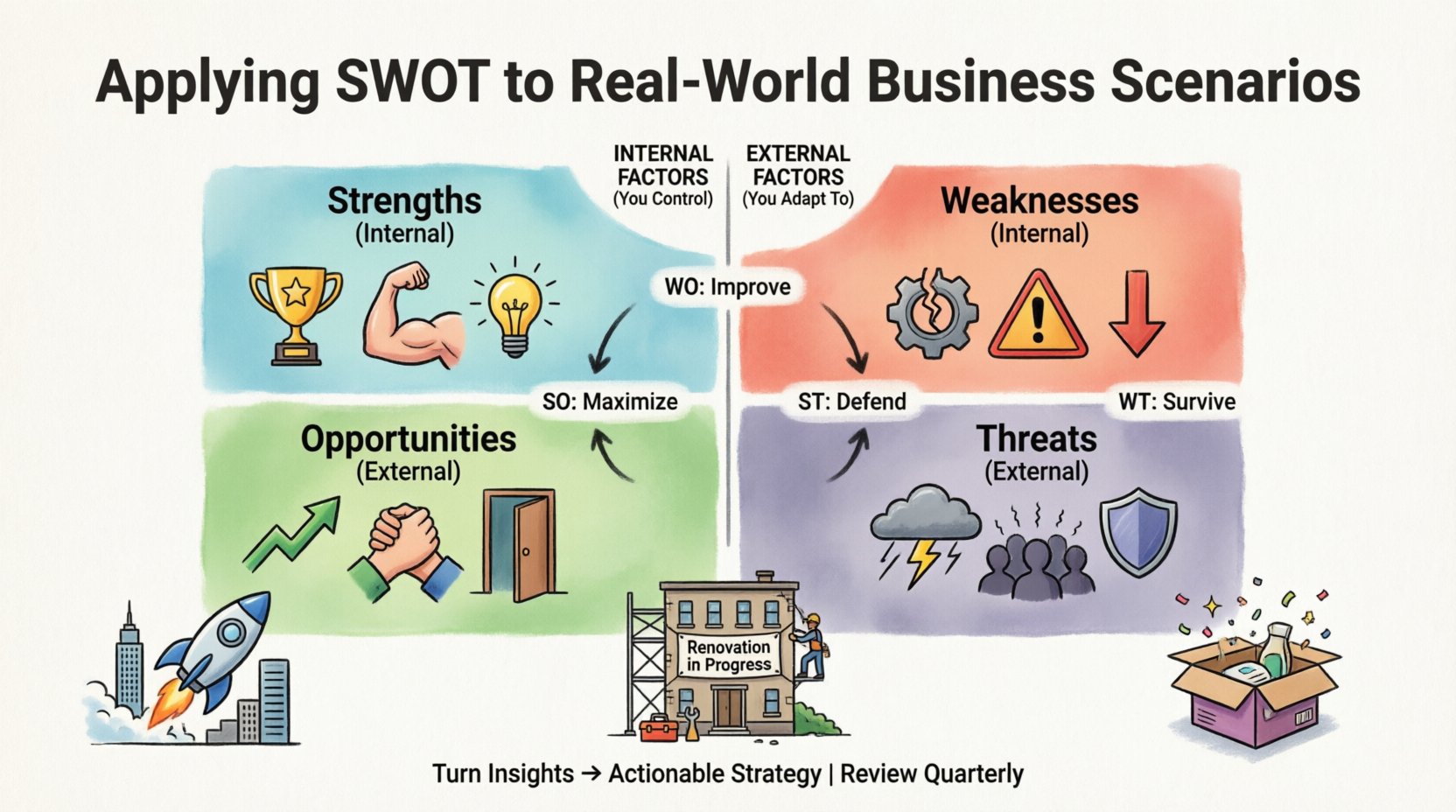
To apply this framework effectively, one must define each quadrant clearly. The distinction between internal and external factors is critical. Internal factors are under the control of the organization. External factors exist outside the organization and cannot be controlled directly, only responded to.
1. Strengths (Internal)
- Attributes that give an advantage over others.
- Resources, capabilities, or assets that are unique.
- Examples: Proprietary technology, strong brand reputation, skilled workforce.
2. Weaknesses (Internal)
- Attributes that place the organization at a disadvantage.
- Areas where resources are lacking or processes are inefficient.
- Examples: High debt levels, outdated infrastructure, poor location.
3. Opportunities (External)
- Chances to improve performance or gain advantage.
- Trends in the market or industry shifts.
- Examples: New regulations, emerging technologies, competitor failure.
4. Threats (External)
- Obstacles that could cause trouble for business performance.
- Competitive actions or economic changes.
- Examples: Changing consumer preferences, new competitors, supply chain disruptions.
🔄 Internal vs. External Factors
Visualizing the difference between what you control and what you must adapt to helps clarify the analysis. The table below outlines the fundamental distinctions.
| Factor Type | Control Level | Focus Area | Examples |
|---|---|---|---|
| Strengths | Internal | Capabilities | Expertise, Patents, Cash Flow |
| Weaknesses | Internal | Deficiencies | Skills Gap, Debt, Technology |
| Opportunities | External | Market Trends | Market Growth, Partnerships, Tech |
| Threats | External | Risks | Regulations, Competitors, Economy |
🚀 Scenario 1: The New Market Entrant
Consider a startup entering a saturated market with established competitors. The goal is to find a foothold and establish credibility without depleting resources too quickly.
Strengths
- Agility: Ability to pivot strategies faster than larger incumbents.
- Innovation: Modern technology stack that offers better user experience.
- Niche Focus: Targeting a specific segment ignored by major players.
Weaknesses
- Brand Recognition: Low awareness among potential customers.
- Budget Constraints: Limited marketing spend compared to competitors.
- Team Size: Small team requiring employees to wear many hats.
Opportunities
- Emerging Channels: Leveraging new social platforms where competitors are absent.
- Partnerships: Collaborating with influencers or complementary services.
- Customer Gaps: Addressing poor customer service complaints of larger rivals.
Threats
- Price Wars: Established players lowering prices to drive out new entrants.
- Regulatory Changes: New laws affecting the specific niche.
- Capital Drying Up: Investor sentiment shifting away from startups.
Actionable Strategy for Entrants
- Leverage agility to test pricing models rapidly.
- Focus marketing on the niche segment rather than the general market.
- Build partnerships to borrow credibility from established entities.
- Monitor competitor pricing closely to avoid direct confrontation initially.
📉 Scenario 2: The Established Company Facing Decline
Now consider a legacy organization experiencing stagnation. Revenue is flat, and market share is eroding. The objective is to revitalize the business model.
Strengths
- Customer Base: A loyal existing client base with high lifetime value.
- Resources: Strong cash reserves and access to capital.
- Experience: Deep institutional knowledge and industry relationships.
Weaknesses
- Culture: Resistance to change among long-term staff.
- Technology: Reliance on legacy systems that are costly to maintain.
- Decision Speed: Bureaucratic processes slowing down execution.
Opportunities
- Digital Transformation: Modernizing operations to reduce costs.
- New Revenue Streams: Monetizing data or services previously unused.
- Acquisition: Buying smaller innovative firms to inject new ideas.
Threats
- Disruptors: New agile companies capturing the younger demographic.
- Economic Downturn: Customers cutting budgets due to recession.
- Talent Drain: Skilled workers leaving for more modern environments.
Actionable Strategy for Decline
- Conduct a full audit of legacy systems to identify cost centers.
- Create internal innovation teams empowered to bypass bureaucracy.
- Invest in training to upskill the workforce for new technologies.
- Engage directly with the loyal customer base to understand evolving needs.
🆕 Scenario 3: The Product Launch Strategy
This scenario focuses on a specific initiative rather than the whole company. A department is preparing to release a new service line.
Strengths
- R&D Capabilities: Proven ability to develop complex solutions.
- Channel Access: Existing sales force ready to promote the item.
- Quality Standards: High reputation for reliability and support.
Weaknesses
- Timeline Pressure: Tight deadlines may compromise testing.
- Budget Allocation: Marketing budget might be split across other projects.
- Feature Set: Some features may be less polished than competitors.
Opportunities
- Seasonal Trends: Launching during peak buying periods.
- Media Coverage: Press interest in innovation within the sector.
- Feedback Loops: Using beta testers to refine the product before full release.
Threats
- Competitor Release: A rival launching a similar product simultaneously.
- Supply Chain: Delays in manufacturing or component availability.
- Market Saturation: Too many similar products flooding the shelf.
Actionable Strategy for Launch
- Align marketing timelines with the product development schedule.
- Prepare contingency plans for supply chain disruptions.
- Highlight unique selling propositions that differentiate from competitors.
- Establish clear metrics for success to evaluate the launch post-event.
🛠️ Turning Insights into Actionable Steps
Identifying factors is only the first step. The real value comes from connecting them to create strategies. This process involves cross-referencing the quadrants to find synergies and defenses.
SO Strategies (Maximize)
- Use strengths to take advantage of opportunities.
- Example: Use strong cash reserves to acquire a competitor during a market downturn.
WO Strategies (Improve)
- Overcome weaknesses by taking advantage of opportunities.
- Example: Partner with a tech firm to fix outdated infrastructure.
ST Strategies (Defend)
- Use strengths to avoid threats.
- Example: Use brand loyalty to retain customers when a price war begins.
WT Strategies (Survive)
- Minimize weaknesses and avoid threats.
- Example: Cut non-essential costs to survive a period of economic recession.
⚠️ Common Mistakes to Avoid
Even with a solid framework, execution can go wrong. Recognizing these pitfalls helps maintain the integrity of the analysis.
- Being Too Vague: Listing “good service” as a strength is not specific enough. Define what makes it good.
- Confusing Internal and External: Do not list a competitor’s weakness as your strength. That is an opportunity.
- Ignoring Data: Relying on gut feelings rather than market research leads to bias.
- One-Time Exercise: Treating the analysis as a single event rather than an ongoing process.
- Ignoring Threats: Focusing only on positives blinds the organization to risks.
🗓️ Integrating SWOT into Long-Term Planning
For this tool to remain relevant, it must be integrated into regular planning cycles. It should not sit in a report that is filed away. Regular reviews ensure that the organization adapts to changing conditions.
- Quarterly Reviews: Re-evaluate external factors quarterly to catch market shifts early.
- Annual Strategy: Use the annual review to set major goals based on the SWOT findings.
- Departmental Alignment: Ensure each department understands how their SWOT contributes to the whole.
- Resource Allocation: Direct budget and talent toward the SO and ST strategies.
By maintaining a living document of these factors, leadership can react proactively. This approach reduces the shock of unexpected market changes. It also provides a clear rationale for strategic decisions when communicating with stakeholders.
Business environments are dynamic. What constitutes a strength today may become a weakness tomorrow if technology shifts. Therefore, continuous monitoring is essential. The goal is not perfection, but clarity. Clarity allows for decisive action.
When teams understand the landscape, they can prioritize tasks that matter most. This alignment reduces wasted effort on activities that do not support the core strategy. It creates a culture of informed decision-making rather than reactive guessing.
Ultimately, the framework serves as a foundation for resilience. It helps organizations navigate uncertainty with a structured mindset. By applying these principles to real-world scenarios, businesses can build a path toward sustainable growth and competitive advantage.