
Enterprise Architecture (EA) is often misunderstood as mere diagramming or IT oversight. In reality, it is the strategic glue binding business objectives with technology capabilities. A structured approach ensures alignment, reduces redundancy, and drives sustainable growth. Without a clear framework, organizations risk fragmented systems, wasted investment, and missed opportunities.
This guide provides a granular, actionable checklist for managing EA projects. It focuses on process, governance, and alignment rather than specific tools. Whether you are initiating a transformation or refining an existing framework, these steps provide a roadmap for success.
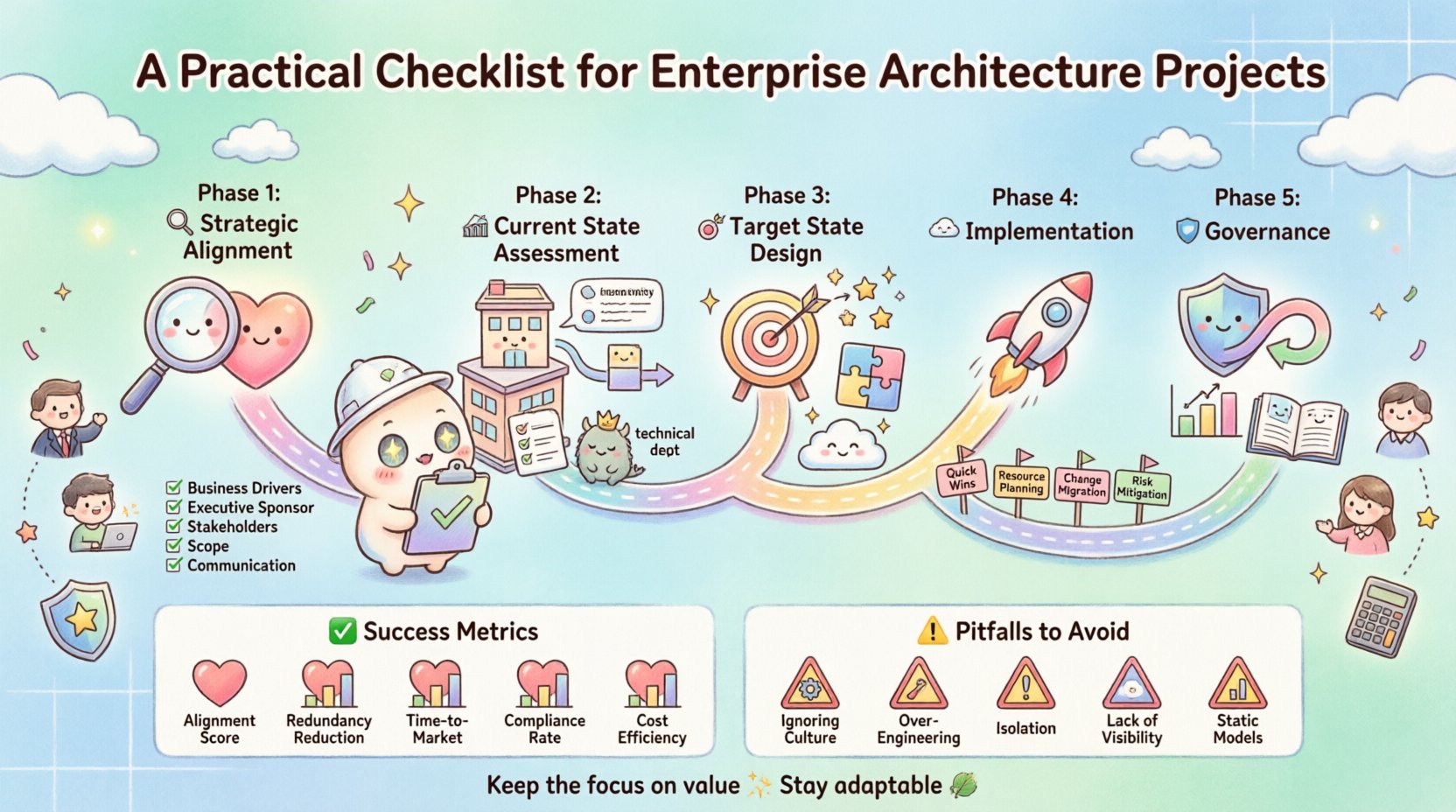
🔍 Phase 1: Strategic Alignment and Initiation
The foundation of any successful EA project lies in understanding the business context. Before drawing a single line or defining a technology stack, you must establish the why and the scope.
- Define Business Drivers: Identify the primary motivations. Is it cost reduction, regulatory compliance, digital transformation, or merger integration? Document these clearly.
- Secure Executive Sponsorship: EA requires authority. Ensure a C-level sponsor is actively engaged to resolve cross-departmental conflicts.
- Identify Stakeholders: Map out who matters. This includes business unit leaders, IT management, security officers, and compliance teams.
- Set Scope Boundaries: Define what is in scope and, more importantly, what is out of scope. Uncontrolled expansion leads to project failure.
- Establish Communication Channels: Determine how progress will be reported and how feedback will be gathered.
If this phase is rushed, the subsequent architecture will lack relevance. The business must feel ownership of the outcome.
🏛️ Phase 2: Current State Assessment
You cannot plan a destination without knowing your starting point. This phase involves a deep dive into the existing landscape.
- Inventory Applications: Catalog all software and systems currently in use. Note ownership, cost, and lifecycle status.
- Map Data Flows: Understand how information moves between systems. Identify bottlenecks and redundancies.
- Assess Technical Debt: Evaluate legacy systems. Determine which components are stable and which pose high risk.
- Review Policies and Standards: Analyze existing governance documents. Are they being followed? Are they outdated?
- Interview Key Personnel: Talk to the people who use the systems daily. They often know the workarounds and pain points that documentation misses.
This audit should be honest. Hiding technical debt will only compound problems later. The goal is a realistic view of the operational reality.
🎯 Phase 3: Target State Design
Once the current reality is understood, you can design the future. This is the creative and strategic core of the project.
- Define Architecture Principles: Establish non-negotiable rules. Examples include “Data must be accessible” or “Cloud-first for new apps”.
- Develop Capability Maps: Align business capabilities with the functions they support. This ensures technology serves the business model.
- Create Application Blueprints: Design the logical structure of the application portfolio. Identify candidates for retirement, consolidation, or replacement.
- Design Data Architecture: Plan for data governance, security, and interoperability across the new landscape.
- Define Integration Patterns: Specify how systems will communicate. Prefer standard APIs over point-to-point connections.
Ensure the target state is achievable. An idealized vision that ignores budget or skill constraints will fail to materialize.
🚀 Phase 4: Implementation and Transition
A plan is useless without execution. This phase bridges the gap between design and reality.
- Develop a Roadmap: Sequence initiatives logically. Prioritize quick wins to build momentum alongside long-term strategic projects.
- Resource Planning: Assign teams and budgets to specific initiatives. Ensure skills match the required tasks.
- Change Management: Prepare the organization for new processes. Training and communication are vital.
- Migration Strategies: Plan how to move from the current state to the target state. Consider parallel runs or phased rollouts.
- Risk Mitigation: Identify potential blockers. Create contingency plans for critical failures.
Agility is key here. The roadmap should be reviewed regularly to accommodate shifting business needs.
🛡️ Phase 5: Governance and Monitoring
Architecture is not a one-time project. It is an ongoing discipline. Governance ensures the architecture remains aligned over time.
- Establish Architecture Review Boards: Create a formal body to evaluate new projects against the defined principles.
- Define Metrics: Measure success. Track compliance rates, system availability, and cost savings.
- Continuous Improvement: Regularly update the architecture models based on lessons learned and market changes.
- Documentation Maintenance: Keep artifacts up to date. Outdated diagrams lose credibility quickly.
- Audit Compliance: Periodically review projects to ensure they adhere to the agreed-upon standards.
📊 Key Deliverables by Phase
Understanding what to produce at each stage helps manage expectations and track progress.
| Phase | Primary Deliverable | Key Audience |
|---|---|---|
| Initiation | Charter & Scope Document | Steering Committee |
| Assessment | Current State Report | IT Leadership |
| Design | Target Architecture Models | Architects & Engineers |
| Implementation | Transition Roadmap | Project Managers |
| Governance | Standards & Compliance Reports | Compliance & Audit |
⚠️ Common Pitfalls to Avoid
Even with a checklist, pitfalls exist. Awareness of these common traps can prevent costly mistakes.
- Ignoring Culture: Technology changes are often people changes. Resistance to new ways of working can stall projects.
- Over-Engineering: Trying to design for every hypothetical scenario leads to paralysis. Focus on the most likely paths.
- Isolation: EA teams working in silos fail to deliver value. Embed architects within business units.
- Lack of Visibility: If stakeholders cannot see the progress or the value, support will wane.
- Static Models: Architecture documents that are never updated become irrelevant noise.
📈 Measuring Success
How do you know the EA project is working? Quantitative and qualitative metrics provide the answer.
- Alignment Score: Percentage of IT projects that align with strategic goals.
- Redundancy Reduction: Number of duplicate applications retired.
- Time-to-Market: Reduction in the time required to deploy new solutions.
- Compliance Rate: Percentage of projects passing architecture review without major deviations.
- Cost Efficiency: Reduction in total cost of ownership (TCO) for the IT portfolio.
🤝 Stakeholder Engagement Strategies
Engagement is the lifeblood of Enterprise Architecture. Different stakeholders require different approaches.
- For Business Leaders: Focus on value, risk reduction, and competitive advantage. Avoid technical jargon.
- For Developers: Focus on standards, reusable components, and tools that make their jobs easier.
- For Security Teams: Focus on risk mitigation, data protection, and compliance requirements.
- For Finance: Focus on cost savings, investment ROI, and budget predictability.
🔄 Iterative Improvement
Enterprise Architecture is not a destination. It is a continuous journey of adaptation. The checklist above is a starting point. As the organization evolves, the architecture must evolve with it.
- Regular Reviews: Schedule quarterly or bi-annual reviews of the architecture landscape.
- Feedback Loops: Create mechanisms for stakeholders to report issues or suggest improvements.
- Market Monitoring: Keep an eye on emerging technologies and industry trends that could impact the strategy.
- Knowledge Sharing: Maintain a repository of best practices and lessons learned.
By following this structured approach, organizations can navigate the complexities of transformation with confidence. The goal is not perfection, but resilience and alignment. With a solid checklist and disciplined execution, EA becomes a strategic asset rather than a bureaucratic hurdle.
Remember, the most successful architecture projects are those that solve real business problems while enabling future growth. Keep the focus on value, maintain open communication, and stay adaptable.