
Effective collaboration between the Business Analyst (BA) and the Product Owner (PO) is the backbone of a high-performing Scrum team. While the Scrum Guide defines specific roles, the reality of software development often blurs the lines between requirements engineering and product strategy. This guide explores how these two critical roles can work together seamlessly to deliver value without stepping on each other’s toes.
When the BA and PO align, the team receives clear direction, reduced rework, and a product that truly meets stakeholder needs. Misalignment, however, leads to confusion, missed deadlines, and frustrated teams. This article details the mechanics of this partnership, from shared goals to conflict resolution.
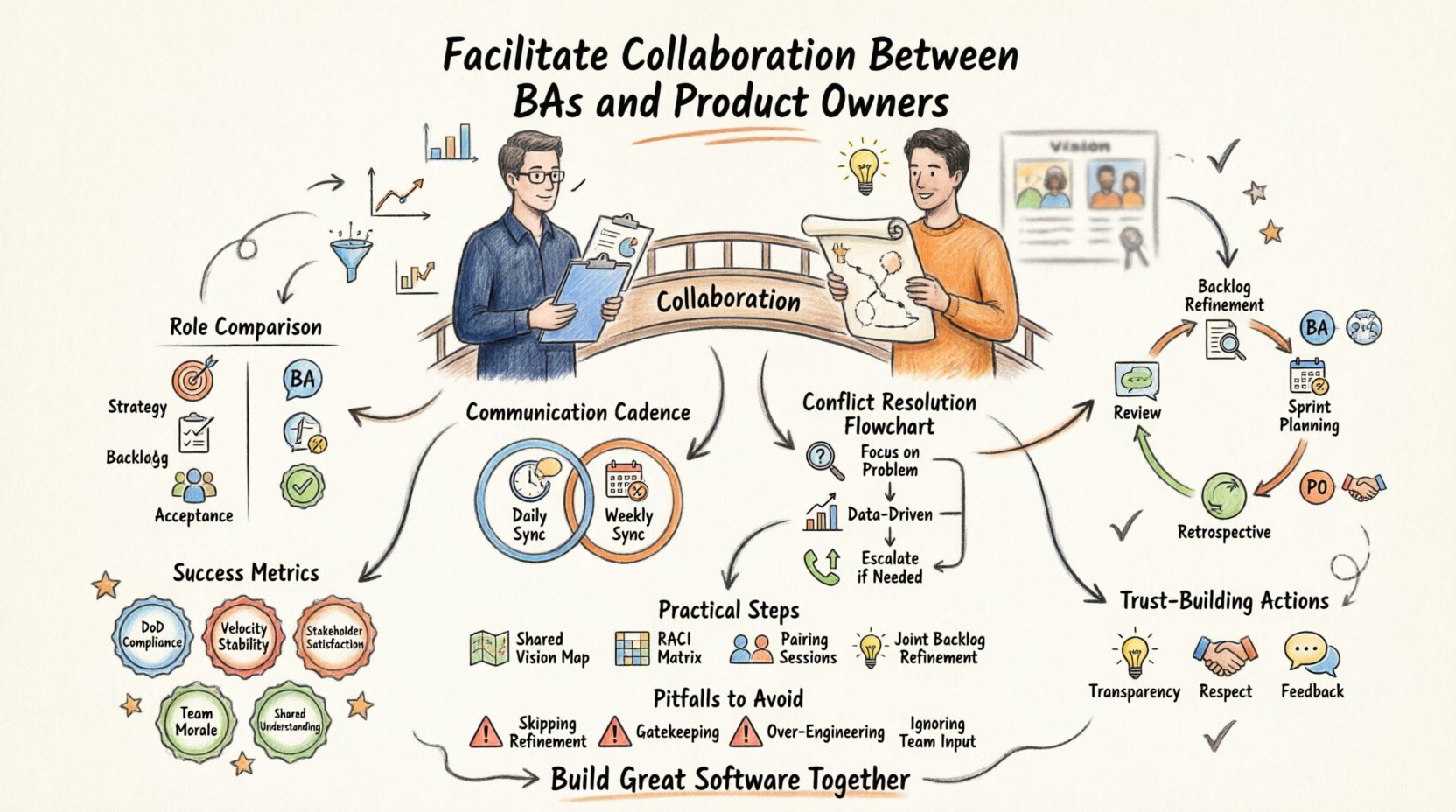
👔 Understanding Distinct Roles and Responsibilities
Before collaboration can happen, both parties must understand where their boundaries lie. The Product Owner is accountable for maximizing the value of the product resulting from the work of the Scrum Team. They manage the Product Backlog. The Business Analyst, often acting as a support role within the Scrum Team, focuses on eliciting, analyzing, and documenting requirements to ensure the development team understands the work.
Here is a breakdown of where their focus typically diverges and converges:
| Area | Product Owner Focus | Business Analyst Focus |
|---|---|---|
| Strategy | Defines the vision, mission, and roadmap. | Analyzes market data and user needs to support the vision. |
| Backlog | Owns the Product Backlog; orders items by value. | Refines items; ensures clarity and feasibility. |
| Stakeholders | Primary point of contact for business value. | Translates stakeholder needs into technical requirements. |
| Acceptance | Defines acceptance criteria. | Validates requirements against acceptance criteria. |
It is important to note that in some organizations, the BA acts as a proxy for the PO, while in others, they are distinct individuals. Regardless of the title, the collaboration remains vital.
📍 Shared Goals and Vision Alignment
Collaboration thrives when both roles share a unified purpose. The BA and PO must agree on the “Why” before discussing the “What”. Without a shared vision, the BA might document features that do not align with the strategic value the PO is trying to achieve.
Key Alignment Practices
- Regular Vision Workshops: Schedule dedicated time to review the product vision. Ensure the BA understands the long-term goals, not just the current sprint.
- Stakeholder Mapping: Jointly identify key stakeholders. The PO manages the relationship, while the BA manages the information flow from those stakeholders.
- Value Definition: Agree on how value is measured. Is it revenue, user engagement, or operational efficiency? Both roles need to know the metric.
📅 Ceremonies and Interaction Points
Scrum ceremonies provide structured opportunities for the BA and PO to synchronize. These are not just meetings for the team; they are critical checkpoints for the BA-PO partnership.
1. Product Backlog Refinement
This is the most critical collaboration point. The PO brings the “what” and the “why”, while the BA brings the “how” and the “details”.
- PO Input: Prioritizes the items based on business value and market timing.
- BA Input: Breaks down items into user stories, defines edge cases, and ensures technical feasibility.
- Outcome: A refined backlog where stories are clear enough for the team to estimate.
2. Sprint Planning
During planning, the PO explains the goal of the sprint. The BA supports the team by clarifying requirements that were not fully understood during refinement. If the BA is present, they should facilitate discussions about acceptance criteria.
3. Sprint Review
This is where value is demonstrated. The PO presents the increment to stakeholders. The BA assists by explaining how specific requirements were met and addressing any gaps in the delivered functionality.
4. Sprint Retrospective
Both roles should reflect on their working relationship. Did the PO provide enough context? Did the BA document too late? Use this time to improve the process.
📄 Requirements Lifecycle and Documentation
In Scrum, documentation should be just enough to support the work. The BA and PO must agree on the level of detail required. Over-documentation slows the team down; under-documentation causes confusion.
Collaborative Documentation Strategies
- Acceptance Criteria: The PO should define the “definition of done” for value. The BA should ensure the technical acceptance criteria are clear.
- User Stories: Collaborate on the format. Ensure the “As a… I want… So that…” structure captures both business intent and technical need.
- Visuals: Use wireframes, flowcharts, or diagrams. These reduce ambiguity better than text alone. The BA often creates these; the PO validates them against the vision.
💬 Communication Cadence and Channels
Async and sync communication must be balanced. Relying solely on email or tickets leads to information silos. Regular check-ins are essential.
Recommended Cadence
- Daily Stand-up: The BA and PO should attend if they are part of the Scrum Team. If the BA is external, they should sync with the PO daily.
- Weekly Sync: A dedicated 30-minute slot for BA and PO to review upcoming backlogs and potential roadblocks.
- Instant Messaging: Use chat tools for quick clarifications. Avoid sending long requirement documents here.
🛡️ Conflict Resolution and Feedback Loops
Disagreements will happen. The PO might want to cut scope to meet a deadline, while the BA might insist on technical debt repayment. The BA might feel the PO is changing requirements too frequently, while the PO might feel the BA is blocking progress with excessive detail.
Constructive Conflict Management
- Focus on the Problem, Not the Person: Discuss the requirement, not the intent of the other role.
- Data-Driven Decisions: Use metrics to resolve disputes. If the PO wants to cut scope, show the impact on quality. If the BA wants more time, show the risk of bugs.
- Escalation Path: If a deadlock occurs, involve the Scrum Master to facilitate a solution, but try to resolve it between the two roles first.
📈 Measuring Success of the Partnership
How do you know if the collaboration is working? Look for indicators in team performance and product quality.
- Definition of Done (DoD) Compliance: Are stories being accepted without rework due to unclear requirements?
- Sprint Velocity Stability: Does the team predict their capacity accurately? Unclear requirements often cause velocity to drop.
- Stakeholder Satisfaction: Are the delivered features meeting business needs?
- Team Morale: Is the team frustrated by constant changes or confusion? A healthy BA-PO relationship reduces friction.
🤝 Building Trust and Psychological Safety
Trust is the currency of collaboration. The PO must trust the BA to represent the stakeholders accurately. The BA must trust the PO to protect the team from scope creep.
Trust Building Actions
- Transparency: Share all information. Do not hide stakeholder feedback from the BA.
- Respect Expertise: The PO is the expert on the business; the BA is the expert on the requirements. Respect these domains.
- Feedback Culture: Give positive feedback publicly. Address issues privately.
🛠️ Practical Steps to Improve Collaboration Today
If you are reading this to improve your current workflow, start with these actionable steps:
- Map the Flow: Draw a diagram of how information moves from stakeholder to PO to BA to Team. Identify bottlenecks.
- Create a RACI Chart: Define who is Responsible, Accountable, Consulted, and Informed for backlog items.
- Pair Refinement: Have the BA and PO refine stories together. This models the behavior for the rest of the team.
- Review the Vision: Revisit the product vision statement monthly to ensure alignment hasn’t drifted.
🐛 Common Pitfalls to Avoid
Avoid these common mistakes that damage the BA-PO relationship:
- Skipping Refinement: If the PO dumps stories on the team without BA input, quality suffers.
- Gatekeeping: If the PO does not share stakeholder context, the BA cannot write good requirements.
- Over-Engineering: If the BA writes specs that are too complex, the PO loses sight of the business value.
- Ignoring the Team: Both roles must involve the Development Team. The BA and PO do not work in a vacuum.
📆 Final Thoughts
Facilitating collaboration between Business Analysts and Product Owners is an ongoing process. It requires intention, discipline, and mutual respect. When these two roles function as a single unit of strategic and tactical clarity, the Scrum team can focus on what they do best: building great software. By following the practices outlined in this guide, you can reduce friction, improve delivery speed, and create a product that delivers real value to your users.