
Enterprise Architecture (EA) often suffers from a reputation problem. Too frequently, it is viewed as an exercise in documentation, bureaucracy, or an ivory tower exercise disconnected from the daily realities of business operations. When teams perceive architecture as a gatekeeper rather than an enabler, adoption stalls, and value evaporates. The solution lies not in better tools or stricter policies, but in a fundamental shift of mindset. This guide explores how to embed architectural thinking into the DNA of your organization, ensuring that structure supports speed rather than hindering it.
Building a culture of architecture requires more than a framework; it demands shared values, consistent communication, and visible leadership commitment. It is about moving from a phase where architecture is a separate function to one where it is a shared responsibility. This transition takes time, patience, and a clear strategy for engagement.
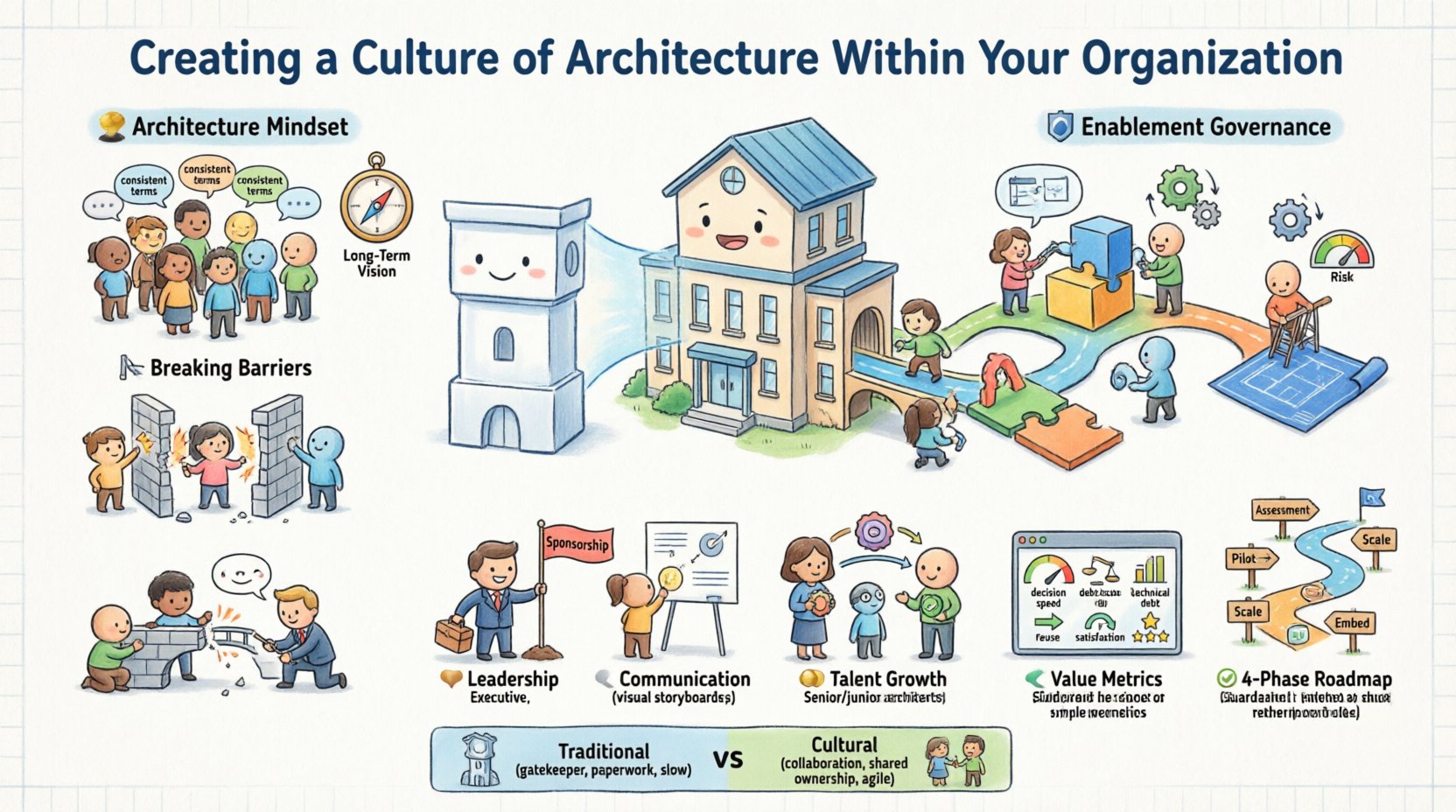
Defining the Architecture Mindset 🧠
What distinguishes a strong architectural culture from a weak one? It is not the volume of diagrams produced or the complexity of the models created. Instead, it is characterized by how decisions are made across the organization. In a mature environment, architectural principles are not rules enforced by a police force; they are guidelines that help teams make better, faster decisions independently.
- Shared Language: Teams use consistent terminology to describe capabilities, data, and systems, reducing friction and misunderstanding.
- Decision-Making Patterns: Leaders and architects establish patterns that guide investment and development without micromanaging every line of code.
- Long-Term Vision: Short-term wins are balanced against long-term sustainability, ensuring that quick fixes do not create technical debt that cripples future growth.
- Collaboration over Compliance: The focus shifts from checking boxes to solving problems together, involving architects early in the planning phase.
When this mindset takes hold, architecture becomes invisible. It is present in the stability of the platform, the clarity of the data, and the agility of the delivery teams. It is the water in which the fish swim, rather than a wall they must climb over.
Identifying Barriers to Adoption 🚧
Before building a new culture, you must understand what is holding the old one back. Common obstacles prevent architectural initiatives from gaining traction. Recognizing these allows you to address them directly.
- Silos and Fragmentation: Departments often operate in isolation, building duplicate capabilities or incompatible systems. This fragmentation makes a unified architectural view difficult to achieve.
- Lack of Trust: If business units view the architecture team as a blocker, they will bypass them. Trust is built by delivering value early and listening to concerns.
- Perceived Bureaucracy: If the process for getting approval is slow and opaque, teams will avoid it. Governance must be lightweight and transparent.
- Resource Constraints: Teams often lack the time or skills to engage with architectural standards. Support and training are essential to bridge this gap.
- Conflicting Priorities: When business goals clash with technical standards, the business wins unless the architecture team can articulate the risk clearly.
Addressing these barriers requires empathy. You must understand the pressures your stakeholders face and position architecture as a partner in managing those pressures.
Leadership and Sponsorship 👥
Top-down support is critical for cultural change. Without active sponsorship from executive leadership, architectural initiatives often lack the authority to enforce standards or allocate resources. However, sponsorship is more than just signing off on a budget; it is about consistent messaging and behavior.
Key Leadership Actions
- Model the Behavior: Leaders must demonstrate architectural thinking in their own decisions. They should ask about long-term implications and alignment with strategy during planning sessions.
- Allocate Resources: Dedicate budget and personnel to architecture teams. This signals that the function is valued and essential to the business.
- Remove Obstacles: Actively intervene when bureaucratic processes slow down delivery. Ensure governance is efficient.
- Recognize Success: Highlight projects that successfully integrated architectural principles. Use these stories to reinforce the desired behavior.
When leadership champions the cause, it cascades down through the organization. Middle management is often the pivot point for this change, as they translate high-level strategy into team-level execution.
Communication Strategies 🗣️
One of the most significant hurdles in enterprise architecture is jargon. Complex models and technical terminology can alienate business stakeholders. Effective communication demystifies these concepts and translates them into business value.
Principles of Clear Communication
- Speak Business First: Start with business outcomes. Explain how architecture reduces cost, mitigates risk, or enables speed, rather than starting with technology stacks.
- Visual Storytelling: Use diagrams and visualizations to make complex relationships understandable. A well-designed map is worth a thousand words of documentation.
- Regular Forums: Establish recurring meetings or communities where architecture is discussed. These can be open forums for feedback or specific working groups for deep dives.
- Feedback Loops: Create channels for teams to report issues or suggest improvements. Two-way communication builds trust and improves the architecture over time.
Documentation should be living, not static. Instead of thick reports that gather dust, use accessible wikis, dashboards, or collaborative platforms that teams can update and reference easily.
Building Capabilities and Talent 👩💻
A culture of architecture requires people who understand both the business context and the technical landscape. Investing in talent development ensures that the organization has the skills to maintain and evolve its architectural foundation.
Development Areas
- Upskilling Existing Staff: Offer training programs that help developers and business analysts understand architectural principles. This creates a broader base of architectural awareness.
- Career Pathways: Define clear career paths for architects. Show that there is a future in this function, whether in technical leadership or business strategy.
- Communities of Practice: Encourage cross-functional groups where architects and engineers share knowledge. This fosters collaboration and innovation.
- Mentorship Programs: Pair senior architects with junior staff to transfer knowledge and guide professional growth.
By investing in people, you create a sustainable ecosystem where architectural thinking becomes a natural part of the workflow rather than an external requirement.
Governance that Enables 🛡️
Governance is often viewed as a necessary evil. However, in a healthy culture, governance acts as a set of guardrails that keep teams safe while allowing them to drive. The goal is to enable innovation, not restrict it.
Effective Governance Models
- Lightweight Processes: Keep approval processes fast. If a change requires a month of review, it is too slow for agile delivery.
- Automated Checks: Where possible, use automation to enforce standards. This reduces the need for manual review and speeds up the process.
- Exception Handling: Allow for exceptions when there is a valid business case. Document these exceptions to learn and update standards if necessary.
- Focus on Risk: Prioritize governance on areas with high risk, such as security, compliance, and data integrity. Lower-risk areas can have more flexibility.
The right governance model adapts to the maturity of the organization. As teams become more proficient, the governance can evolve from strict oversight to supportive advisory.
Measuring Impact 📊
You cannot improve what you do not measure. However, traditional metrics like “number of diagrams created” or “hours spent modeling” are often vanity metrics. They do not reflect the actual value delivered by the architecture function.
Value-Driven Metrics
| Metric Category | Example Indicator | Why It Matters |
|---|---|---|
| Decision Speed | Time from proposal to approval | Indicates if governance is enabling or blocking. |
| Technical Debt | Ratio of legacy to new systems | Shows long-term sustainability and risk. |
| Reuse Rate | Percentage of services reused | Measures efficiency and standardization. |
| Stakeholder Satisfaction | Survey scores from business units | Gauges perception of value and support. |
| Incident Reduction | Frequency of architecture-related outages | Demonstrates stability and reliability. |
Regularly review these metrics with leadership and adjust the strategy based on the data. If decision speed is low, simplify the process. If technical debt is high, focus resources on remediation.
A Roadmap for Integration 🗺️
Implementing a cultural shift is a journey, not a destination. A phased approach allows for testing, learning, and adjustment. This roadmap outlines the typical progression from initial assessment to full integration.
Phase 1: Assessment and Alignment
- Conduct a survey to understand current maturity and pain points.
- Interview key stakeholders to gather insights on expectations.
- Define the vision and goals for the architectural culture.
- Secure executive sponsorship and budget approval.
Phase 2: Pilot and Proof of Value
- Select a high-visibility project to apply the new approach.
- Implement lightweight governance and communication channels.
- Document successes and challenges during the pilot.
- Gather feedback from the project team to refine processes.
Phase 3: Scaling and Standardization
- Roll out the approach to additional teams based on pilot learnings.
- Develop training materials and resources for broader adoption.
- Establish formal communities of practice and governance forums.
- Integrate architectural reviews into the standard delivery lifecycle.
Phase 4: Embedding and Optimization
- Shift focus from enforcement to continuous improvement.
- Automate governance checks and reporting.
- Continuously update standards based on industry trends.
- Measure impact and report value to leadership regularly.
Comparing Traditional vs. Cultural Approaches 🔄
Understanding the difference between a traditional architecture function and a cultural one helps clarify the shift required. The table below contrasts the two models.
| Aspect | Traditional Approach | Cultural Approach |
|---|---|---|
| Focus | Compliance and Documentation | Enablement and Value |
| Interaction | Gatekeeping at the end | Collaboration from the start |
| Responsibility | Architecture Team Only | Shared Across Organization |
| Tools | Heavy Modeling Tools | Accessible Knowledge Bases |
| Outcome | Approved Diagrams | Agile Delivery with Stability |
Transitioning from the left column to the right column requires patience and persistence. It involves changing habits that may have been in place for years. However, the payoff is an organization that is more resilient, adaptable, and efficient.
Final Thoughts on Sustainable Growth 🌱
The journey to a robust architectural culture is ongoing. Markets change, technologies evolve, and business strategies shift. The architecture function must remain flexible enough to adapt while maintaining the core principles that ensure stability.
Success is not measured by the absence of problems, but by the ability to solve them efficiently. When architecture is woven into the fabric of the organization, it becomes a strategic asset that drives innovation rather than a cost center that slows it down.
Start by engaging with your teams, listening to their challenges, and demonstrating how architectural thinking can help. Build trust through small wins, and let the value speak for itself. Over time, the culture will shift, and the organization will reap the benefits of a unified, forward-looking approach.