

Launching a large-scale digital transformation requires precision, speed, and a structured methodology. The IT Outsourcing Project Guide by Visual Paradigm is the ultimate AI-powered IT outsourcing tool designed to handle complex transitions like legacy system upgrades. Whether you are managing a multi-million dollar banking platform modernization or a specialized software integration, this professional application ensures you remain in control of every phase. Eliminate project risk and accelerate your timeline with a proven outsourcing framework that converts raw project data into actionable results instantly!
Quick Takeaways for Project Leaders
-
Automated Document Generation: Produce professional RFPs and final reports in seconds.
-
Risk Mitigation: Follow a structured 10-step workflow to avoid oversight.
-
AI-Driven Efficiency: Use advanced AI to generate comprehensive project data based on minimal input.
-
Data-Centric Decisions: Centralize vendor scores, technical stacks, and budget estimates.
-
Full Customization: Tailor every data table to meet unique regulatory or technical needs.
Accelerate Your Project with AI-Driven Generation
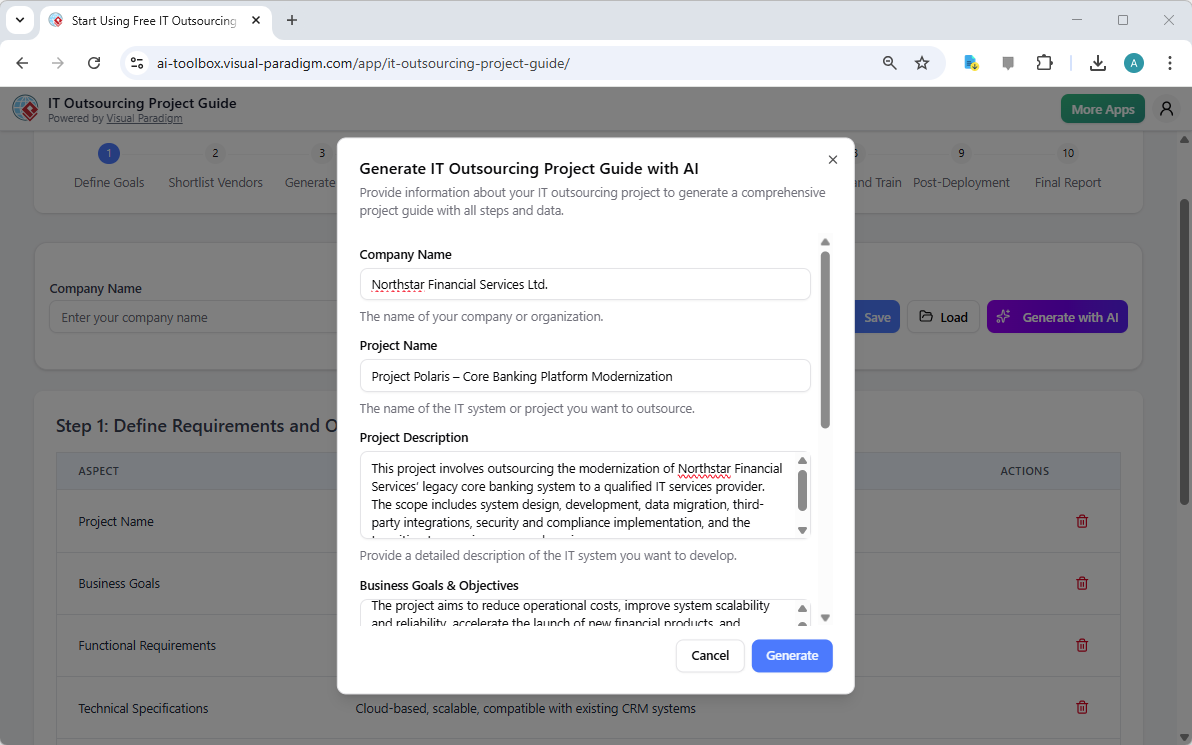
Modernizing a legacy system, such as a core banking platform, involves immense complexity. The process begins by providing high-level project details to the AI engine. In our example, “Project Polaris” for Northstar Financial Services Ltd. targets a cloud-native microservices architecture with a budget of up to $3.5 million. The AI-powered project planner processes these objectives to create a complete roadmap.
By inputting the project description, business goals, and technical requirements, the application builds a foundation for the entire 10-step journey. This eliminates the need for manual drafting during the initial discovery phase. You receive a structured starting point that aligns with industry standards for security and scalability.
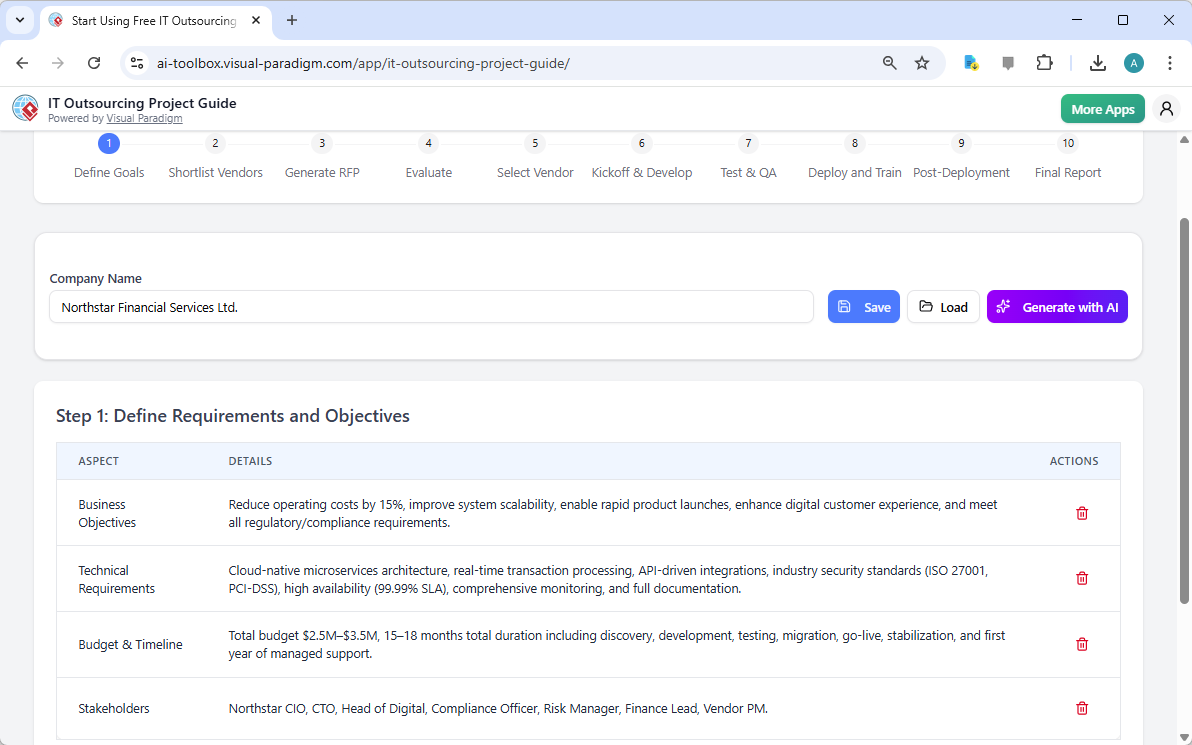
Step 1: Defining Precise Requirements and Objectives
Success starts with clarity. In Step 1, the IT Outsourcing Project Guide organizes your business objectives, technical specifications, and stakeholder lists into a clean, editable grid. This step ensures all critical success criteria, such as reducing operating costs by 15% or achieving 99.99% SLA uptime, are documented from the start.
The interface allows for in-place editing. You can modify budget ranges, refine timelines, or add specific compliance requirements like ISO 27001 or PCI-DSS. Having this information centralized creates a single source of truth for the entire procurement and development team.
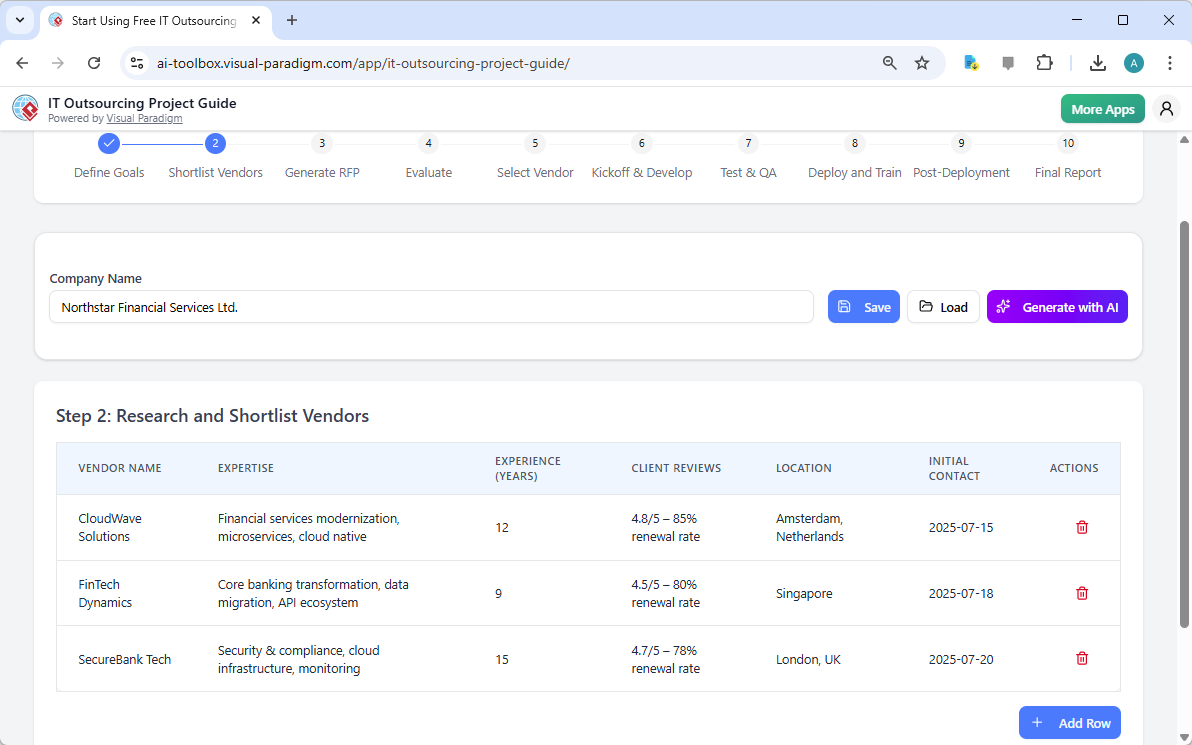
Step 2: Strategic Vendor Research and Shortlisting
Finding the right partner is critical for high-stakes IT projects. Step 2 provides a professional vendor management table to track potential service providers. You can document their specific expertise, years of experience, and client review scores. In the Project Polaris example, vendors like CloudWave Solutions and SecureBank Tech are evaluated based on their modernization and security capabilities.
This table enables a side-by-side comparison of initial contact dates and geographical locations. Organizing this data early prevents confusion during the bidding process. It ensures only qualified vendors move forward to the proposal stage.
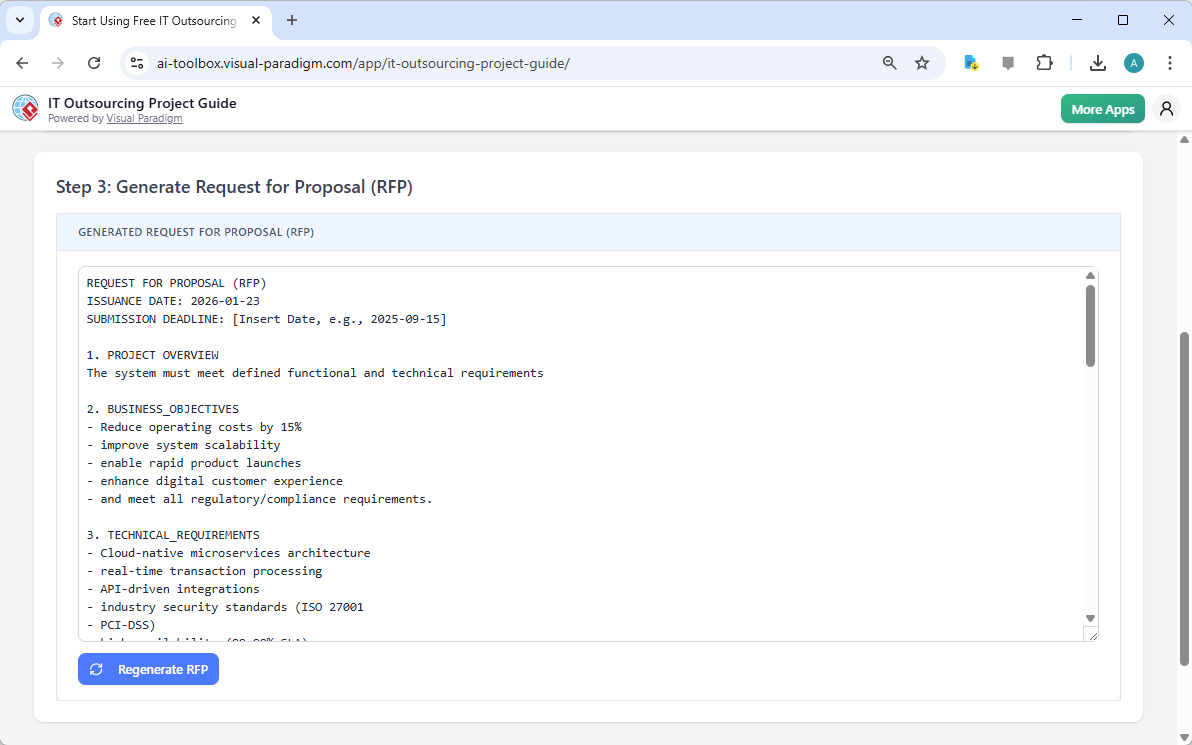
Step 3: Instant Request for Proposal (RFP) Generation
Drafting a comprehensive Request for Proposal often takes weeks. This online RFP maker automates the task by pulling data directly from your previous steps. The generated document includes the project overview, detailed business objectives, and technical requirements in a professional format ready for distribution.
The tool provides a “Regenerate RFP” function if your requirements change. You can also manually refine the text area to add specific submission deadlines or contact details. This feature significantly reduces administrative overhead and ensures potential vendors receive clear, consistent information.
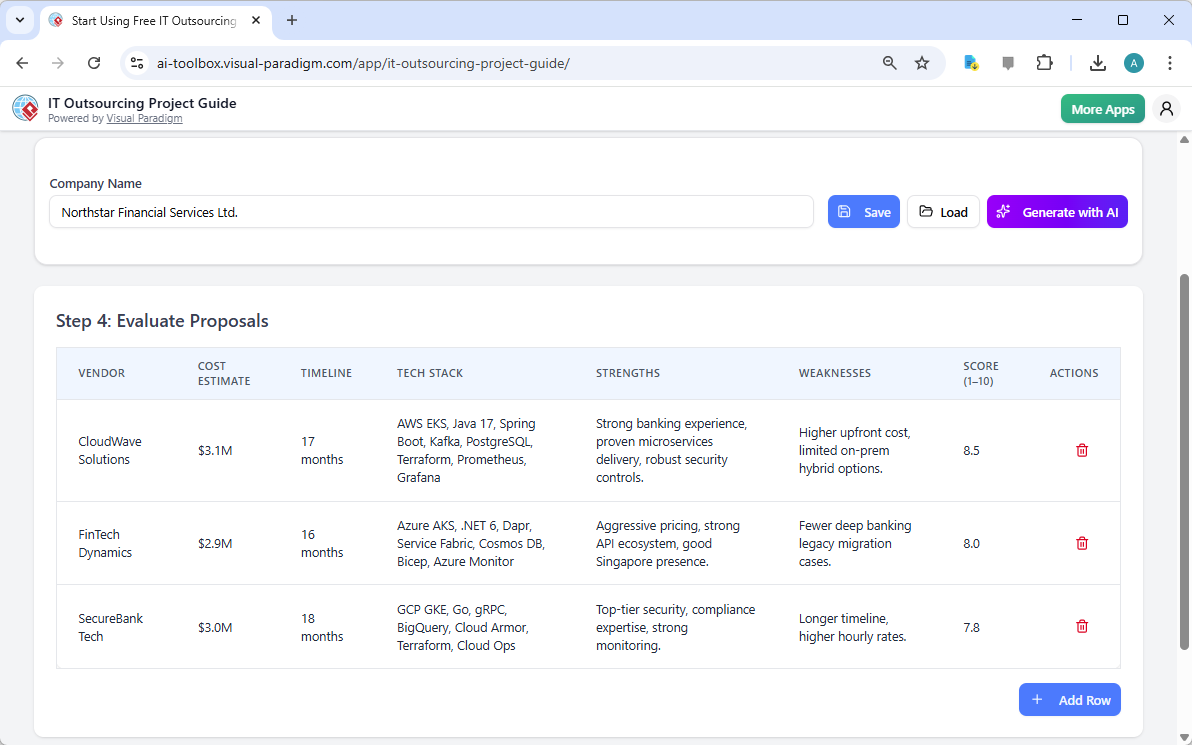
Step 4: Objective Proposal Evaluation
Once proposals arrive, you must evaluate them against your specific needs. Step 4 introduces a scoring system to analyze cost estimates, timelines, and technical stacks. This best-in-class evaluation tool allows you to list the strengths and weaknesses of each bidder, such as “strong microservices delivery” or “higher upfront cost.”
Assigning a numerical score (1-10) to each vendor simplifies complex decision-making. By quantifying qualitative data, your team can justify the final selection to stakeholders and executives. This data-driven approach minimizes bias and focuses on technical and financial viability.
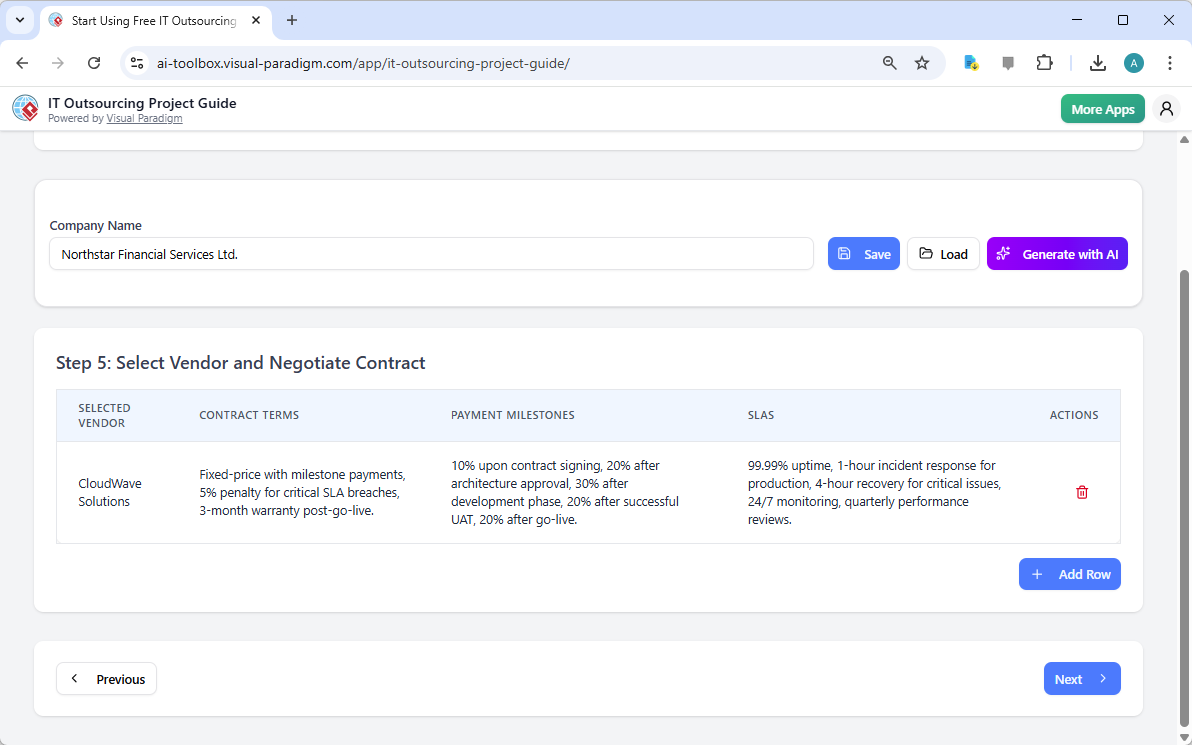
Step 5: Vendor Selection and Contract Finalization
After selecting the top-performing vendor, such as CloudWave Solutions, you must document the contractual terms. Step 5 focuses on Service Level Agreements (SLAs), payment milestones, and penalty clauses. This ensures the partnership is governed by clear expectations and financial accountability.
Defining payment milestones—such as 20% after architecture approval—links financial outlays to tangible project progress. This step is essential for maintaining control over the $2.5M – $3.5M budget allocated for the modernization initiative.
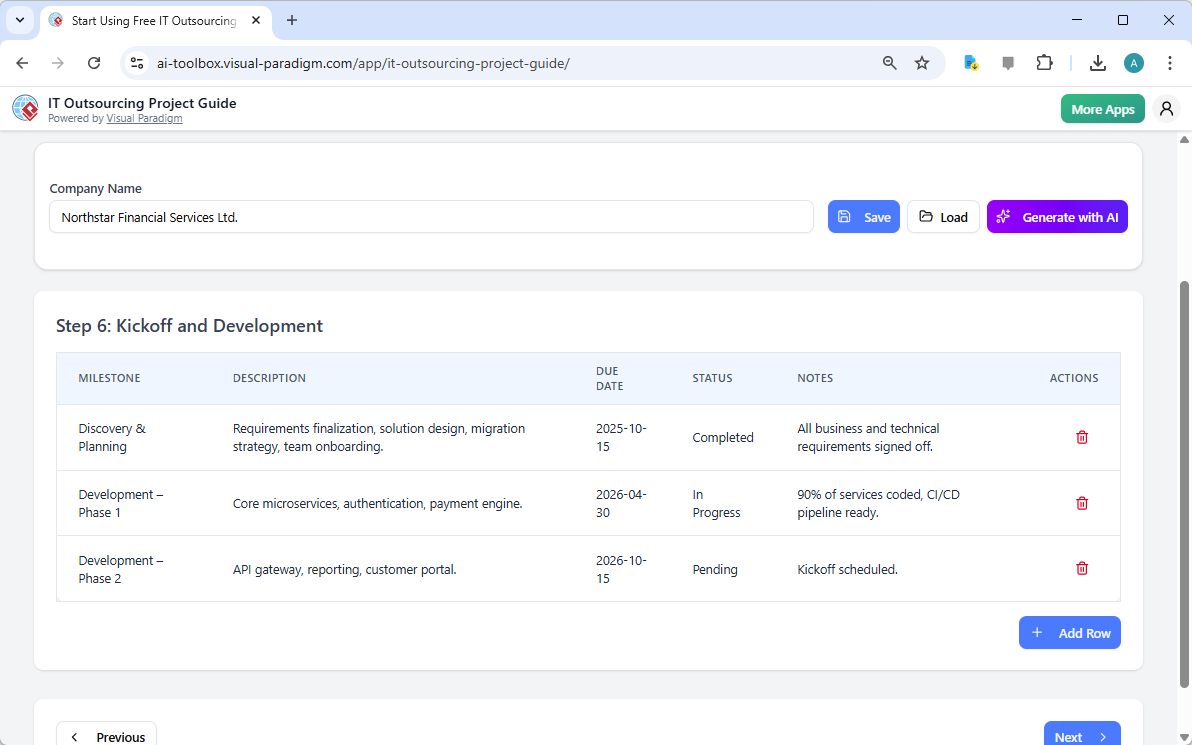
Steps 6 & 7: Development Tracking and Quality Assurance
Monitoring the execution phase is vital. Step 6 provides a milestone tracking dashboard where you can record the status of discovery, planning, and specific development phases. Each milestone includes due dates and progress notes to keep the project on its 15-to-18-month schedule.
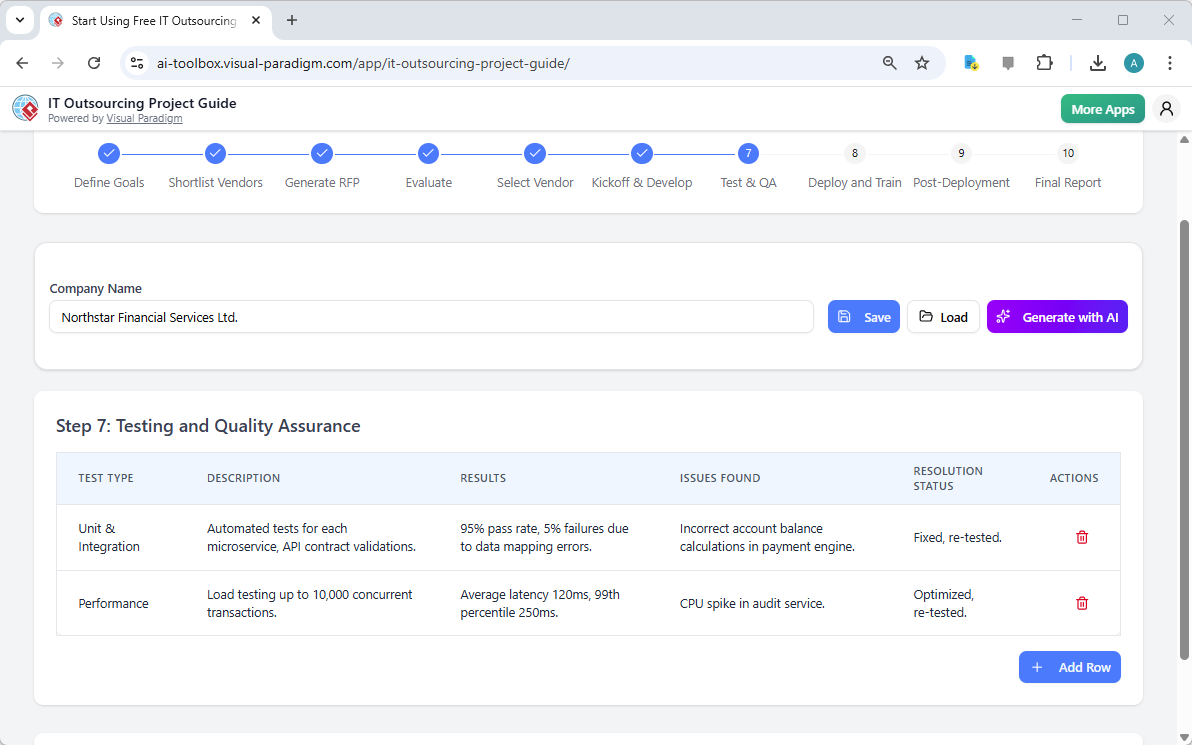
Simultaneously, Step 7 manages Testing and Quality Assurance. You can document results for unit tests, integration tests, and high-load performance testing. Tracking the “Resolution Status” for issues like data mapping errors or CPU spikes ensures the platform is stable before the final go-live date.
Steps 8 & 9: Deployment, Training, and Post-Deployment Support
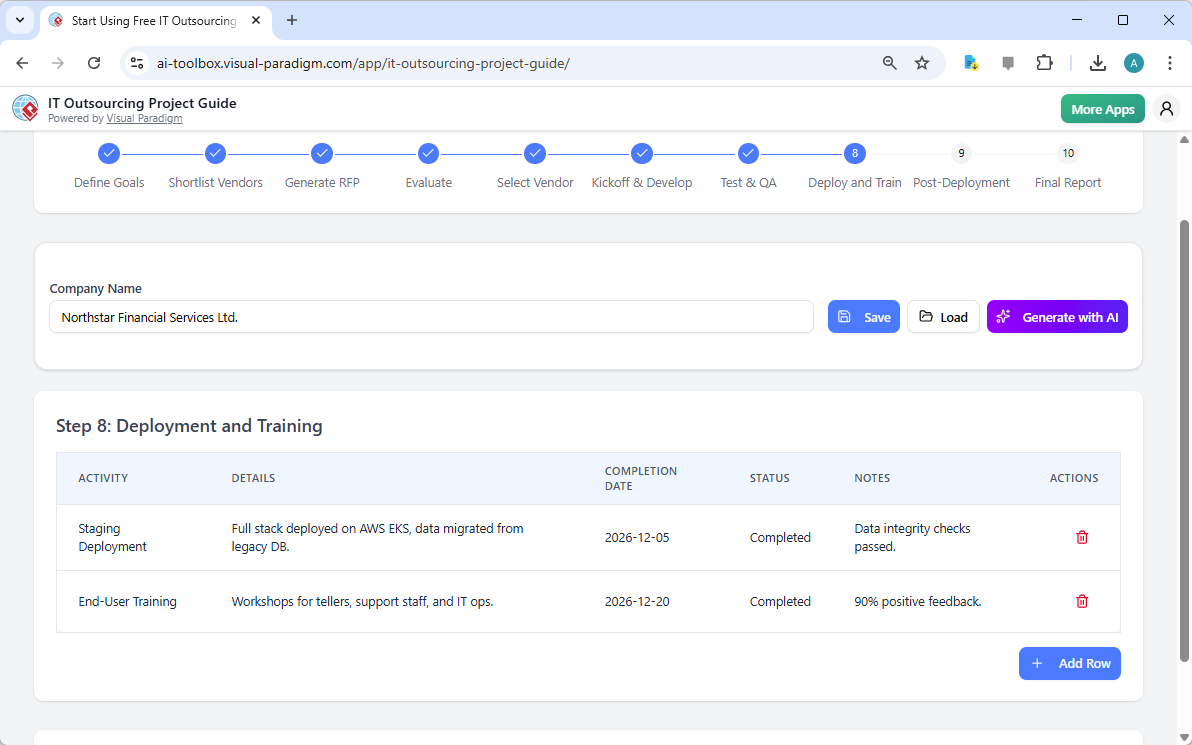
Transitioning to the new core banking platform involves staging deployments and end-user training. Step 8 tracks these final activities, ensuring data integrity checks are passed and staff feedback is positive. Completion dates are logged to finalize the active development phase.
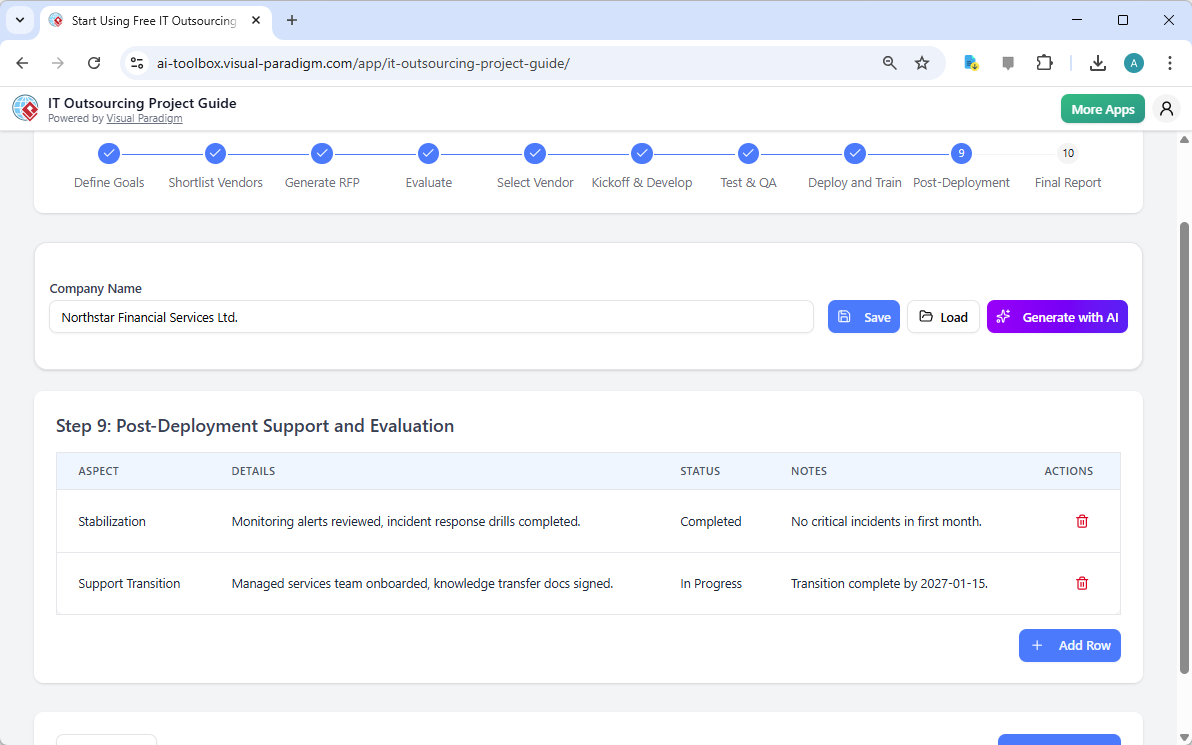
The journey does not end at go-live. Step 9 focuses on stabilization and support transition. Monitoring alerts, review drills, and the transfer of knowledge to the managed services team are all documented here. This ensures long-term operational success and minimizes the risk of post-deployment failures.
Step 10: Generate a Comprehensive Final Project Report
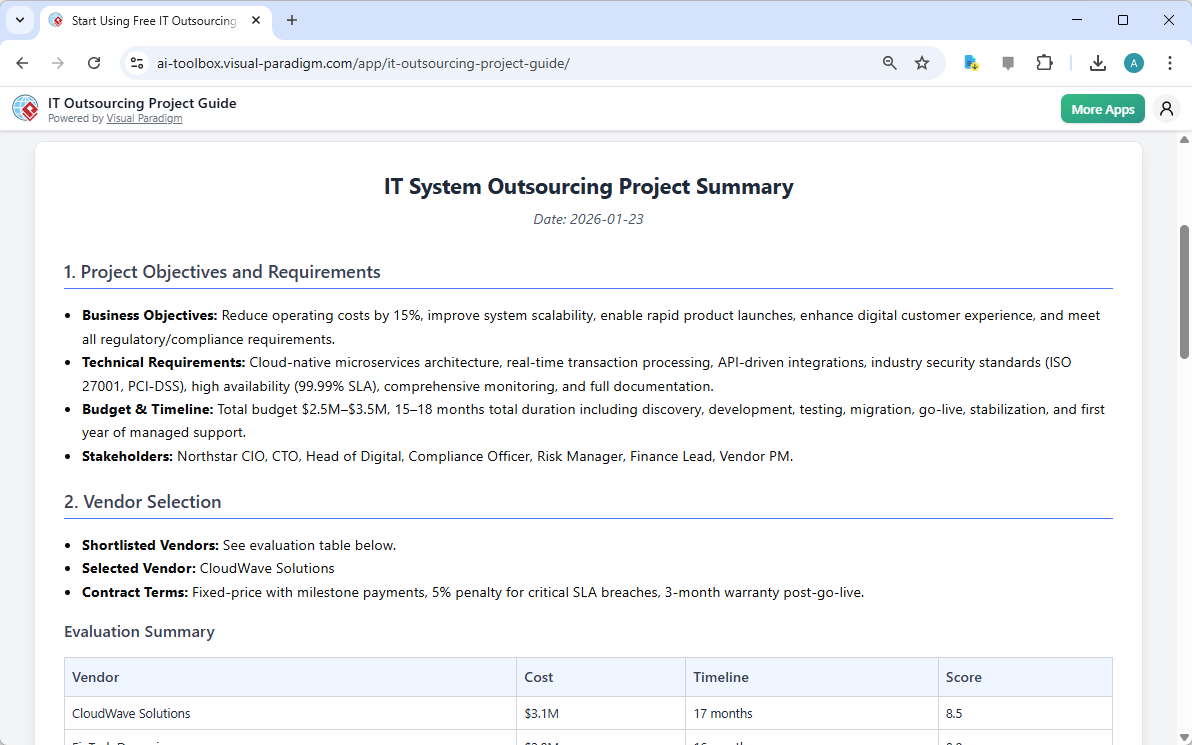
The final stage of the IT outsourcing process is the creation of a professional project summary report. This document compiles every piece of data collected from Step 1 through Step 9. It provides stakeholders with a complete overview of project objectives, vendor evaluation results, and final outcomes.
The report includes detailed tables and lists, making it an invaluable record for future audits or strategic reviews. You can enter your company name, finalize the “Prepared by” field, and print the report directly to PDF for immediate sharing with the board of directors.
Summary of Benefits
Visual Paradigm’s IT Outsourcing Project Guide is a comprehensive solution for managing high-value technology partnerships. By using this tool, organizations can reduce project risk, save hundreds of hours in documentation, and ensure every vendor is held to the highest technical standards. The integration of AI-powered planning with a structured 10-step map provides the clarity needed to succeed in today’s complex IT landscape.
Try the IT Outsourcing Project Guide Now
Ready to streamline your next major IT initiative? Start building your professional project plan today. Visit the Learn More page for a full feature breakdown or Launch the App to begin your 10-step journey immediately!
-
Learn More: Visual Paradigm IT Outsourcing Tool Details
-
Try Now: Launch IT Outsourcing Project Guide
Related Links
IT project management is a specialized discipline focused on organizing project scope, tasks, and deliverables to ensure effective planning and execution within technology environments. This field utilizes established methodologies such as Agile, Scrum, and PMBOK to foster innovation, respond to change, and mitigate project risks. Professional management solutions provide essential tools for the lifecycle, including Gantt charts for scheduling, PERT charts for estimating timelines, and Work Breakdown Structures (WBS) for decomposing scope into manageable tasks. Modern platforms now integrate AI-powered automation to generate Risk Breakdown Structures and structure Jira backlogs, significantly enhancing project visibility and team collaboration.
-
What Is Project Management? A Comprehensive Guide: A fundamental resource covering core principles, methodologies, and best practices for effective project execution.
-
Practical Guide to Gantt Charts: Master Project Planning & Scheduling: An in-depth guide on using Gantt charts to improve the accuracy of project planning and timeline management.
-
How to Use Work Breakdown Structure (WBS) in Project Management: A detailed tutorial on how to decompose project scope into manageable components for better organization.
-
Project Management Lifecycle Guide-Through: Information on a structured tool that provides step-by-step guidance for project activities and deliverable development.
-
What Is Scrum? A Complete Guide to Agile Project Management: An overview of the core principles, roles, and processes defined within the Scrum framework for agile teams.
-
The Best PMBOK Tool: Visual Paradigm for Project Management Success: Highlights the advantages of using PMBOK-compliant software to drive project efficiency and standardized outcomes.
-
Visual Paradigm: A Comprehensive Suite for IT Project Development and Digital Transformation: An exploration of how an integrated suite of tools supports digital transformation and large-scale IT development projects.
-
AI-Powered Risk Breakdown Structure Generator: Simplify Proactive Risk Management: Details on an AI tool that automates the creation of Risk Breakdown Structures for proactive risk identification.
-
Visual Paradigm Roadmap Tool – Plan and Track Product Development: A resource for creating strategic roadmaps that align business goals with long-term development milestones.
-
RACI Matrix Tool – Visual Paradigm Features: An overview of the tool used to clearly define roles and responsibilities within complex project teams.