

Enterprise Architecture (EA) serves as the blueprint for an organization’s structure, processes, and information systems. It bridges the gap between business strategy and IT execution. However, many organizations struggle to translate EA concepts into tangible value. Successful implementation requires more than just diagrams; it demands cultural shifts, rigorous governance, and continuous alignment.
This guide outlines the essential steps and methodologies for building a robust EA function. We will explore how to align technology with business goals, manage stakeholders effectively, and establish governance frameworks that endure. By following these practices, organizations can navigate complexity and drive sustainable growth.
📊 Defining Scope and Strategic Alignment
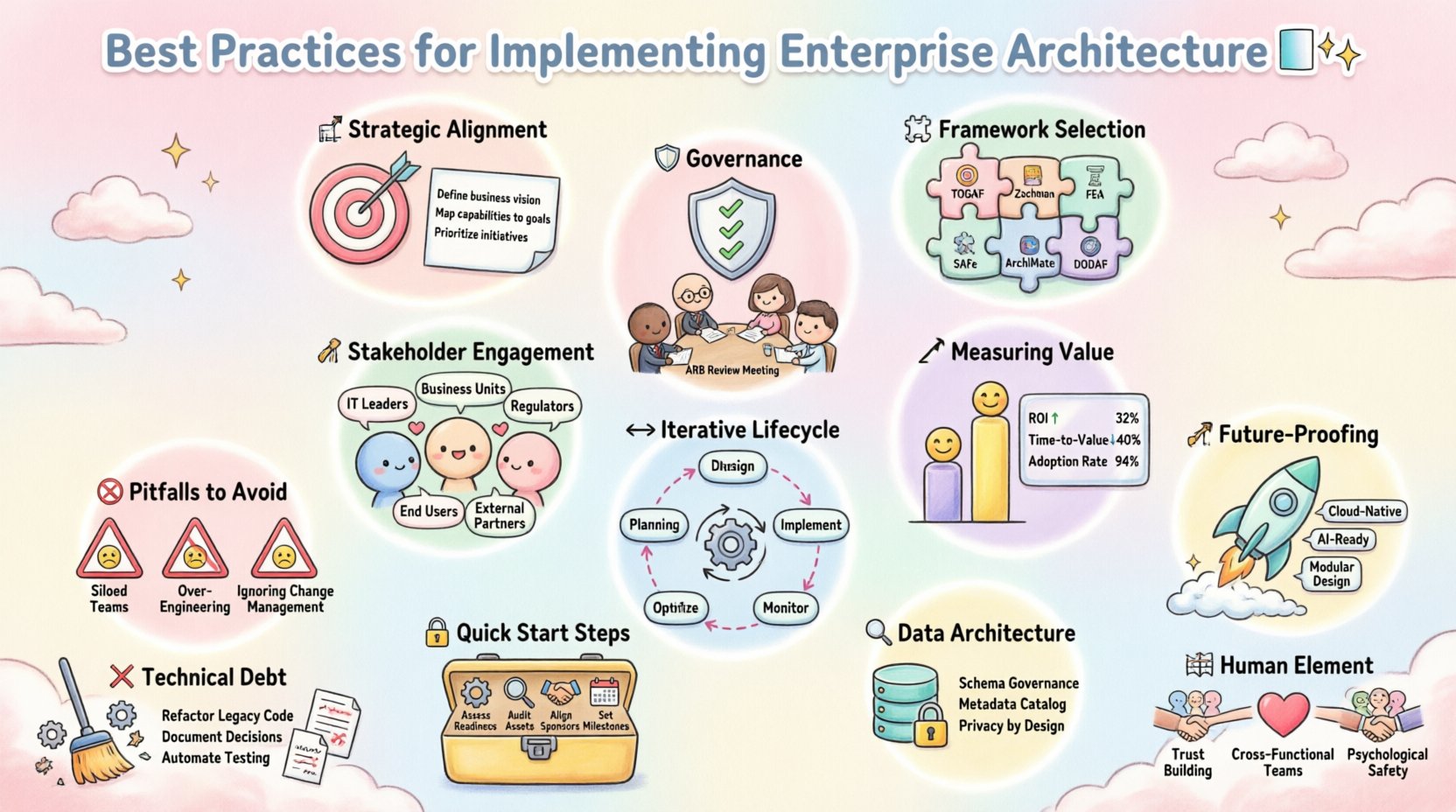
The foundation of any successful EA initiative lies in clear scope definition. Attempting to map every system and process immediately often leads to analysis paralysis. Instead, focus on strategic alignment first.
- Identify Business Objectives: Start by understanding the core goals of the organization. Are you looking to reduce costs, improve customer experience, or enter new markets?
- Map Current State: Document the existing landscape. This includes applications, data flows, and infrastructure.
- Define Target State: Visualize where the organization needs to be in three to five years.
- Gap Analysis: Identify the differences between the current and target states to prioritize initiatives.
Without this alignment, EA becomes a theoretical exercise rather than a practical tool. It must directly support the mission of the business. When stakeholders see that EA decisions lead to cost savings or revenue generation, buy-in increases naturally.
🧩 Selecting the Right Framework
Frameworks provide a structured approach to organizing architectural artifacts. However, they are not one-size-fits-all solutions. Choosing the wrong framework can create unnecessary bureaucracy.
Common Framework Considerations
- Flexibility: Can the framework adapt to your industry’s pace? Agile environments require lighter frameworks.
- Compliance: Does the framework support regulatory requirements specific to your sector?
- Community Support: Is there a community or documentation available to help resolve issues?
- Tooling Integration: Can the framework be supported by existing management tools?
It is common to combine elements from different frameworks to create a tailored approach. For instance, one might use a specific methodology for business architecture while adopting a different standard for technology architecture. The goal is utility, not adherence to a specific name.
🛡️ Establishing Governance and Decision Making
Governance ensures that architectural decisions are consistent with organizational standards. Without governance, systems become fragmented, leading to technical debt and integration issues.
Key Governance Components
- Architecture Review Boards (ARB): A group of stakeholders who review major projects to ensure alignment.
- Standards and Policies: Documented rules regarding technology choices, data security, and integration patterns.
- Decision Rights: Clear definition of who has the authority to approve specific architectural changes.
- Exception Handling: A process for managing deviations from standards when business needs dictate.
Effective governance balances control with agility. Too much control stifles innovation; too little leads to chaos. The ARB should function as a facilitator, helping teams solve problems rather than simply blocking projects.
🤝 Stakeholder Engagement and Communication
EA is a people-first discipline. Technology changes, but the resistance to change comes from people. Engaging stakeholders early and often is critical.
Engagement Strategies
- Identify Influencers: Find key decision-makers and opinion leaders within the business units.
- Tailored Messaging: Explain architectural benefits in terms relevant to each group. Finance cares about cost; Operations cares about stability.
- Regular Updates: Publish newsletters, dashboards, or reports to keep the organization informed of progress.
- Workshops: Conduct collaborative sessions to gather requirements and validate designs.
Communication should be transparent. If a project is delayed or a standard is being changed, communicate the reasons and impacts clearly. Trust is built through honesty and consistency.
📈 Measuring Value and Performance
One of the biggest challenges in EA is proving its return on investment. Without metrics, the function risks being viewed as a cost center rather than a value driver.
Key Performance Indicators (KPIs)
| Category | Example Metric | Goal |
|---|---|---|
| Financial | Reduction in License Costs | Lower operational expenses |
| Operational | System Uptime Percentage | Improved reliability |
| Strategic | Time to Market for New Features | Faster delivery of value |
| Quality | Percentage of Compliant Systems | Reduced risk and debt |
Tracking these metrics requires discipline. Data must be collected consistently and reviewed regularly. Use this data to adjust your strategy and demonstrate value to leadership over time.
🔄 Iterative Implementation and Lifecycle Management
Enterprise Architecture is not a one-time project; it is a continuous lifecycle. Markets change, technologies evolve, and business needs shift. The architecture must evolve with them.
The Architecture Lifecycle
- Planning: Define the vision and roadmap.
- Design: Create models and specifications.
- Implementation: Deploy systems and services.
- Monitoring: Track performance and compliance.
- Optimization: Refine and improve based on feedback.
Adopting an iterative approach allows the organization to deliver value incrementally. Rather than waiting for a perfect blueprint, release updates that provide immediate benefits. This reduces risk and keeps momentum high.
🚫 Common Pitfalls to Avoid
Even with a solid plan, organizations often fall into traps that undermine their EA efforts. Being aware of these common mistakes can help you navigate them.
- Boiling the Ocean: Trying to document everything at once. Start small and expand.
- Ignoring Culture: Focusing only on technology and neglecting the people who use it.
- Lack of Executive Sponsorship: Without leadership support, initiatives often stall.
- Rigid Standards: Enforcing rules that do not fit the current business context.
- Isolation: Operating in a silo away from development and operations teams.
Recognizing these pitfalls early allows for corrective action. Regular retrospectives can help identify where the process is breaking down.
🚀 Future Proofing and Adaptability
The technology landscape is constantly changing. Cloud computing, artificial intelligence, and edge computing are reshaping how enterprises operate. EA must remain adaptable to these shifts.
Build flexibility into your architecture. Use abstraction layers that allow for technology swapping without disrupting business logic. Encourage a culture of learning where teams stay updated on emerging trends.
Adaptability Checklist
- Are systems decoupled enough to allow for upgrades?
- Is data standardized to support new analytics capabilities?
- Do policies allow for experimentation and innovation?
- Is there a budget allocated for technology refreshment?
By prioritizing adaptability, the organization ensures that its architecture remains relevant for years to come. This reduces the need for costly and disruptive rewrites.
🛠️ Practical Steps for Immediate Action
If you are starting your EA journey today, consider these actionable steps.
- Conduct a Discovery Workshop: Gather key leaders to discuss current pain points and strategic goals.
- Map Critical Processes: Identify the top 5-10 processes that drive business value.
- Review Existing Documentation: Audit what you already have before creating new models.
- Appoint Champions: Identify individuals in each department to champion architectural standards.
- Set Short-Term Wins: Choose one quick project to demonstrate the value of EA.
These steps provide a clear path forward without overwhelming the team. Momentum is built through small successes.
🔍 Deep Dive: Data Architecture Integration
Data is the lifeblood of modern enterprises. A robust Enterprise Architecture must include a strong data strategy. This ensures information is accurate, accessible, and secure.
- Data Governance: Establish ownership and stewardship for critical data assets.
- Integration Patterns: Define how systems exchange data (e.g., APIs, ETL, Event-driven).
- Master Data Management: Ensure a single source of truth for key entities like customers or products.
- Security and Privacy: Embed compliance requirements into data flow designs.
Ignoring data architecture leads to silos and inconsistencies. When data flows freely and securely, decision-making improves significantly. This integration supports the broader goal of digital transformation.
🌐 The Human Element of Architecture
Architecture is not just about boxes and lines. It is about understanding how work gets done. This requires empathy and deep listening skills.
- Understand Workflows: Observe how users interact with systems in their daily tasks.
- Resist Technical Dogma: Do not impose technology choices without understanding the business need.
- Foster Collaboration: Create environments where architects and developers work side by side.
- Mentorship: Share knowledge to build capability across the organization.
When architects act as partners rather than gatekeepers, the relationship improves. This leads to better designs and faster adoption of new standards.
📉 Handling Technical Debt
Technical debt accumulates over time when shortcuts are taken. EA plays a vital role in managing this debt.
- Identify Debt: Catalog systems that are outdated, unsupported, or costly to maintain.
- Quantify Impact: Calculate the cost of debt in terms of time and money.
- Prioritize Repayment: Schedule refactoring or replacement projects based on risk and value.
- Prevent New Debt: Update standards to avoid repeating past mistakes.
Proactive management prevents debt from becoming unmanageable. Regular audits help keep the landscape healthy.
🏁 Summary of Implementation Success
Implementing Enterprise Architecture is a journey that requires patience, clarity, and persistence. By focusing on strategic alignment, establishing clear governance, and engaging stakeholders, organizations can build a function that delivers real value. Avoid common pitfalls like over-complication and lack of visibility. Embrace iteration and continuous improvement.
Remember that the goal is not perfection. The goal is to create an environment where technology enables business success. With the right practices in place, your organization can navigate complexity and achieve its objectives efficiently.
Start today. Assess your current state, define your goals, and take the first step toward a more structured and effective architecture. The path forward is clear.