

The discipline of Enterprise Architecture (EA) stands at a critical inflection point. As organizations navigate complex digital ecosystems, the role of the architect has shifted from static documentation to dynamic strategic leadership. The landscape is no longer defined by rigid frameworks alone but by adaptability, integration, and value creation. This guide explores the pivotal trends redefining how we design, govern, and evolve enterprise systems.
The Evolution of Enterprise Architecture 🔄
Historically, EA focused on aligning IT infrastructure with business goals through comprehensive documentation and standardized processes. While this foundation remains necessary, the pace of technological change demands a more fluid approach. Modern architecture must support continuous delivery, real-time decision-making, and resilience against unforeseen disruptions. The shift involves moving from a “blueprint” mindset to a “living system” perspective.
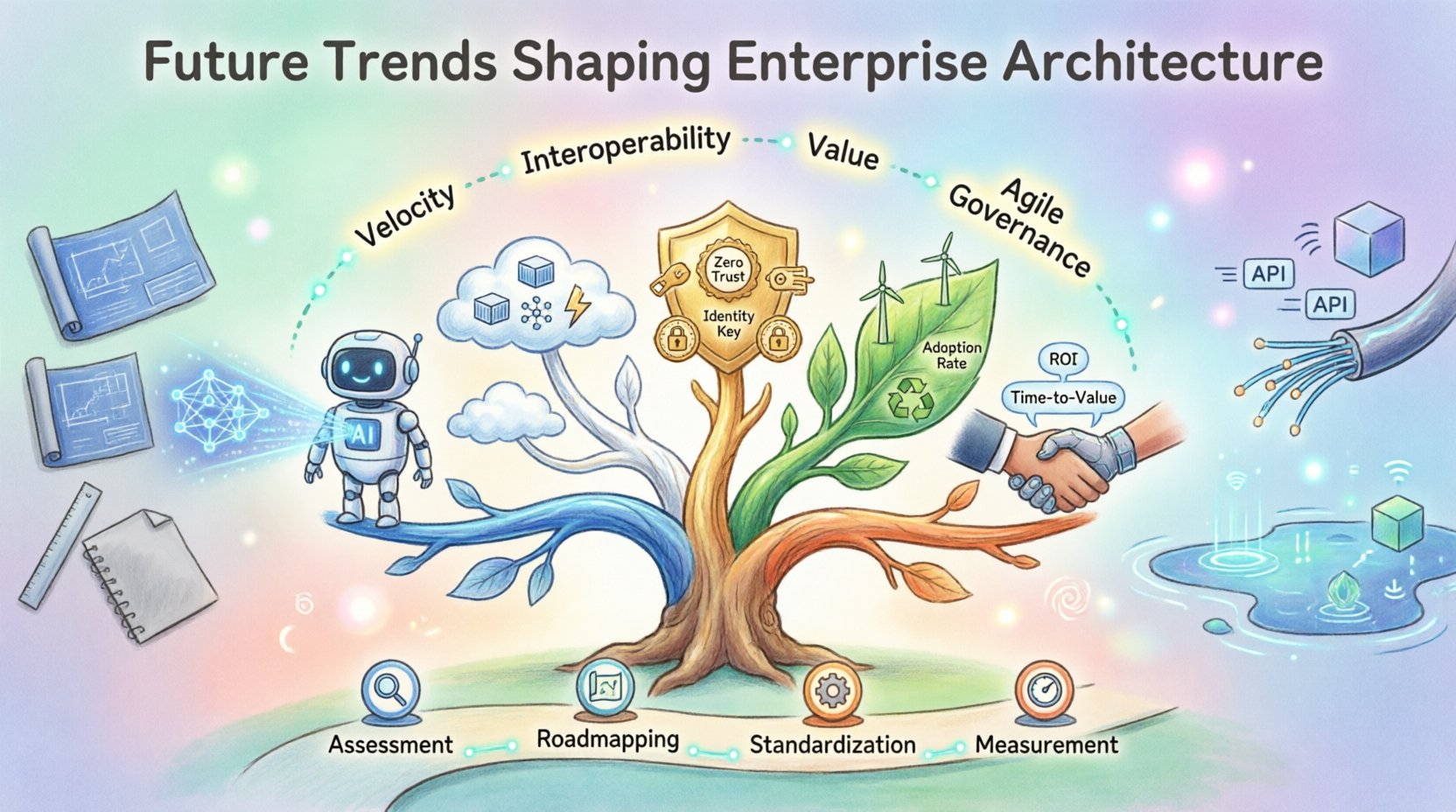
Key drivers for this evolution include:
- Velocity: The need to deploy features faster than ever before.
- Complexity: Managing hybrid environments spanning on-premise, cloud, and edge.
- Interoperability: Ensuring disparate systems communicate seamlessly.
- Value: Direct linkage between architectural decisions and business outcomes.
Key Trends Reshaping the Landscape 🌍
Several macro-level trends are influencing architectural decisions today. Understanding these forces allows organizations to build systems that are not only functional but future-proof.
1. Artificial Intelligence and Cognitive Automation 🤖
Artificial Intelligence is no longer a niche capability; it is becoming a core architectural component. Enterprise systems increasingly rely on machine learning models for predictive analytics, automated decision-making, and natural language processing. Architects must design infrastructure that supports the lifecycle of these models.
Considerations for AI integration include:
- Data Governance: Ensuring data quality, lineage, and privacy for model training.
- Compute Requirements: Scaling resources dynamically to handle inference workloads.
- Model Ops: Establishing pipelines for model deployment, monitoring, and retraining.
- Ethical Frameworks: Building safeguards against bias and ensuring transparency in automated decisions.
Architects are tasked with creating data fabrics that allow AI systems to access information without creating silos. The integration of AI requires a shift from manual processes to intelligent automation, reducing operational overhead while increasing accuracy.
2. Cloud-Native and Hybrid Infrastructure ☁️
The migration to the cloud has moved beyond simple lift-and-shift strategies. Modern architecture prioritizes cloud-native principles, utilizing containers, microservices, and serverless computing to enhance scalability and resilience. However, a single-cloud approach is rarely sufficient. Most enterprises operate in hybrid or multi-cloud environments to optimize cost, mitigate vendor lock-in, and meet data sovereignty requirements.
Architectural strategies for this environment involve:
- Standardization: Defining common patterns for deployment across different environments.
- Orchestration: Implementing platforms that manage containerized workloads efficiently.
- Network Topology: Designing secure and low-latency connections between distributed nodes.
- Cost Management: Monitoring resource utilization to prevent cloud spend from spiraling.
The complexity lies in managing state and consistency across these distributed systems. Service meshes and API gateways have become essential components to handle traffic routing, security policies, and observability across the hybrid landscape.
3. Zero Trust Security Models 🔒
Traditional perimeter-based security is obsolete. With remote work and distributed systems, the network boundary is indistinguishable from the internal network. Zero Trust Architecture (ZTA) operates on the principle of “never trust, always verify.” Every access request, regardless of origin, must be authenticated and authorized.
Implementation requirements for Zero Trust include:
- Identity as the Perimeter: Multi-factor authentication and identity federation are critical.
- Least Privilege: Access is granted only for specific tasks and limited durations.
- Micro-segmentation: Isolating workloads to limit lateral movement during a breach.
- Continuous Monitoring: Analyzing behavior patterns to detect anomalies in real time.
Architects must embed security controls into the design phase rather than treating them as an afterthought. This approach reduces the attack surface and ensures compliance with evolving regulatory standards.
4. Sustainable and Green Architecture 🌱
Environmental sustainability has moved to the forefront of corporate strategy. Organizations are evaluating the carbon footprint of their digital infrastructure. Energy-efficient computing and optimized data centers are becoming competitive advantages.
Architects can drive sustainability by:
- Right-sizing: Ensuring infrastructure matches actual demand to avoid waste.
- Code Efficiency: Writing algorithms that consume less processing power.
- Hardware Lifecycle: Planning for hardware recycling and extended usage periods.
- Green Cloud: Selecting providers that commit to renewable energy sources.
This trend is not just about compliance; it is about cost reduction and brand reputation. Efficient architectures consume less energy, directly lowering operational expenditures.
5. Business-Technology Convergence 🤝
The gap between business units and technology teams is narrowing. Architects act as translators, ensuring that technical capabilities align with strategic objectives. This convergence requires a shared vocabulary and shared metrics.
Strategies for convergence include:
- Product Thinking: Treating services as products with owners accountable for value.
- Agile Governance: Moving from gatekeeping to enabling compliant delivery.
- Data-Driven Decisions: Using architecture metrics to guide business strategy.
- Collaborative Design: Involving business stakeholders in the architecture review process.
| Feature | Traditional Approach | Modern Approach |
|---|---|---|
| Focus | Documentation & Compliance | Value & Agility |
| Structure | Monolithic & Rigid | Modular & Flexible |
| Security | Perimeter-based | Zero Trust |
| Deployment | Waterfall | Continuous Delivery |
| Relationship | IT Supports Business | Business & IT Collaborate |
Strategic Implementation Considerations 🛠️
Adopting these trends requires a structured approach. Rushing into new technologies without a roadmap can lead to fragmentation. Organizations should assess their current maturity and prioritize initiatives based on risk and value.
Key steps for implementation:
- Assessment: Audit existing systems for technical debt and alignment with goals.
- Roadmapping: Create a phased plan that balances innovation with stability.
- Standardization: Define guardrails that enable autonomy without chaos.
- Measurement: Establish KPIs to track the success of architectural changes.
It is essential to recognize that architecture is not a destination but a continuous journey. Regular reviews ensure that the strategy remains relevant as the market evolves.
Talent and Capability Shifts 👥
The skill set required for modern architects is expanding. Beyond technical proficiency, architects need skills in change management, data science, and business strategy. The role is becoming more interdisciplinary.
Required competencies include:
- Systems Thinking: Understanding how changes in one area impact the whole.
- Communication: Articulating complex concepts to non-technical audiences.
- Financial Acumen: Understanding cost structures and ROI of technical decisions.
- Adaptability: Learning new tools and paradigms quickly.
Organizations must invest in training and development to build this internal capability. Mentorship programs and cross-functional teams can help bridge the gap between legacy skills and future needs.
Governance and Compliance ⚖️
As systems become more complex, governance must evolve to support rather than hinder. Heavy-handed governance creates bottlenecks, while lack of governance creates risk. The goal is lightweight, automated compliance.
Effective governance practices involve:
- Policy as Code: Embedding rules directly into deployment pipelines.
- Automated Audits: Continuous verification of adherence to standards.
- Transparency: Making architectural decisions visible to stakeholders.
- Accountability: Clearly defining roles and responsibilities for ownership.
Regulatory requirements regarding data privacy and security are tightening globally. Architects must ensure that designs comply with regulations like GDPR or CCPA without stifling innovation. Privacy by Design is no longer optional.
Looking Ahead 🔭
The future of Enterprise Architecture is defined by resilience and intelligence. Systems must be able to self-heal, scale automatically, and adapt to changing conditions. The integration of quantum computing and advanced IoT will introduce new challenges and opportunities.
Architects who embrace these trends will position their organizations to thrive. The focus remains on delivering value, ensuring security, and maintaining agility. By building adaptable foundations, enterprises can navigate uncertainty with confidence.
The journey requires commitment, investment, and a willingness to challenge the status quo. Those who view architecture as a strategic asset rather than a cost center will lead the market. The landscape is shifting, and the time to act is now.