

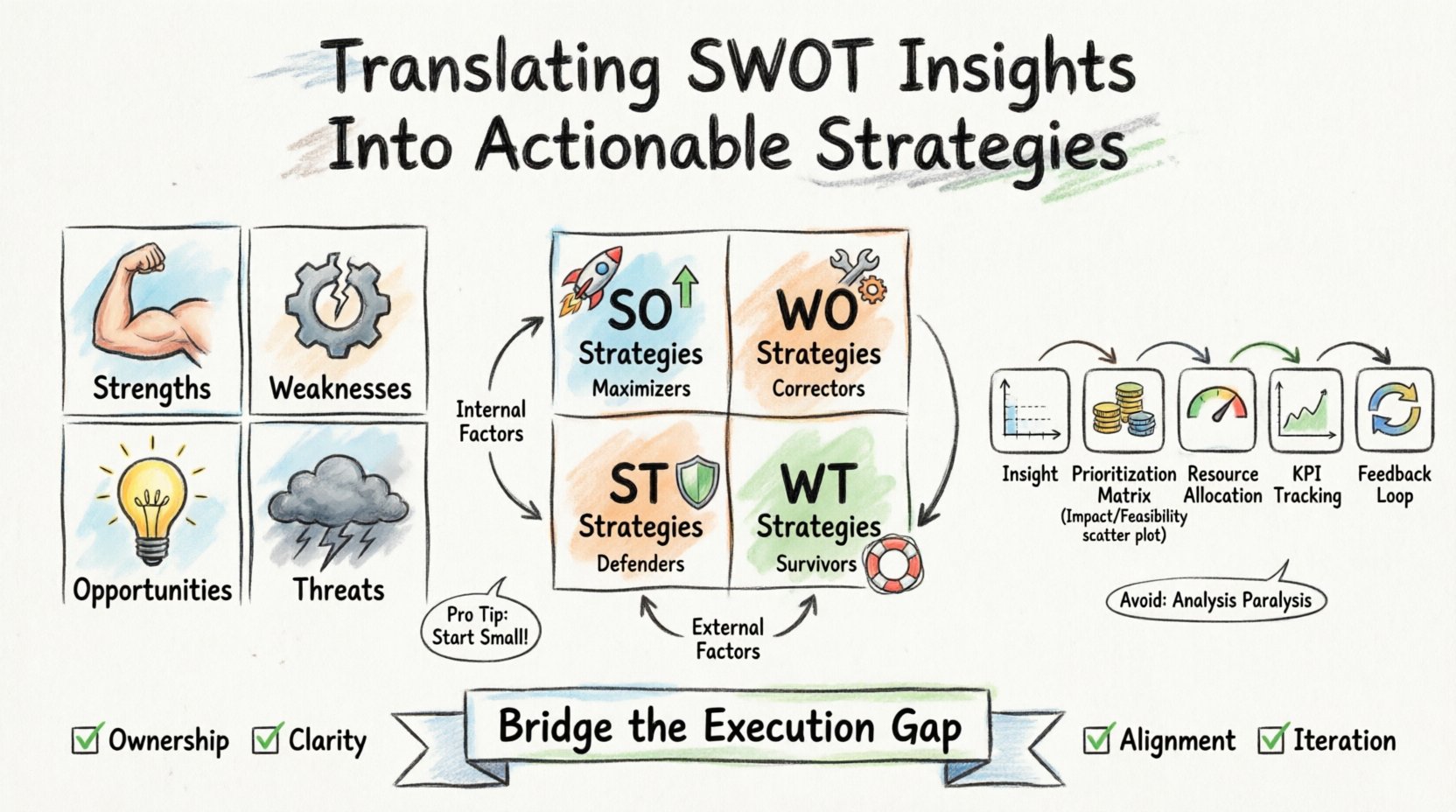
Every organization conducts a SWOT analysis at some point in its lifecycle. It is a standard framework for assessing internal capabilities and external conditions. However, a critical disconnect often exists between the document sitting on a shelf and the daily operations driving growth. Many teams complete the analysis, celebrate the insight, and then fail to execute. The true value of a SWOT analysis lies not in the identification of factors, but in the translation of those factors into concrete operational steps.
This guide explores how to move beyond static lists and transform strategic intelligence into dynamic action plans. We will examine the TOWS matrix, resource allocation methods, and the critical role of organizational alignment in ensuring that Strengths, Weaknesses, Opportunities, and Threats lead to tangible results.
🛑 The Execution Gap: Why Analysis Fails
Conducting a SWOT analysis is relatively straightforward. Gathering data on internal strengths, acknowledging weaknesses, scanning the horizon for opportunities, and identifying threats is a logical process. The difficulty arises in the subsequent phase: prioritization and implementation. Without a structured approach to conversion, these insights remain abstract concepts.
Common reasons for this failure include:
- Lack of Ownership: No individual is assigned responsibility for acting on specific insights.
- Ambiguity: Insights are too vague to form the basis of a project plan.
- Resource Misalignment: Strategies are proposed without considering budget or personnel capacity.
- Static Planning: Treating the SWOT as a one-time event rather than a living framework.
To bridge this gap, you must treat the SWOT analysis as a diagnostic tool that informs a prescription, not a destination itself. The goal is to create a direct line of sight from an insight to a key performance indicator (KPI).
🔗 The TOWS Matrix Framework
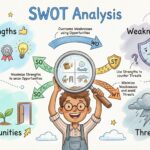
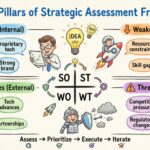
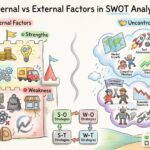
While SWOT lists factors separately, the TOWS matrix connects them. This tool helps you generate strategies by cross-referencing internal factors with external factors. It forces you to think about how to use strengths to capture opportunities or how to use strengths to defend against threats.
There are four distinct strategic quadrants to explore:
1. SO Strategies (Maximizers)
These strategies leverage internal strengths to take advantage of external opportunities. This is the most aggressive growth quadrant. The goal is to align your best assets with market trends to maximize competitive advantage.
2. WO Strategies (Correctors)
These strategies aim to overcome internal weaknesses by taking advantage of external opportunities. This often requires investment or change management. The focus is on fixing gaps in capability to allow the organization to seize available market space.
3. ST Strategies (Defenders)
These strategies use internal strengths to reduce the vulnerability to external threats. This is a defensive posture that relies on existing competitive advantages to neutralize risks. It is about stability and resilience.
4. WT Strategies (Survivors)
These strategies minimize internal weaknesses and avoid external threats. This is often the most difficult quadrant, requiring significant restructuring or divestment. The goal here is risk mitigation and survival.
🛠️ Translating Insights Into Actionable Steps
Turning a concept like “Strong Brand Reputation” into a strategy requires breaking it down. Here is how to approach each quadrant with a focus on actionability.
Leveraging Strengths (S)
Strengths are assets you already possess. The strategy is to deploy them where they yield the highest return. Avoid the trap of hoarding strengths without application.
- Identify High-Value Applications: Where does this strength solve a customer pain point?
- Standardize Processes: If a team has a unique capability, document it and replicate it.
- Market Positioning: Use the strength as the primary messaging hook in marketing campaigns.
Addressing Weaknesses (W)
Weaknesses are internal limitations. The goal is not necessarily to eliminate them entirely, but to manage them so they do not hinder strategic goals.
- Investment in Training: If skill gaps exist, allocate budget for upskilling.
- Outsourcing: If a function is a chronic weakness, consider external partners.
- Process Automation: If inefficiency is the issue, review workflows for automation opportunities.
Capitalizing on Opportunities (O)
Opportunities are external chances for improvement. They require agility to seize.
- Market Expansion: Identify new demographics or geographic regions.
- Product Innovation: Develop features that align with emerging trends.
- Partnerships: Collaborate with entities that fill the gap between your capability and the market demand.
Mitigating Threats (T)
Threats are external risks. Preparation is key to handling these without disruption.
- Scenario Planning: Develop contingency plans for high-probability threats.
- Diversification: Reduce reliance on a single revenue stream or supplier.
- Compliance Monitoring: Stay ahead of regulatory changes that could impact operations.
📊 Prioritization and Resource Allocation
Not all strategies can be pursued simultaneously. You must prioritize based on impact and feasibility. A simple table can help visualize the trade-offs.
| Strategy | Impact (High/Low) | Feasibility (High/Low) | Priority |
|---|---|---|---|
| Launch New Product Line | High | Low | Phase 2 |
| Optimize Current Sales Funnel | High | High | Phase 1 |
| Expand to International Market | Medium | Medium | Phase 3 |
| Update Legacy IT Systems | Medium | High | Phase 1 |
Using a prioritization matrix ensures that resources are not wasted on low-impact initiatives. High Impact, High Feasibility strategies should be the immediate focus. High Impact, Low Feasibility strategies may require significant investment or time to develop.
👥 Organizational Alignment
Even the best strategy will fail if the team does not understand it or feel connected to it. Communication is a critical component of translating SWOT insights into action.
- Cascading Objectives: Ensure that departmental goals align with the strategic insights derived from the SWOT.
- Clear Roles: Every task derived from the strategy must have an owner.
- Regular Check-ins: Establish a rhythm of review to discuss progress against the strategic plan.
When employees understand how their daily tasks contribute to the broader strategy, engagement increases. This reduces resistance to change and fosters a culture of accountability.
⏱️ Monitoring and Iteration
Strategy is not a static document. It is a hypothesis about the future that must be tested against reality. You need to establish metrics that indicate whether the strategies derived from your SWOT are working.
Key Performance Indicators (KPIs)
Define specific metrics for each strategic initiative. For example, if the strategy is to “Capture Market Share,” the KPI might be “Percentage Growth in Customer Base.” If the strategy is “Reduce Costs,” the KPI might be “Operating Margin Improvement.”
The Feedback Loop
Set a schedule for reviewing the SWOT analysis itself. Conditions change. A strength today may become a weakness tomorrow. An opportunity may vanish due to market shifts. Regular reviews allow you to pivot quickly.
- Quarterly Reviews: Assess progress on active strategies.
- Annual Deep Dive: Re-conduct the full SWOT analysis to refresh the strategic baseline.
- Trigger Events: Update the analysis immediately following major market shifts or internal changes.
⚠️ Common Pitfalls to Avoid
Even with a solid framework, several errors can derail the process. Being aware of these helps maintain focus.
- Internal Bias: Focusing too much on internal strengths while ignoring external threats. This leads to overconfidence.
- Over-Analysis: Spending too much time gathering data and not enough time acting. Analysis paralysis prevents execution.
- Generic Goals: Setting vague objectives like “Improve Customer Service.” This needs to be specific, such as “Reduce response time to 2 hours.”
- Ignoring Culture: Implementing a strategy that conflicts with the organizational culture often leads to failure. Change management is essential.
🔄 Continuous Improvement
The ultimate goal of translating SWOT insights into action is continuous improvement. This is not a linear path but a cycle of planning, executing, measuring, and adjusting. By embedding this cycle into your operations, you create an organization that is adaptive and resilient.
Start small. Pick one insight from your analysis and create a pilot project. Measure the results. Learn from the data. Scale what works and discard what does not. This iterative approach reduces risk and builds momentum.
📝 Final Considerations
Translating strategic insights into action requires discipline and clarity. It demands that you move beyond the comfort of data collection and into the uncertainty of execution. By using frameworks like TOWS, prioritizing effectively, and maintaining organizational alignment, you can ensure that your SWOT analysis delivers real value.
Remember that the document is a tool, not the solution. The solution lies in the work done by your people, guided by the intelligence you have gathered. Focus on the execution, monitor the results, and remain willing to adapt as the landscape evolves.
With a structured approach, the gap between insight and action can be closed. This is how sustainable growth is achieved, not through luck, but through deliberate strategic management.