


In the complex landscape of modern business, technology serves as the backbone of operational success. However, without a structured approach, technology initiatives often become fragmented, leading to redundancy, security vulnerabilities, and misalignment with strategic goals. This is where the Enterprise Architecture Framework comes into play. It provides the blueprint for organizing business and IT capabilities to support long-term objectives.
Constructing a robust framework requires more than just selecting tools; it demands a disciplined methodology, clear governance, and a deep understanding of how different organizational units interact. This guide explores the essential components, strategic alignment, and governance structures necessary to build an architecture that sustains growth and agility.
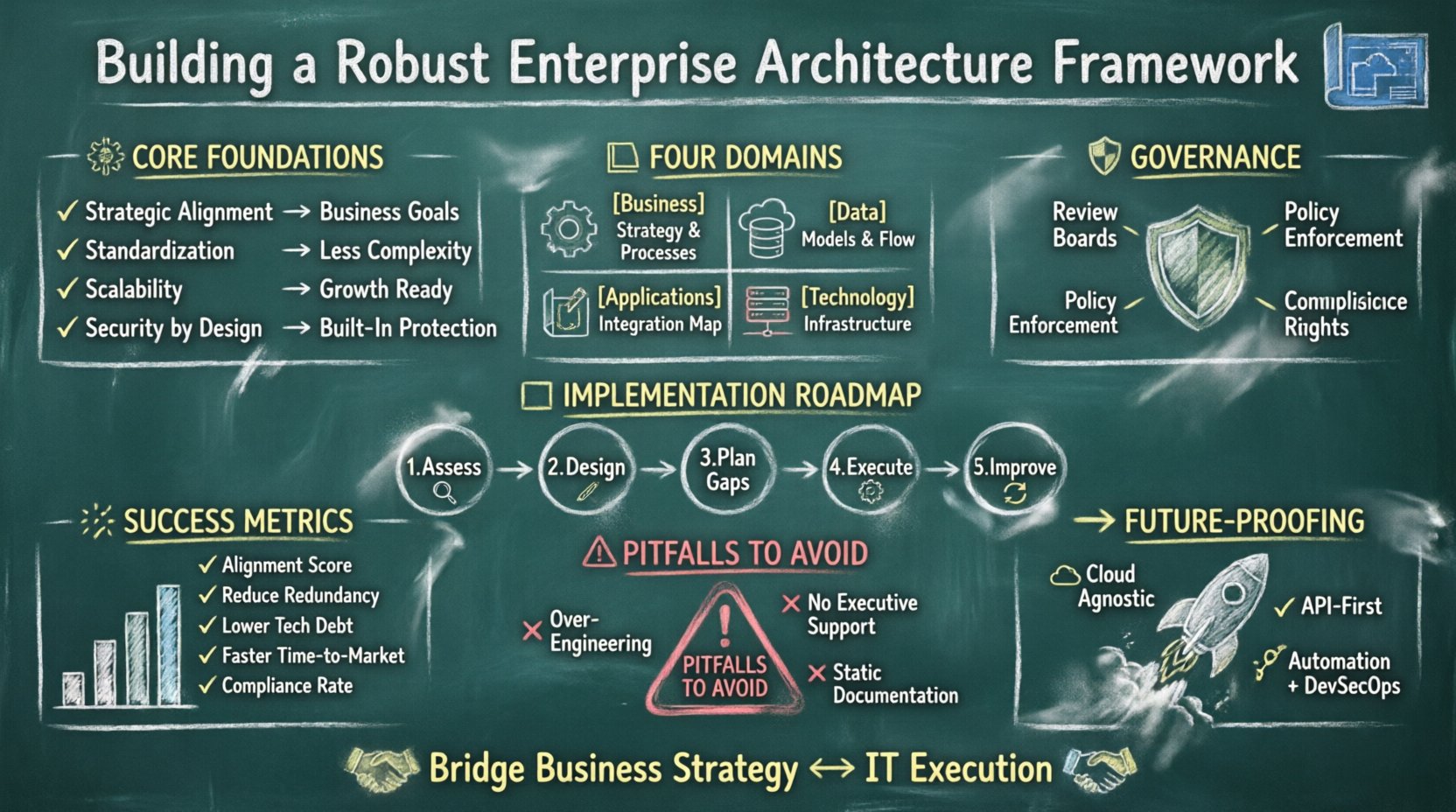
🧩 Understanding the Core Foundations
Before drafting any diagrams or policies, it is crucial to define what constitutes a solid foundation. An Enterprise Architecture Framework is not merely a documentation repository; it is a living system that guides decision-making. It ensures that investments in technology deliver value to the business rather than becoming sunk costs.
Strategic Alignment: Every architectural decision must trace back to a business objective. If a system does not support a strategic goal, its necessity should be questioned.
Standardization: Establishing common standards for data, interfaces, and platforms reduces complexity and maintenance costs.
Scalability: The framework must accommodate growth, whether through increased user load, new market entry, or mergers and acquisitions.
Security by Design: Security protocols should be integrated into the architecture from the start, rather than applied as an afterthought.
Without these pillars, an architecture effort often devolves into a series of disjointed projects. The framework acts as the connective tissue, ensuring coherence across the organization.
🏛️ The Four Domains of Enterprise Architecture
A comprehensive framework addresses four primary domains. Each domain interacts with the others, creating a holistic view of the organization. Ignoring one domain often leads to bottlenecks in others.
Domain | Focus Area | Key Deliverables |
|---|---|---|
Business Architecture | Strategy, governance, organization, and business processes. | Process maps, capability maps, organizational charts. |
Data Architecture | Logical and physical data assets and data management resources. | Data models, data flow diagrams, data governance policies. |
Application Architecture | Blueprint for individual applications and their interactions. | Application portfolios, interface definitions, integration patterns. |
Technology Architecture | Hardware, software, and network infrastructure. | Infrastructure diagrams, standards for hardware and software. |
Business Architecture sets the stage. It defines what the organization does and how it creates value. If the business strategy shifts, the architecture must adapt to support the new direction. This domain ensures that technology is serving the business model, not the other way around.
Data Architecture is increasingly critical in a data-driven economy. It governs how information is created, stored, moved, and consumed. A robust data architecture ensures that data is accurate, accessible, and secure. It prevents the creation of data silos where information becomes trapped within specific departments.
Application Architecture details the software landscape. It maps out which applications exist, how they communicate, and where the gaps lie. This view helps in deciding whether to build, buy, or retire an application. It reduces technical debt by identifying redundant systems.
Technology Architecture provides the underlying infrastructure. It encompasses servers, networks, cloud environments, and end-user devices. This domain ensures that the physical and virtual resources can support the applications and data flows defined in the other domains.
🛡️ Establishing Governance and Compliance
Architecture without governance is merely a suggestion. To ensure adherence to the framework, a governance structure must be implemented. This involves defining who has the authority to make decisions and how those decisions are enforced.
Effective governance relies on clear policies and active oversight. It is not about creating bureaucracy, but about enabling speed and quality through clear rules.
Architecture Review Boards: A cross-functional team that reviews major technology decisions. They ensure compliance with standards and strategic alignment.
Policy Enforcement: Mechanisms to validate that projects adhere to defined standards before deployment.
Compliance Monitoring: Regular audits to ensure security and regulatory requirements are met.
Decision Rights: Clearly defined roles that specify who can approve changes to the architecture.
When governance is weak, shadow IT emerges. Departments purchase their own tools without central oversight, leading to integration nightmares and security risks. A strong governance framework brings these initiatives into the light, allowing for proper assessment and integration.
👥 Roles and Responsibilities
Clarity in roles prevents confusion and accountability gaps. The following table outlines typical responsibilities within an architecture governance model.
Role | Primary Responsibility |
|---|---|
Chief Architect | Overall vision, strategic direction, and framework maintenance. |
Domain Architects | Specific oversight of Business, Data, App, or Technology domains. |
Project Managers | Ensuring project delivery aligns with architectural standards. |
Security Officers | Validating security controls within the architecture. |
🗺️ The Implementation Roadmap
Building this framework is a journey, not a one-time event. A phased approach allows the organization to mature its capabilities without overwhelming resources. Starting small and expanding provides immediate value and builds confidence in the process.
Phase 1: Assessment and Baseline
The first step involves understanding the current state. This includes inventorying existing applications, data sources, and infrastructure. It also involves interviewing stakeholders to understand pain points and strategic goals. The output is a “As-Is” model that highlights gaps and redundancies.
Phase 2: Target State Definition
Once the current state is understood, the “To-Be” state is designed. This defines the future architecture that will support the business strategy. It includes high-level principles, standards, and target technologies. This phase sets the direction for future investments.
Phase 3: Gap Analysis and Planning
This phase identifies the differences between the current and target states. It creates a roadmap for migration, detailing which projects are needed to bridge the gaps. Prioritization is key here, focusing on high-impact, low-risk initiatives first.
Phase 4: Execution and Governance
During execution, the governance structures established earlier come into play. Projects are monitored against the roadmap. The architecture team works with project teams to ensure alignment. Continuous feedback loops allow for adjustments to the plan as the environment changes.
Phase 5: Continuous Improvement
Architecture is dynamic. As the market changes, so must the framework. Regular reviews ensure the architecture remains relevant. Lessons learned from implementation are fed back into the framework to improve standards and processes.
📊 Measuring Success with Metrics
To prove the value of the framework, metrics must be established. Without measurement, it is difficult to justify continued investment or identify areas for improvement. Key Performance Indicators (KPIs) should focus on alignment, efficiency, and stability.
Alignment Score: Percentage of IT projects that directly support a strategic business objective.
System Redundancy: Number of duplicate applications performing the same function.
Technical Debt Ratio: Estimate of effort required to fix legacy issues versus building new features.
Time to Market: Duration from concept to deployment for new capabilities.
Compliance Rate: Percentage of projects passing architecture reviews on the first attempt.
These metrics should be reported regularly to leadership. They provide transparency into the health of the technology landscape and the effectiveness of the architecture function.
⚠️ Common Pitfalls to Avoid
Even with a solid plan, organizations often stumble during the implementation. Recognizing these pitfalls early can save significant time and resources.
Over-Engineering: Creating frameworks that are too complex to understand or use. The goal is utility, not academic perfection.
Lack of Executive Sponsorship: Without buy-in from senior leadership, architectural decisions may be ignored in favor of short-term gains.
Ignoring Culture: Architecture is as much about people as it is about technology. Resistance to change can derail even the best plans.
Static Documentation: Maintaining documents that are never updated. The architecture must reflect the current reality, not a snapshot from years ago.
Isolation: Treating architecture as a separate department rather than an integrated function. Collaboration with development and operations is essential.
🚀 Future-Proofing the Framework
The technology landscape evolves rapidly. A framework built today may need to adapt to new paradigms tomorrow. Building flexibility into the design ensures longevity.
Cloud Agnosticism: Avoiding lock-in to a specific vendor allows for more flexible infrastructure choices.
API-First Design: Prioritizing open interfaces ensures systems can communicate regardless of underlying technology.
Automation: Using automation for compliance checks and deployment reduces manual effort and error.
Security Integration: Embedding security practices into the development lifecycle (DevSecOps) ensures resilience.
By focusing on these adaptable principles, the architecture remains relevant even as specific technologies rise and fall. The goal is to create a stable foundation upon which innovation can safely occur.
🤝 Collaboration and Communication
Success depends heavily on communication. The architecture team must act as translators between technical teams and business stakeholders. They need to explain technical constraints in business terms and translate business needs into technical requirements.
Visualizations: Use diagrams and models to make complex relationships understandable.
Workshops: Facilitate sessions to gather requirements and validate designs with stakeholders.
Training: Educate teams on architectural standards and best practices to foster a culture of quality.
Feedback Channels: Create mechanisms for teams to report issues or suggest improvements to the framework.
When communication flows effectively, the architecture becomes a shared asset rather than a bureaucratic hurdle. This shared ownership drives better outcomes for the entire organization.
🔗 Integrating Business and IT
The ultimate goal of the framework is to bridge the gap between business strategy and IT execution. This integration ensures that every line of code and every server purchased contributes to the organization’s mission.
Business leaders need visibility into technical capabilities to make informed investment decisions. IT leaders need clarity on business priorities to allocate resources effectively. The Enterprise Architecture Framework serves as the common language that facilitates this dialogue.
By maintaining a continuous loop of feedback and adjustment, the organization can respond to market changes with agility. The architecture evolves alongside the business, ensuring that technology remains an enabler rather than a constraint.