Mastering Enterprise Architecture: A Comprehensive Guide to the TOGAF Capability Framework
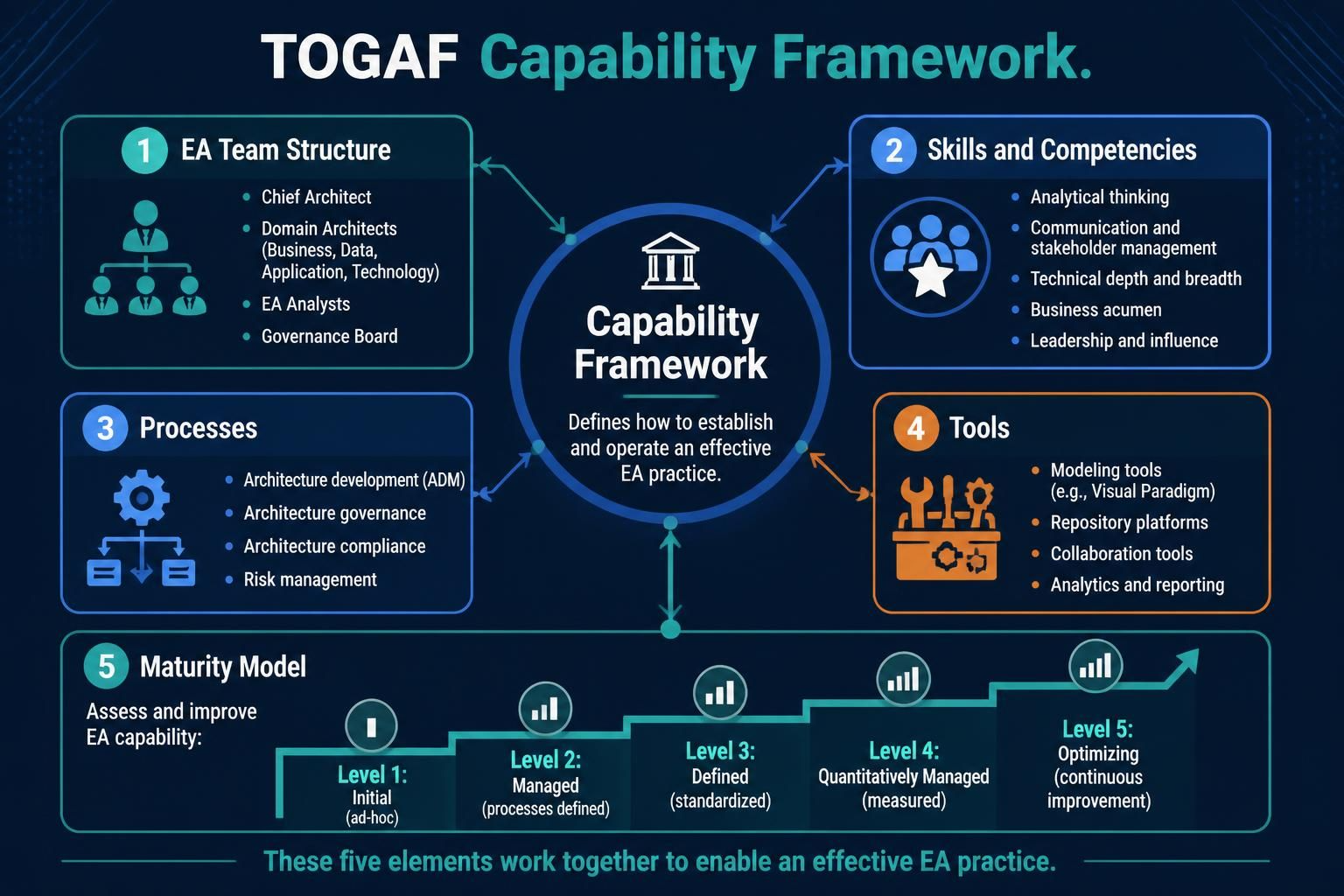
Enterprise Architecture (EA) is the discipline that aligns an organization’s business strategy with its IT infrastructure. However, having a strategy is not enough; an organization needs a robust system to manage, govern, and evolve that architecture. The TOGAF Capability Framework provides the blueprint for establishing and operating an effective EA practice. This tutorial breaks down the five critical pillars of this framework, guiding you through the structure, skills, processes, tools, and maturity models required to build a world-class architecture department.
1. The Foundation: EA Team Structure
Before a single diagram is drawn, an organization must define who is responsible for the architecture. The EA Team Structure establishes the hierarchy and roles necessary to drive architectural initiatives. This structure ensures that there is clear ownership and accountability across different domains.
- Chief Architect: The strategic leader who defines the overall vision and ensures alignment with business goals.
- Domain Architects: Specialists who focus on specific areas such as Business, Data, Application, and Technology architectures. This specialization ensures deep expertise in complex domains.
- EA Analysts: The operational backbone responsible for gathering requirements, documenting standards, and maintaining architecture artifacts.
- Governance Board: A cross-functional group that reviews architectural proposals, ensures compliance with standards, and approves major changes.
2. The Human Element: Skills and Competencies
A successful framework relies on people with the right mindset. The TOGAF Capability Framework emphasizes that technical skills alone are insufficient. Architects must possess a blend of soft and hard skills to navigate complex organizational landscapes.
Core Competencies Required
- Analytical Thinking: The ability to deconstruct complex problems into manageable components.
- Communication and Stakeholder Management: Translating technical constraints into business value and managing expectations across the organization.
- Technical Depth and Breadth: Understanding specific technologies while maintaining a broad view of the enterprise landscape.
- Business Acumen: Understanding the market forces, financial drivers, and operational goals of the business.
- Leadership and Influence: The ability to drive change and influence decision-makers without direct authority.
3. The Engine: Processes
Processes turn potential into reality. This section outlines the lifecycle activities that an EA practice must perform to remain effective. These processes ensure consistency and repeatability in how architecture is developed and maintained.
- Architecture Development (ADM): The Architecture Development Method is the core cycle used to design and implement the target architecture.
- Architecture Governance: The process of ensuring that the architecture remains compliant with standards and that projects adhere to the defined design.
- Architecture Compliance: Auditing projects and systems to verify they meet the established architectural principles.
- Risk Management: Identifying and mitigating architectural risks, such as single points of failure or security vulnerabilities.
4. The Enablers: Tools
Modern enterprise architecture is too complex to manage with spreadsheets and paper. Effective tooling is essential for modeling, storing, and analyzing architectural data. The right tools allow architects to visualize the enterprise, collaborate in real-time, and derive insights from the data.
Recommended Tooling Stack
To build a scalable and effective EA practice, organizations should invest in a comprehensive suite of tools:
- Modeling Tools: Visual Paradigm is a leading industry-standard tool that allows for the creation of detailed diagrams, including UML, BPMN, and SysML. It supports the full lifecycle of architecture modeling.
- Repository Platforms: Centralized databases to store all architectural artifacts, ensuring a “single source of truth.”
- Collaboration Tools: Platforms that facilitate communication between architects, developers, and business stakeholders.
- Analytics and Reporting: Dashboards that provide visibility into the architecture portfolio, health scores, and compliance status.
5. The Goal: Maturity Model
How do you know if your EA practice is working? The Maturity Model provides a roadmap for assessing and improving EA capability. It moves the organization from ad-hoc practices to a culture of continuous improvement.
Assessing EA Maturity Levels
- Level 1: Initial (Ad-hoc): Processes are unpredictable, poorly controlled, and reactive. Success depends on individual heroics rather than a system.
- Level 2: Managed: Processes are planned and tracked. Basic project management techniques are used, and requirements are managed.
- Level 3: Defined: Processes are standardized, documented, and integrated into a coherent framework. The organization follows a consistent approach.
- Level 4: Quantitatively Managed: Processes are measured and controlled using statistical techniques. Performance is predictable and data-driven.
- Level 5: Optimizing: Continuous process improvement is enabled by quantitative feedback and piloting innovative ideas. The architecture practice evolves proactively.
Conclusion
Establishing an effective Enterprise Architecture practice is a multifaceted challenge that requires more than just technical diagrams. It demands a strategic approach that integrates the right team structure, cultivates essential competencies, enforces rigorous processes, and leverages powerful tools.
By following the TOGAF Capability Framework, organizations can systematically elevate their maturity from reactive, ad-hoc operations to a state of continuous optimization. A critical component of this evolution is the adoption of robust tooling. For organizations looking to implement this framework effectively, the Recommended tooling of Visual Paradigm TOGAF Tool is an excellent choice. Visual Paradigm offers a comprehensive environment that supports the full architecture development method, manages repositories, and facilitates the collaboration necessary to achieve Level 3 and beyond in the Maturity Model. By combining the structured framework with advanced tooling, enterprises can ensure their architecture practice delivers tangible business value.